One shift I am watching closely is the rise of lightweight but capable AI models such as DeepSeek V4 Flash. For years, infrastructure automation has largely followed one pattern: if something needs to run repeatedly, we build a permanent mechanism around it - systemd, cron, daemon, supervisor, detached processes or a dedicated monitoring stack. That architecture still matters for production-grade reliability, but not every operational task needs permanent infrastructure.
For temporary server monitoring, deployment observation, migration, backup verification, incident investigation or short maintenance windows, an AI agent can increasingly operate as a temporary intelligent layer. The model does not replace deterministic monitoring. It adds contextual interpretation. Instead of simply reporting “CPU 91%”, an agent can correlate CPU spikes, container behaviour, application errors, database timeouts and HTTP 503 responses, then explain what is likely happening before an engineer intervenes.
For me, the distinction is becoming clearer: detached 系统 provide the reliability layer, while lightweight AI 智能体 provide the interpretation and on-demand action layer. Sometimes the requirement only exists for the next 30 minutes, two hours or one deployment cycle. In those cases, building another permanent service or automation rule may be unnecessary.
This is where the SME economics become interesting. A small business may not justify another monitoring platform, additional infrastructure or dedicated technical headcount for occasional operational tasks. If a lightweight agent can handle temporary monitoring, log triage and first-level diagnosis using existing infrastructure, the cost per operational task falls. One technical team can potentially supervise more servers, more customers and more deployments without increasing manpower at the same rate.
That directly changes unit economics for an AI infrastructure provider. A customer paying RM100 or RM300 per month is difficult to serve if every incident requires manual engineering time. But if routine observation and preliminary diagnosis can be handled at low marginal inference cost, while human engineers focus only on exceptions, the model becomes more scalable. 营收 can grow faster than operational cost.
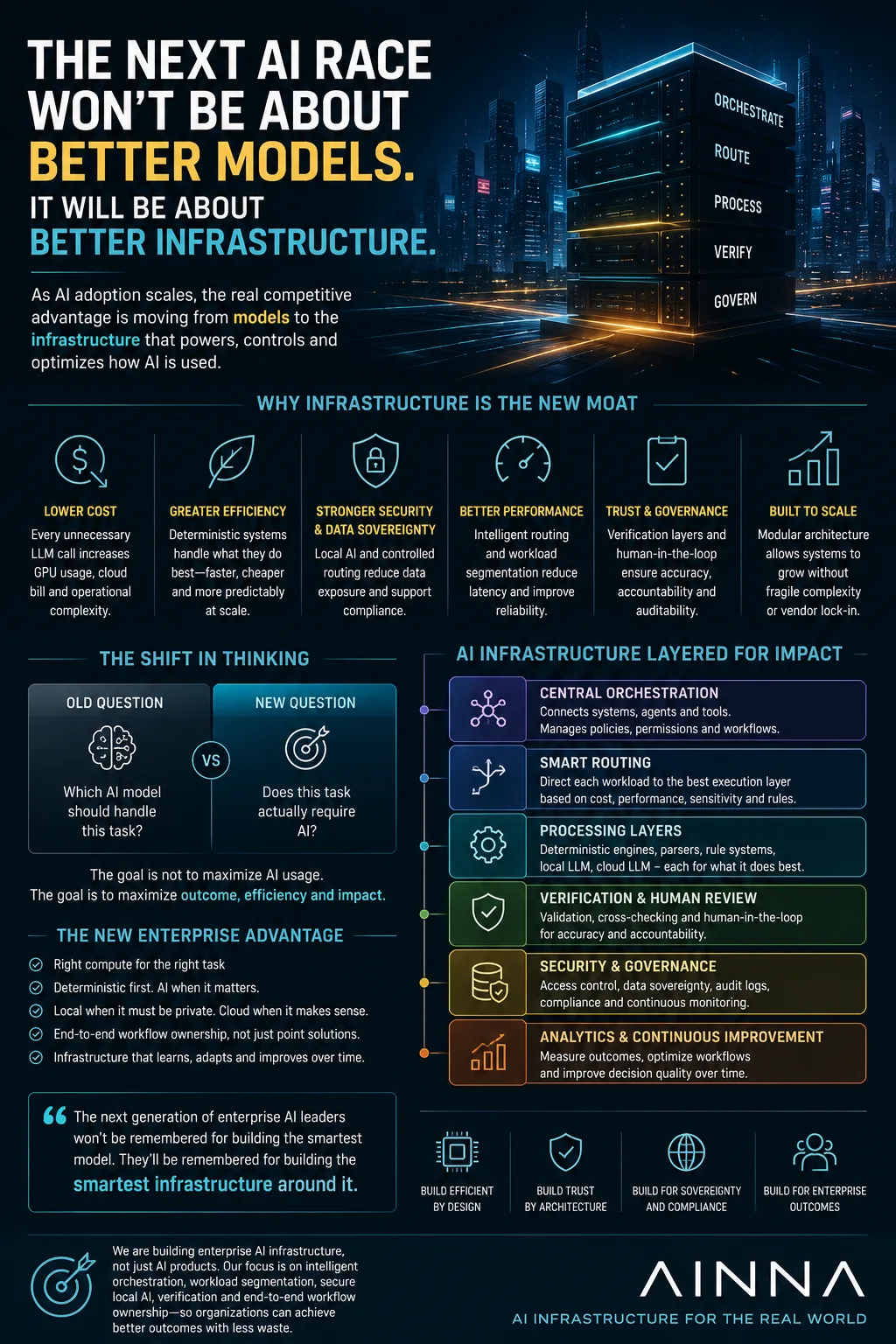
This is not about replacing infrastructure engineering with AI. It is about making infrastructure more adaptive, lower-friction, intent-driven and economically scalable.
I see this emerging as a 新 operational category: On-需求 AI 运营.
The next infrastructure advantage may not come from deploying more permanent 系统. It may come from knowing which tasks no longer need one - and how much that changes the cost of serving each customer.
#AIOps #AIAgents #DeepSeek #基础设施 #DevOps #自动化 #LocalAI #EnterpriseAI #SME #UnitEconomics