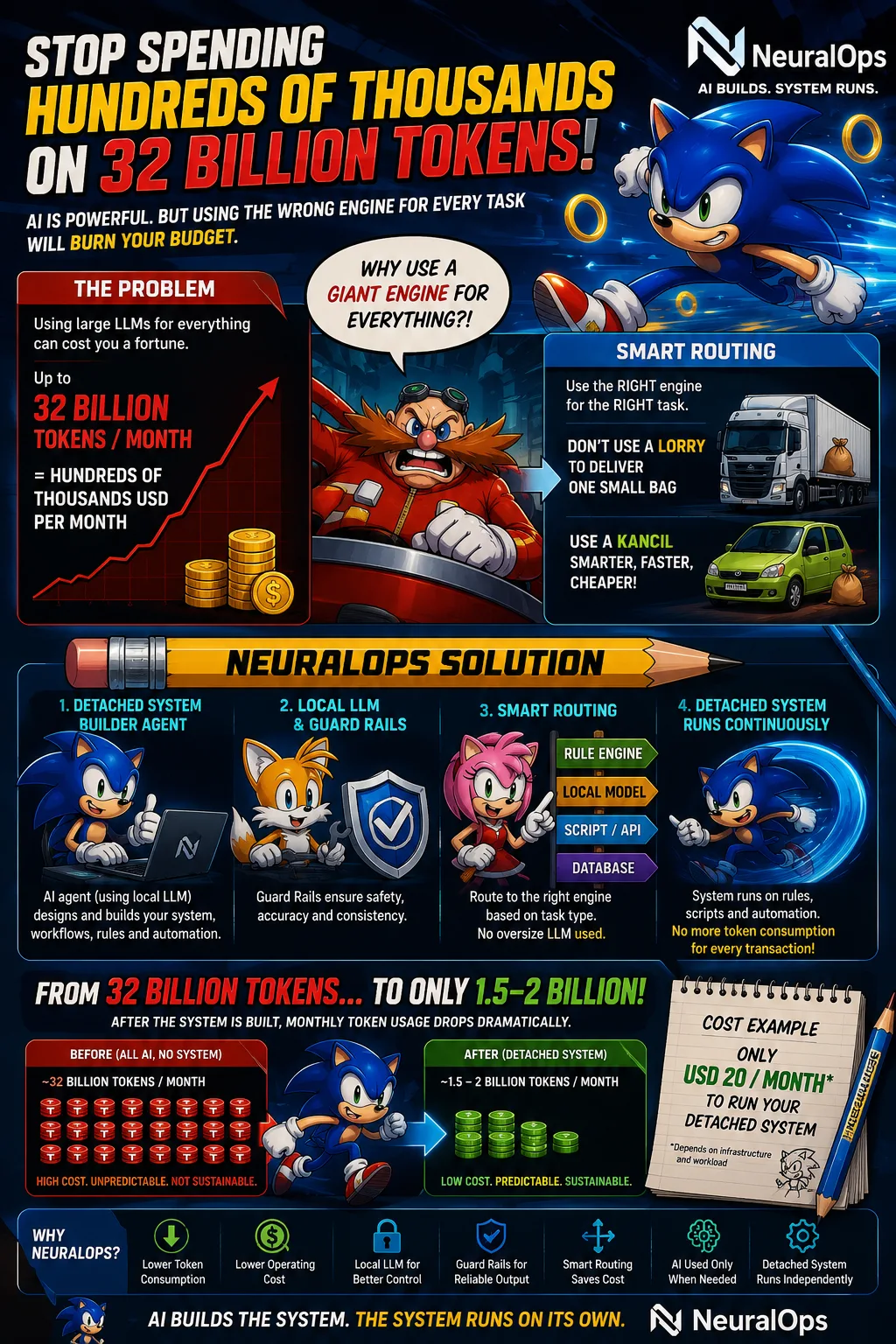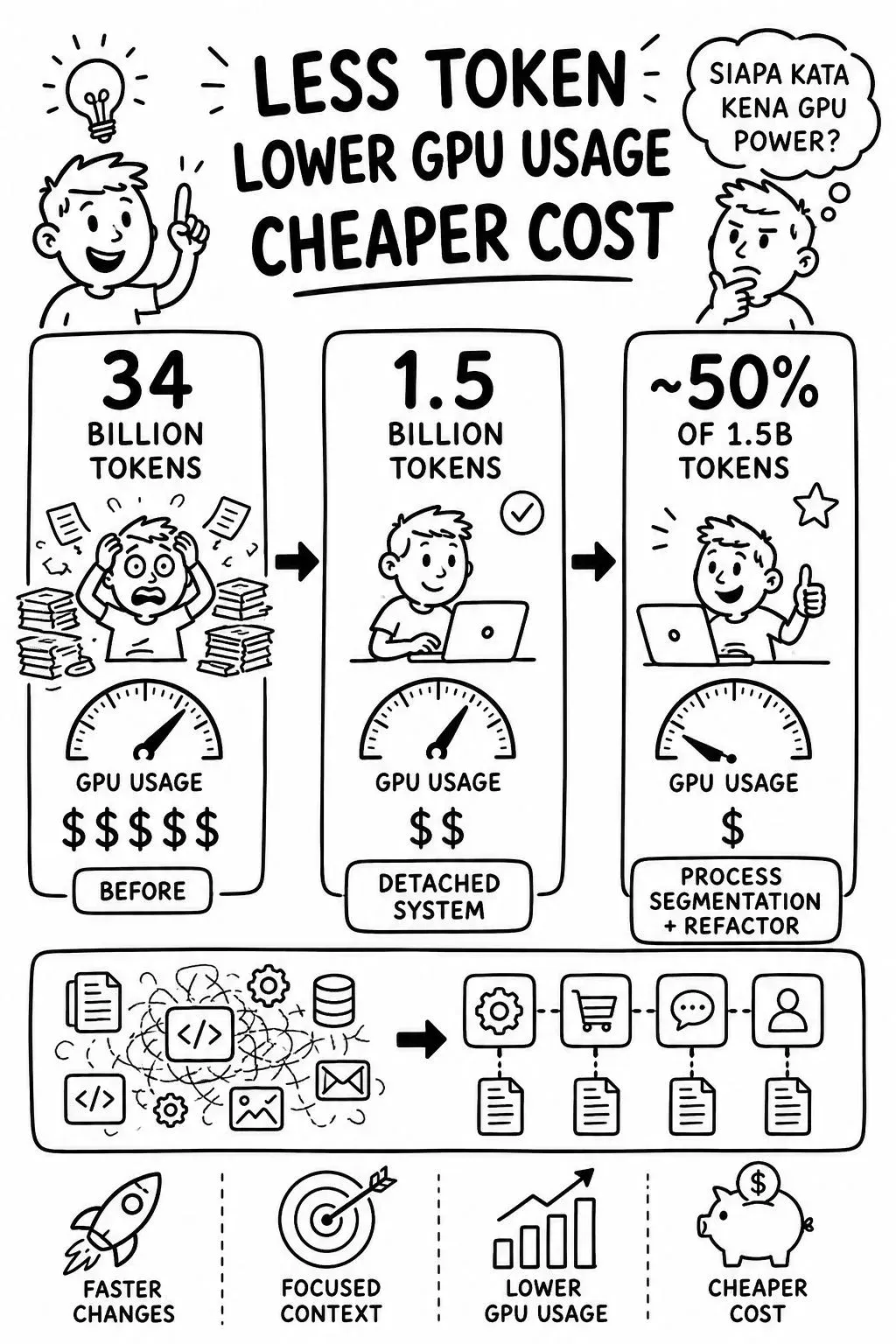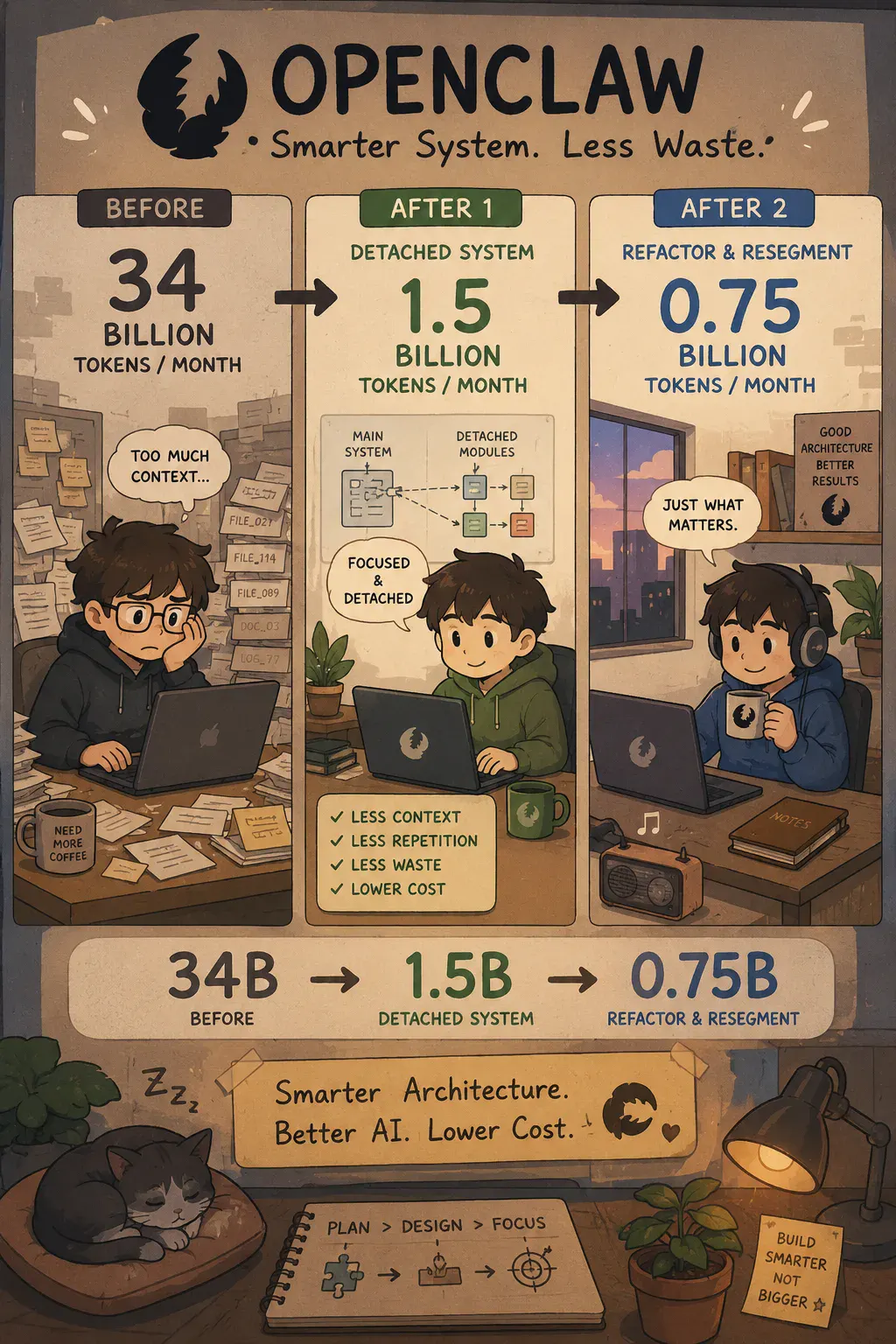
Since using OpenClaw, our token usage dropped from 34 billion 令牌 per month to 1.5 billion 令牌 per month through the 独立系统 approach.
Now, with Refactor and Resegment, we reduced it even further to around 750 million 令牌 per month.
The biggest lesson here is simple: optimization is not always about buying bigger GPUs or adding more compute power. Sometimes, the real breakthrough comes from redesigning how the 系统 thinks, reads, and executes.
Before this, AI had to read too much context repeatedly just to make small changes. That created token waste, higher cost, slower execution, and unnecessary load on the 系统.
With 独立系统, the workload became more focused. With Refactor and Resegment, each process became even more structured. The AI no longer needs to scan the whole 系统 every time. It only works on the exact part that matters.
That is how we moved from:
34B → 1.5B → 750M 令牌/月
Less context.
Less repetition.
Less waste.
更低 cost.
更快的执行.
For me, this proves one thing clearly: the future of AI efficiency is not only about stronger hardware. It is about smarter architecture.
效率 starts with 系统 设计.
#OpenClaw #AI #LLM #AIAgents #系统架构 #Token优化 #Software工程 #AI工程 #效率