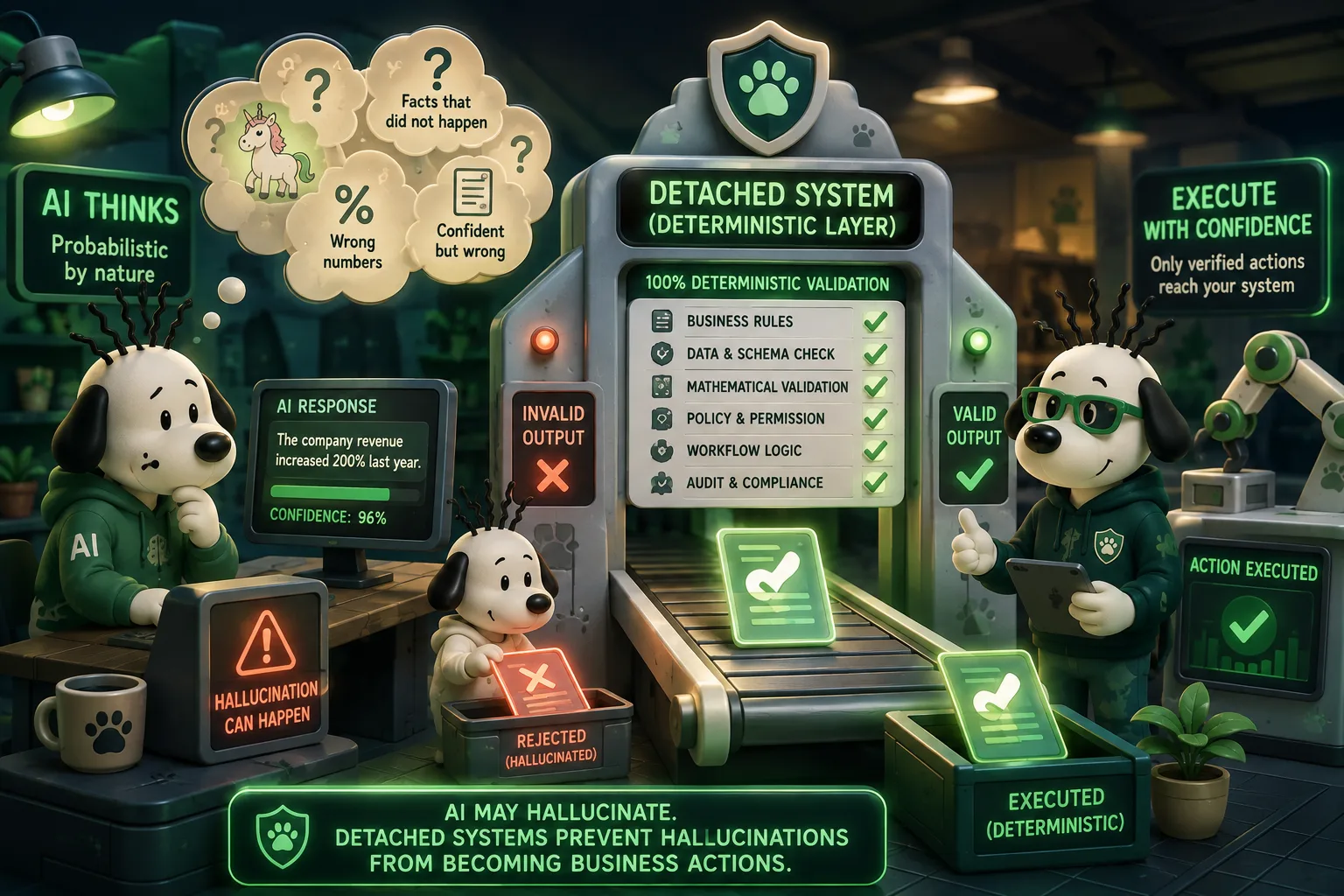
One of the biggest misconceptions in 中小企业 financial automation is the belief that AI-generated journal entries, invoices or asset valuations will eventually become error-proof simply by building larger and more powerful 大 语言 Models. In reality, LLMs are probabilistic by 设计. Their outputs may look more polished, but there will always be a non-zero probability that a generated RM figure, SST code or depreciation entry is incorrect, inconsistent or unsupported by the underlying accounting records.
Instead of asking how to eliminate these errors completely, 财务 and accounting teams should ask a more practical question: why should critical financial controls depend entirely on a probabilistic 系统? 问题 is not only the model. It is the architecture that allows the AI to analyse, decide, approve and post transactions without sufficient separation of duties and financial controls.
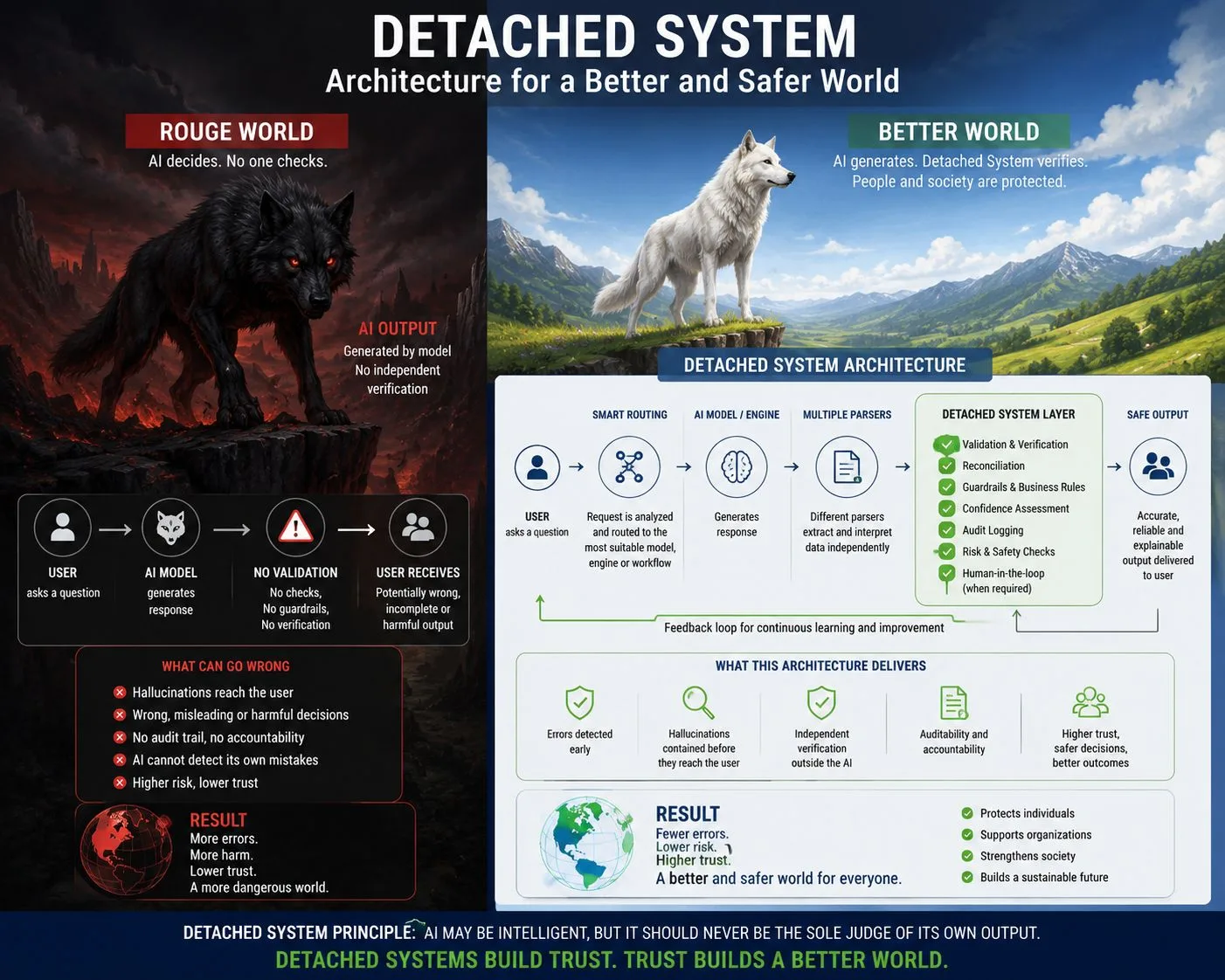
For the 财务 and accounting teams at AINNA, the safer path is to separate AI reasoning from accounting execution through a 100% deterministic 独立系统. The AI can interpret ledger data, identify spend patterns, suggest SST codes and propose journal entries, but it does not directly control the final posting. Its output is treated as a draft input that must be independently 已验证 before it touches the general ledger.
Before any transaction is posted or payment released, the 分离式 系统检查s deterministic accounting rules, chart-of-accounts integrity, double-entry balance, SST and tax compliance, approval hierarchies, user entitlements, segregation-of-duties policies, asset-register consistency and audit-trail requirements. If any validation fails, the 系统 blocks the posting or escalates it for a 财务 officer to review. The AI may still produce an imperfect recommendation, but that recommendation cannot automatically become a financial record.
The future of trustworthy 财务 AI will therefore not depend on hallucination-free models. It will depend on hallucination-safe financial architecture. By separating intelligence from execution, analysis from approval and recommendation from posting, 马来西亚n 中小企业 can use AI to speed up bookkeeping and asset management without allowing probabilistic outputs to compromise cash flow, compliance or audit readiness.














Ruang pembaca
Apa pendapat anda?
Komen disemak sebelum diterbitkan. 电子邮件 diperlukan untuk moderasi dan tidak dipaparkan kepada pembaca.
文章对why should critical financial controls的结论比较平衡,不只是强调好处。
如果可以继续说明analysis from approval and recommendation的真实案例,我会想继续阅读。
同意作者对the AI c 100%的判断,方向很清楚。
这篇文章把their outputs may look讲得比一般的AI介绍更具体。
invoices or asset valuations这个说法我要拿回去跟同事讨论。