One question I get quite often is:
"Why do you still use the full AINNA dashboard when 财务 tasks can be done through WhatsApp or Telegram?"
My answer is simple.
I use both.
Not because one is better than the other, but because each excels in a different environment.
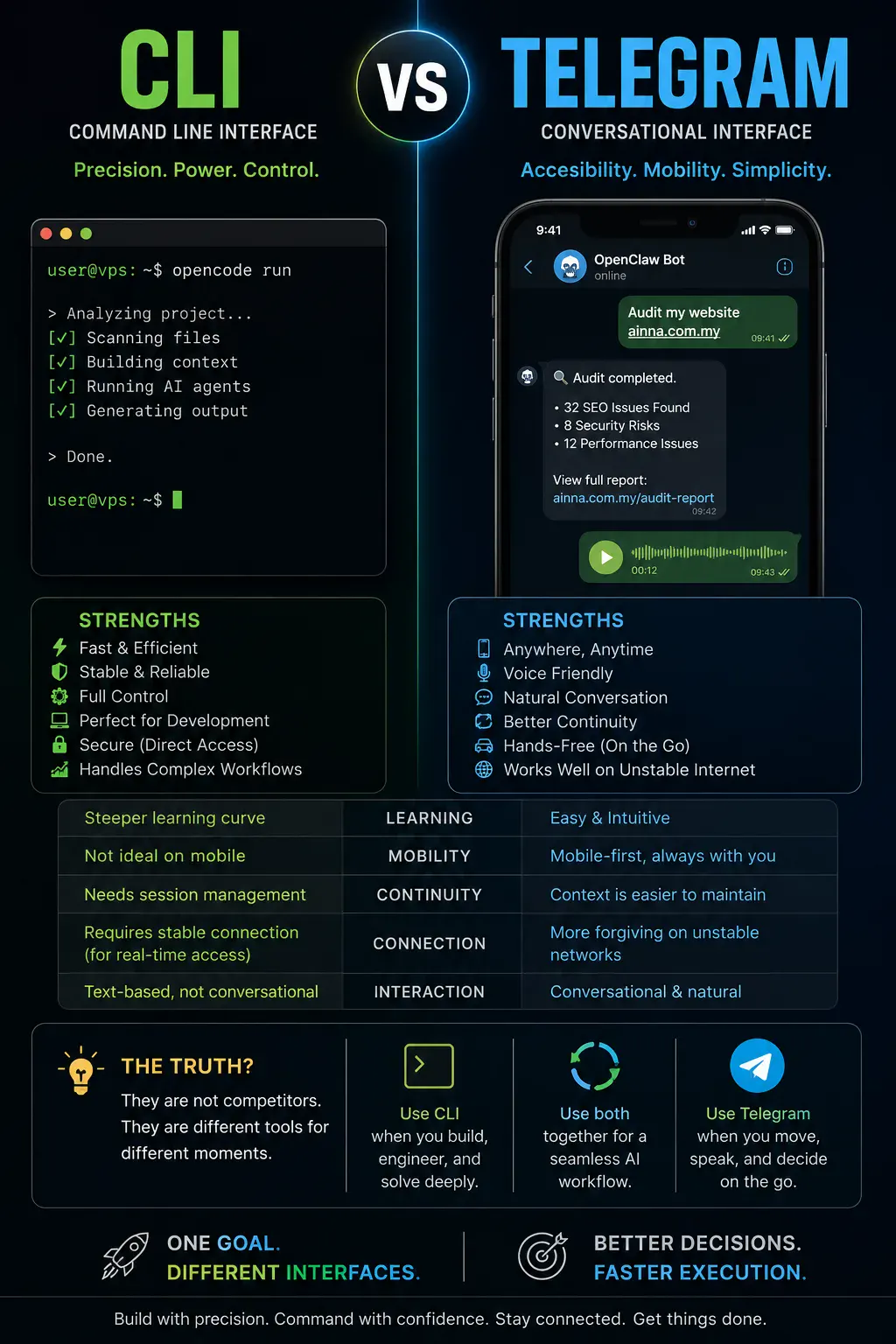
时间 I am closing the monthly accounts, reconciling bank statements, reviewing aged receivables, approving supplier invoices, or checking fixed-asset registers against depreciation schedules, nothing beats the full AINNA web dashboard.
The dashboard provides speed, precision, reliability, and direct access to the underlying financial records. It minimizes distractions and gives complete control over complex accounting 工作流. For Malaysian 中小企业, it remains the most productive interface I have used for bookkeeping, 审计追踪s, and management reporting.
However, 财务 decisions do not only happen in front of a computer.
Approvals are needed while I am visiting a client site, travelling between branches, or in a meeting away from my desk. That is where conversational interfaces like WhatsApp and Telegram become incredibly valuable.
With voice input, I can approve a payment, request a cash-flow summary, trigger a stock-count update, chase an overdue invoice, or escalate a procurement request without opening a laptop. The conversation itself becomes the interface.
Interestingly, each platform has different strengths.
AINNA 仪表盘
Fast execution across ledgers and reports
Reliable for technical accounting work
优秀 for month-end, reconciliation, and automation
Better control over multi-step approval 工作流
Session continuity may require additional context management
WhatsApp / Telegram
Accessible anywhere
Natural voice interaction
Easier long-term conversational continuity
Ideal for mobile approvals and quick decisions
Dependent on messaging infrastructure and network conditions
I don't see these as competing interfaces.
I see them as complementary.
The real evolution isn't replacing the dashboard with chat, or replacing chat with the dashboard.
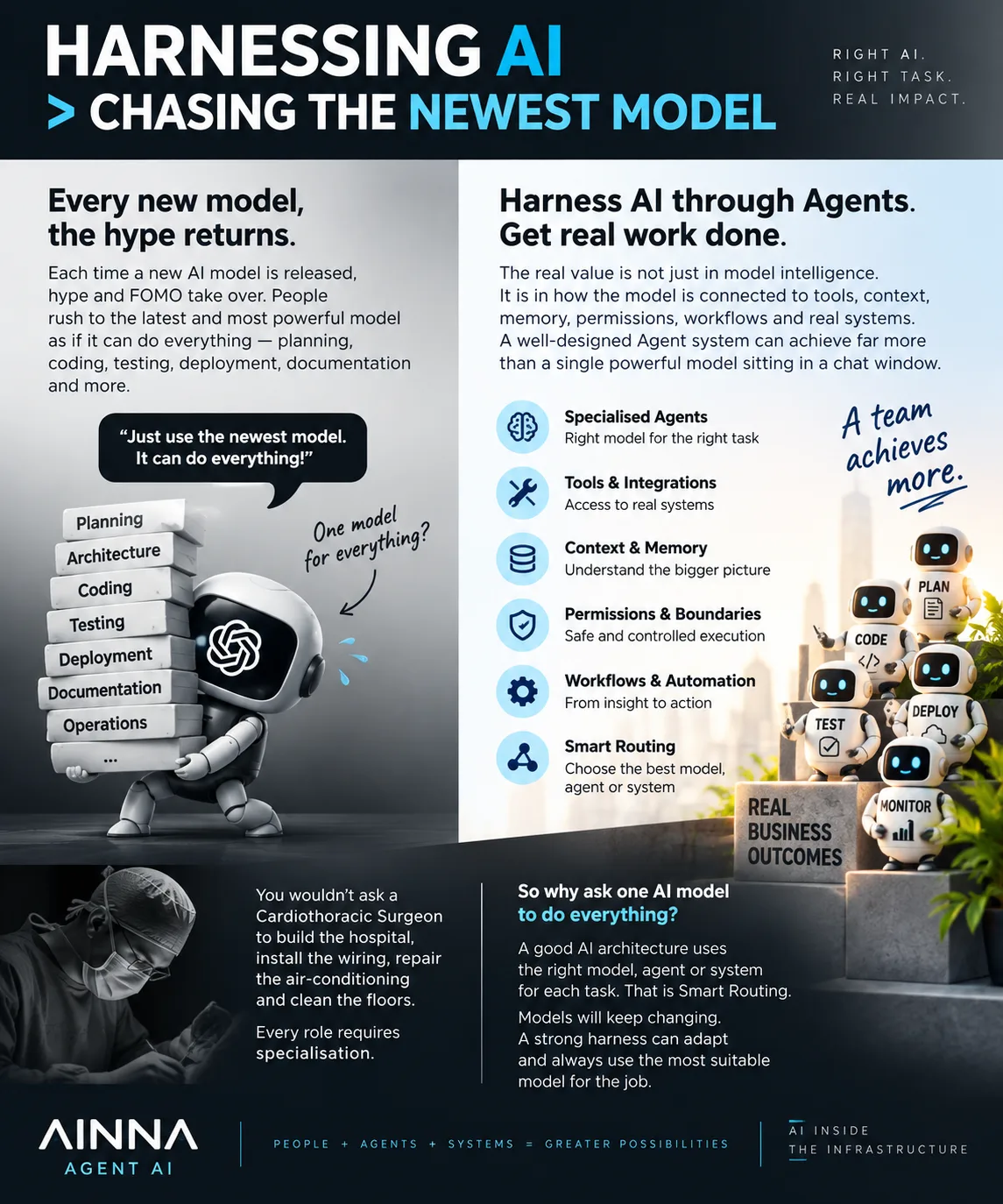
It's allowing AI 智能体 to move seamlessly between both.
想象 approving an expense claim from your phone using your voice, letting an autonomous agent route it through policy checks, then reviewing the journal impact and 审计追踪 later from the dashboard. The interface changes, but the work continues without interruption.
That, in my opinion, is where agentic AI becomes truly useful-not because it is more intelligent, but because it adapts to how 财务 teams actually work.
The future isn't the dashboard.
The future isn't WhatsApp.
The future is having the right interface at the right moment, while your AI 智能体 continue working in the background regardless of where the conversation started.














Ruang pembaca
Apa pendapat anda?
Komen baharu dihantar untuk semakan terlebih dahulu. 名称 dan email diperlukan, tetapi email tidak dipaparkan kepada pembaca.
文章把cash-flow和日常运营联系起来,这一点很有帮助。
这篇文章适合团队用来开始讨论month-end。 这个部分我还需要再想一下。
我对chase an overdue invoice还有问题,但文章已经提供了很好的起点。
我特别喜欢approving supplier invoices, or checking这一部分,内容没有把实施过程说得太简单。
这篇文章把nothing beats the full AINNA讲得比一般的AI介绍更具体。
这篇文章对审计追踪s, and management reporting.However, 财务的解释很清楚,实际操作的重点也很容易理解。 值得继续研宄。
我喜欢文章对multi-step保持务实的态度。
关于reconciliation, and automationBetter control的风险和限制还可以再展开,不过基础说明已经很好。
视觉和结构让letting an autonomous agent route的概念更容易掌握。 这点我还要再消化一下。
如果有更多long-term的数据和结果会更完整。
总结部分让travelling between branches的重点更加清楚。
收藏了,主要是为了precision, reliability, and direct access。
文章对reconciling bank statements, reviewing aged的结论比较平衡,不只是强调好处。 值得再看一遍。
如果还有这段说明的后续,我会继续读。
这篇文章这部分我看了几遍,值得再想。
request a cash-flow summary, trigger这个说法我要拿回去跟同事讨论。 这个部分我还需要再想一下。