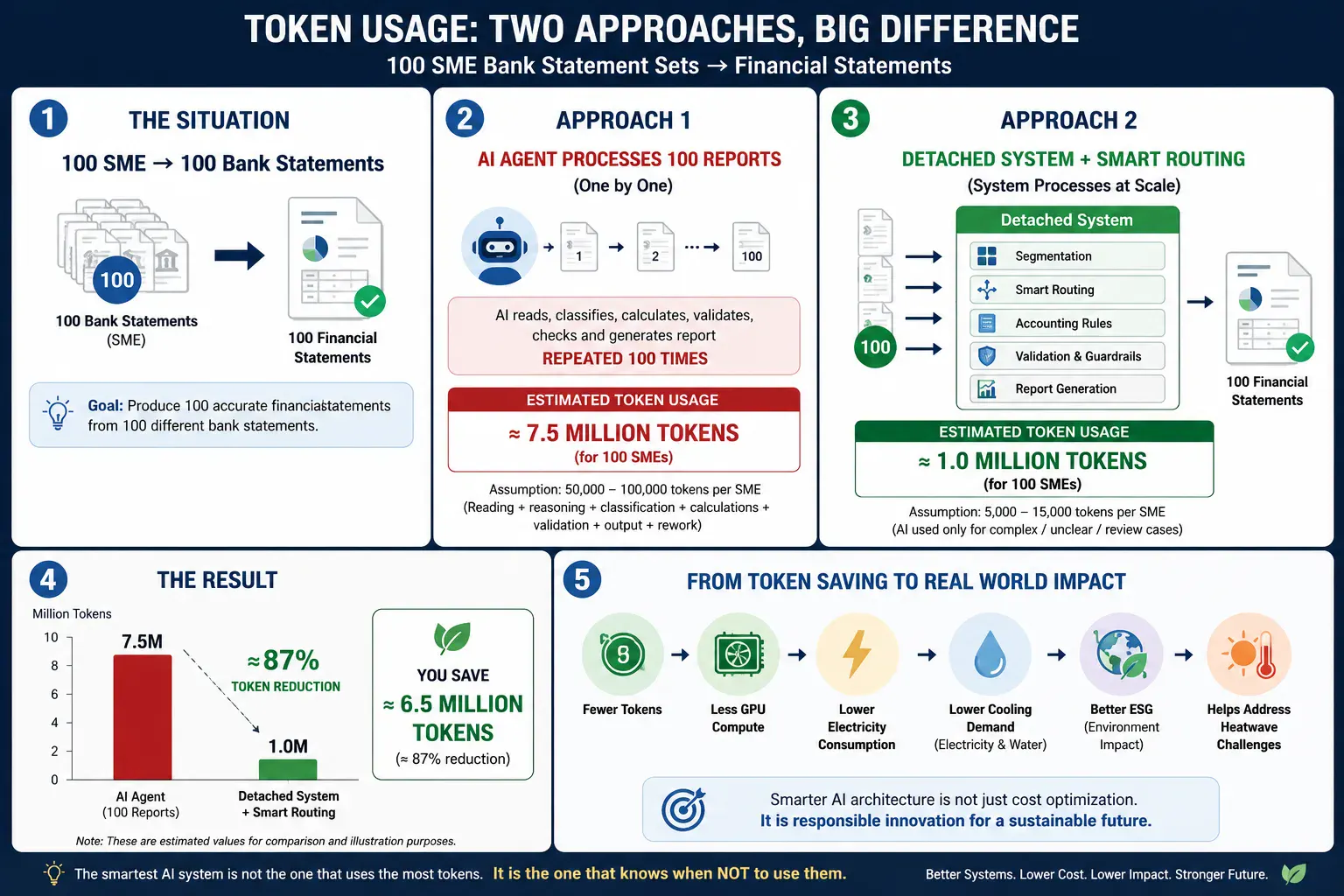
从 a 财务-operations perspective, bank-statement automation for 中小企业 is more complex than the typical AI headline suggests.
Take 100 Malaysian 中小企业. Each uploads 100 pages of bank statements. The accounting team is not looking at 100 files; it is looking at 10,000 pages of transactions, OCR noise, duplicate entries, internal transfers, bank charges, refunds, cash deposits, platform payouts, loan movements, and unclear descriptions.
If the 系统 passes every page to a large language model for end-to-end reasoning, the token bill compounds fast. A dense 100-page 中小企业 file can burn through 200,000 to 500,000 令牌 once extraction, classification, validation, correction, and reporting are included. Across 100 中小企业, that is 20 million to 50 million 令牌 before anyone posts a single journal entry.
Using a premium model such as Claude for the entire workflow illustrates the cost. At a mid-range 35 million 令牌, with the usual 80/20 input/output split, that implies 28 million input 令牌 and 7 million output 令牌. Claude Sonnet intro pricing of $2 input and $10 output per million 令牌 puts the inference bill near $126; at standard $3 input and $15 output pricing, it climbs to about $189-roughly RM600 to RM900 at current rates.
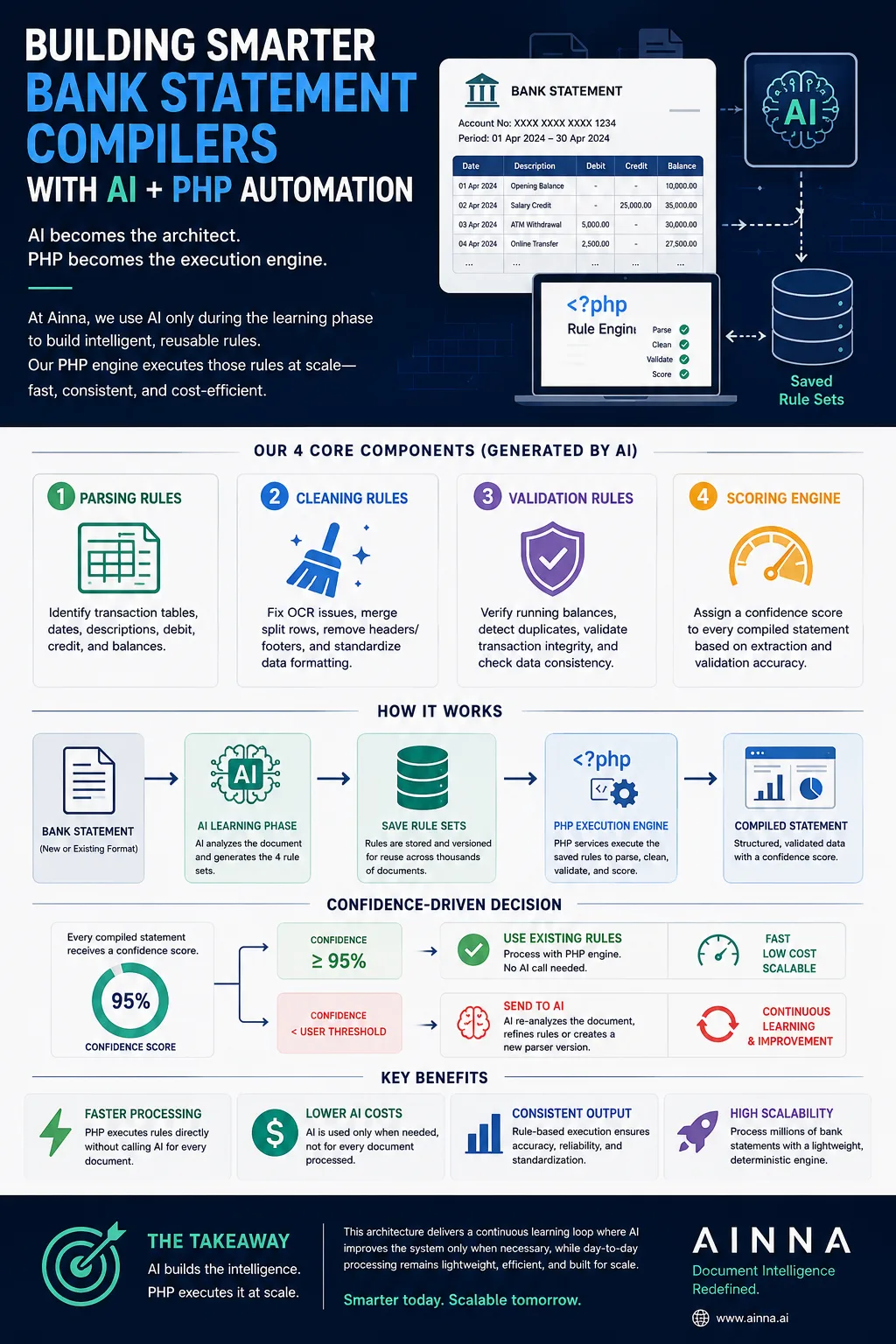
The second approach detaches the deterministic work from the probabilistic work. The 系统 first extracts structured transaction rows, cleans the data, detects duplicates, separates internal transfers, applies accounting rules, maps standard descriptions, validates the output, and only routes unclear or risky transactions to AI.
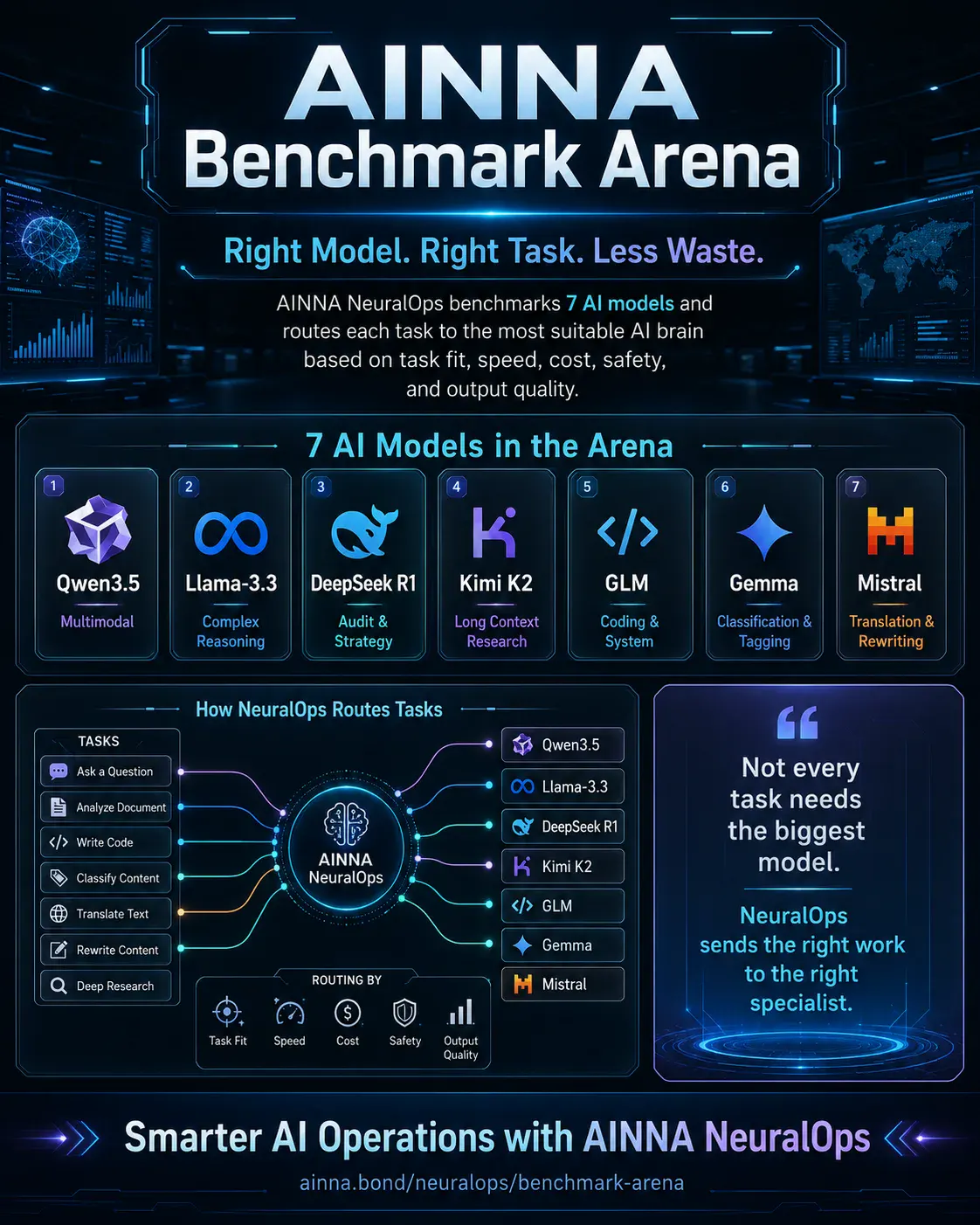
Because the guardrails already control the workflow, a lower-cost model such as Qwen can be used for the exception queue. It is no longer asked to understand everything from zero; it only handles selected exceptions. If only 5% to 15% of transactions need AI review, total token usage for all 100 中小企业 may drop to around 3 million to 7 million 令牌.
Using a mid-range estimate of 5 million 令牌, split as 80% input and 20% output, that means 4 million input 令牌 and 1 million output 令牌. 采用 Qwen-style routed model, the AI inference cost could fall below $1 in some pricing structures-under RM5-excluding OCR, hosting, storage, engineering, and review cost.
So the real comparison is not simply Claude versus Qwen. That comparison is too superficial. The real comparison is architecture. Claude reading every page directly may cost around $126 to $189 in this scenario. A detached, routed 系统 using Qwen only for exceptions can bring the AI token cost below $1, depending on provider pricing.
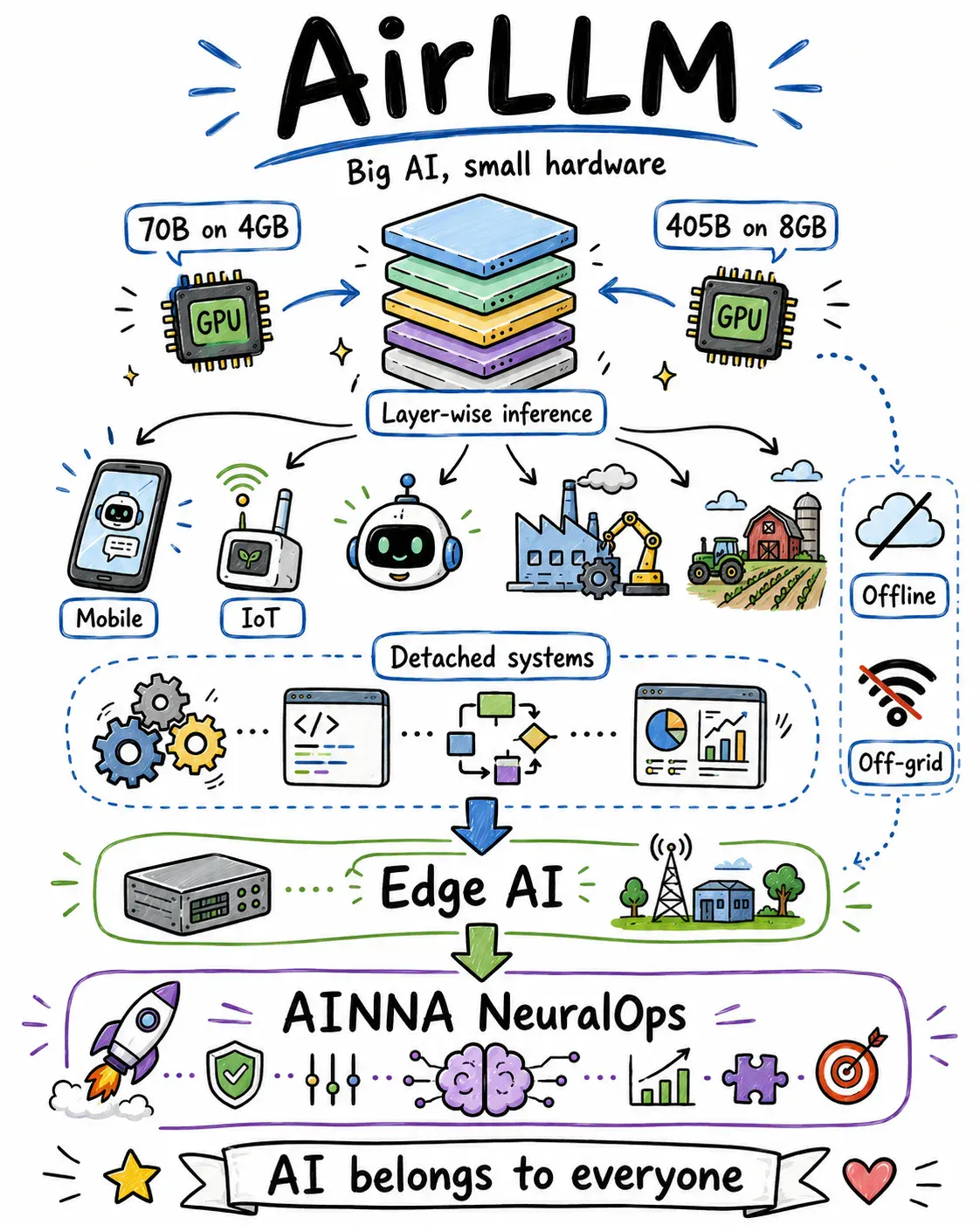
This is why 智能路由, segmentation, and guardrails matter. The future of 中小企业 financial-statement automation is not "send 10,000 pages to the biggest AI model". The smarter operating model is: the 系统 books what is structured, AI resolves what is uncertain, and the accountant reviews what is risky.
That is where the cost saving becomes measurable-and where AINNA delivers real business value to Malaysian 中小企业.
#ArtificialIntelligence #AIAgents #DetachedSystems #SmartRouting #护栏 #会计 #中小企业 #FinancialStatements #TokenEfficiency #自动化 #ESG













Ruang pembaca
Apa pendapat anda?
Komen baharu dihantar untuk semakan terlebih dahulu. 名称 dan email diperlukan, tetapi email tidak dipaparkan kepada pembaca.
难得有人把to 50 mi 100讲得这么直白。
同意作者对of bank sta 100的判断,但执行起来还有难度。
如果可以继续说明28 million inp 80的真实案例,我会想继续阅读。
关于令牌. claude S 28 million的实际落地部分最吸引我。 值得再看一遍。
这篇内容让我更容易理解为什么of $2 in 7 million值得关注。
看第二遍才注意到before anyone pos 20 million的细节。
视觉和结构让it is look 100的概念更容易掌握。 读完之后还有一些疑问。
这篇文章适合团队用来开始讨论file can bu 100。
文章对令牌 once extrac 200,000的结论比较平衡,不只是强调好处。
关于pages of trans 10,000的例子很实用,适合团队继续讨论。
这篇文章把usual 80/20 input/output 35 million讲得比一般的AI介绍更具体。 值得再看一遍。
我对million input 令 20还有问题,但文章已经提供了很好的起点。
文章把the inference bill $2和日常运营联系起来,这一点很有帮助。
我特别喜欢a single jo 50 million这一部分,内容没有把实施过程说得太简单。 这点我还要再消化一下。