Parsing 工艺: How 规则-Based Logic and AI Cut 成本 and 错误
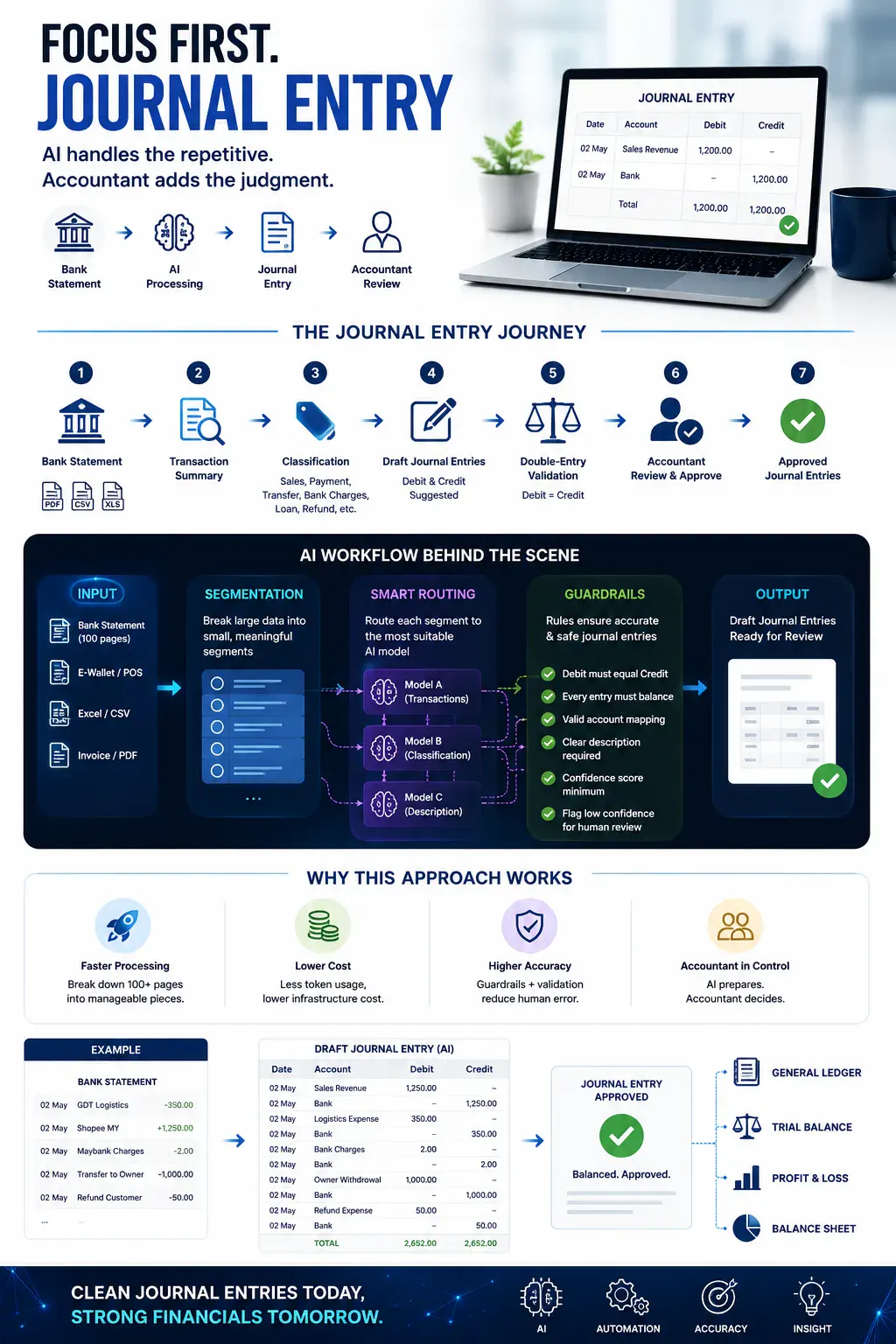
In financial operations, a single document often holds the data needed for an entire journal entry. 银行 statements, supplier invoices, receipts, sales reports, and financial PDFs may look simple on the surface, but the real work is turning them into structured accounting data that the general ledger, cashbook, or management report can actually consume.
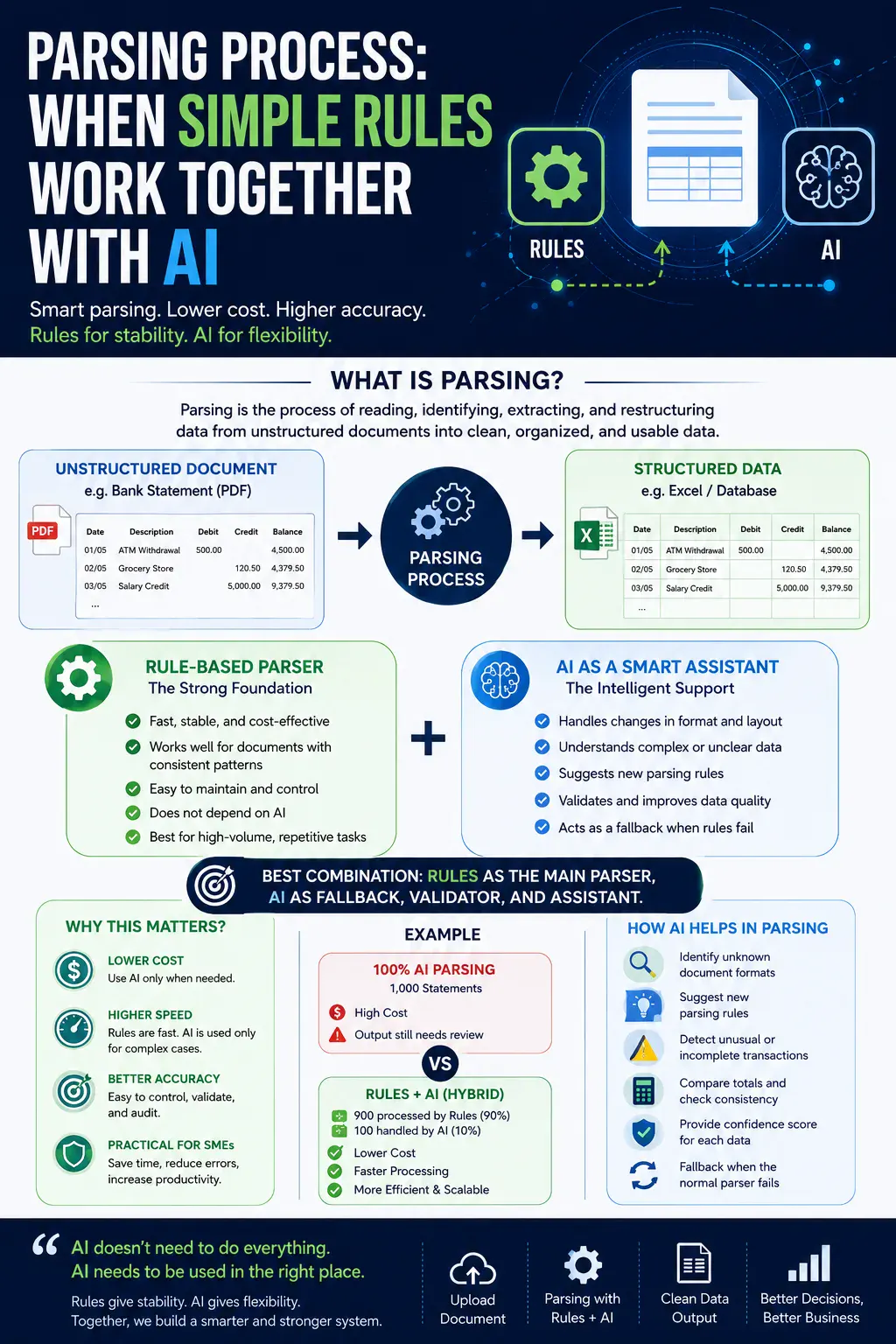
从 a cost and control standpoint, using AI for every field is not always the most efficient choice. A large share of 财务 documents are repetitive, predictable, and follow a fixed layout. For these, a rule-based parser gives faster throughput, a stable unit cost, and output that is easier to reconcile.
A rule-based parser follows predefined accounting logic. It can locate transaction dates, descriptions, debit amounts, credit amounts, running balances, reference numbers, and account or cost-centre details based on known templates. 时间 the document format is stable, this approach can achieve very high accuracy without invoking an AI model on every line.
AI becomes valuable when the source document is unclear, the format changes between statements, or the parser cannot confidently classify a transaction. In these cases, AI acts as a controlled exception handler: identifying 未知 layouts, suggesting 新 parsing rules, validating uncertain figures, and flagging unusual or incomplete transactions before they reach the books.
The right 设计 is not AI versus rules; it is AI supporting rules. The rule-based engine should carry the main workload because it delivers speed, auditability, and predictability. AI should sit behind it as a fallback, validator, and continuous-improvement layer for the cases that fall outside standard rules.
Consider 1,000 bank statements. 处理中 all 1,000 through AI raises compute cost and still leaves room for review. If 90% are parsed by rules and only the remaining 10% are escalated to AI, the blended processing cost falls sharply while the overall throughput and reliability improve.
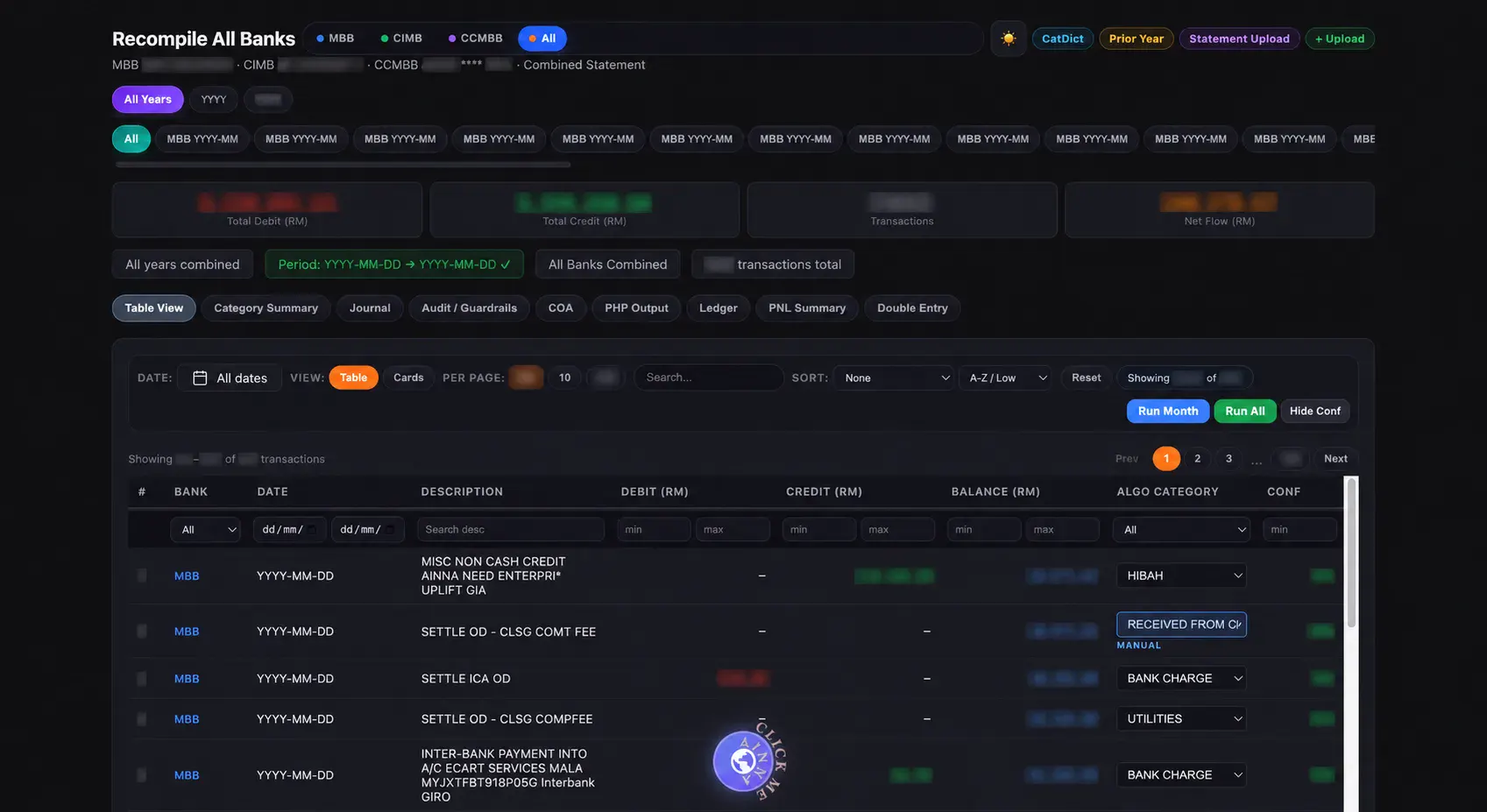
This is especially relevant 面向马来西亚SME. At AINNA, we see this pattern repeatedly: staff still spend hours manually keying in transactions, cross-checking figures, and compiling monthly reports. A well-built parsing workflow lets them upload a statement or invoice, click once, and receive clean data ready for Excel, the accounting 系统, or the database.
To me, that is the financially mature way to deploy AI. AI does not need to own the entire process; it needs to be positioned where the return is highest. 规则 provide consistency and cost discipline, AI handles exceptions and edge cases, and together they produce a lighter, more dependable data-parsing pipeline.
#AI #自动化 #DataParsing #SME #Fintech #RuleBasedSystem #DigitalTransformation #BusinessAutomation