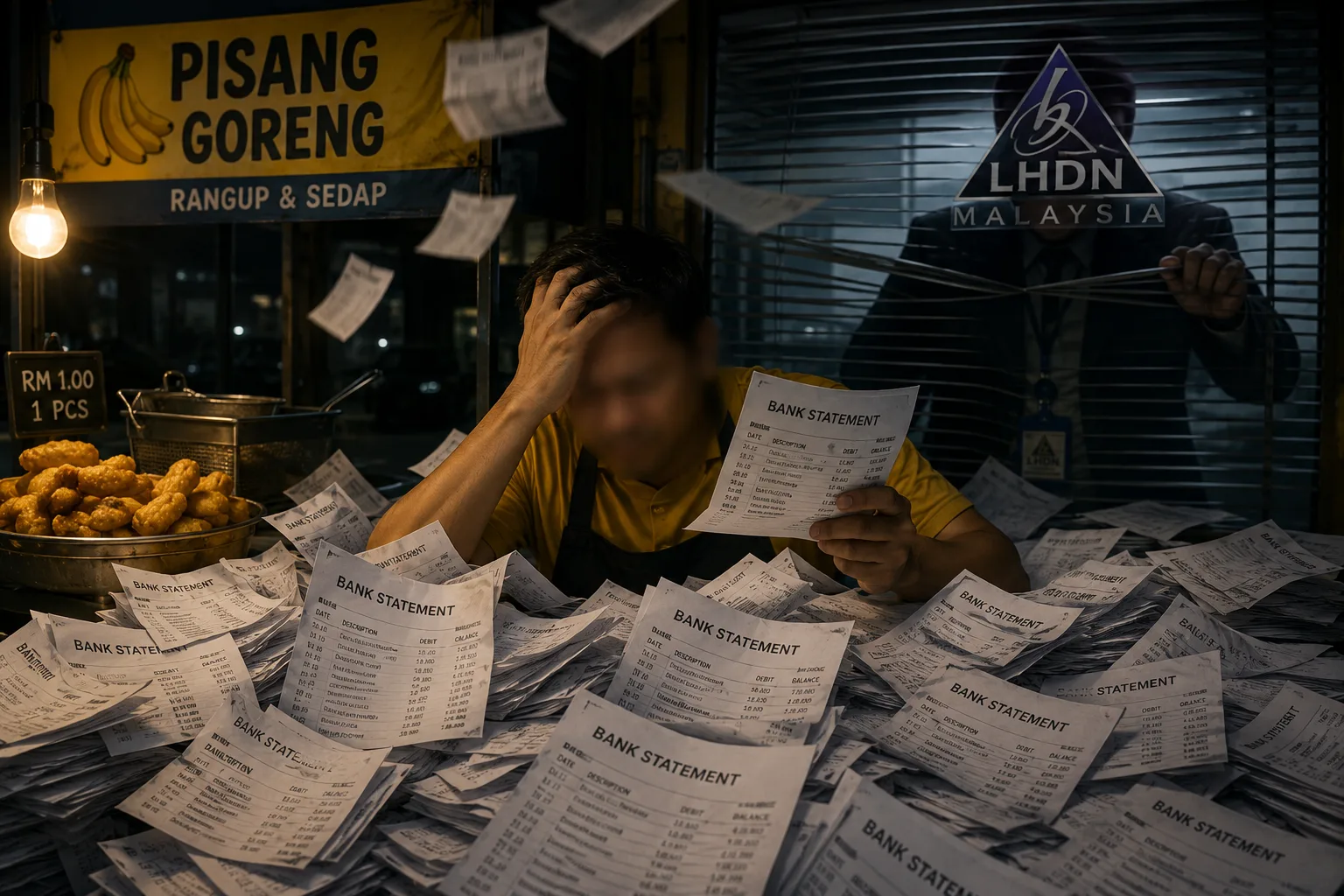
At AINNA, we ran our 财务 operations the same way many street 中小企业 do. Orders came from multiple platforms, payments arrived through different channels, and expenses happened every day. The business kept growing, but when it came time to close the books and prepare proper financial statements, everything became far harder than it should have been. The underlying data was already there, but it was fragmented across bank statements, marketplace reports, payment gateways, manual ledgers and spreadsheets.
That experience made us realise we weren't struggling because we lacked accounting software. We were struggling because we lacked the infrastructure to turn raw financial data into reliable financial information. Instead of asking, "How do we build a better accounting 系统?", we started asking, "Why is it still so difficult for 中小企业 to generate financial statements when almost every transaction is already digital?"
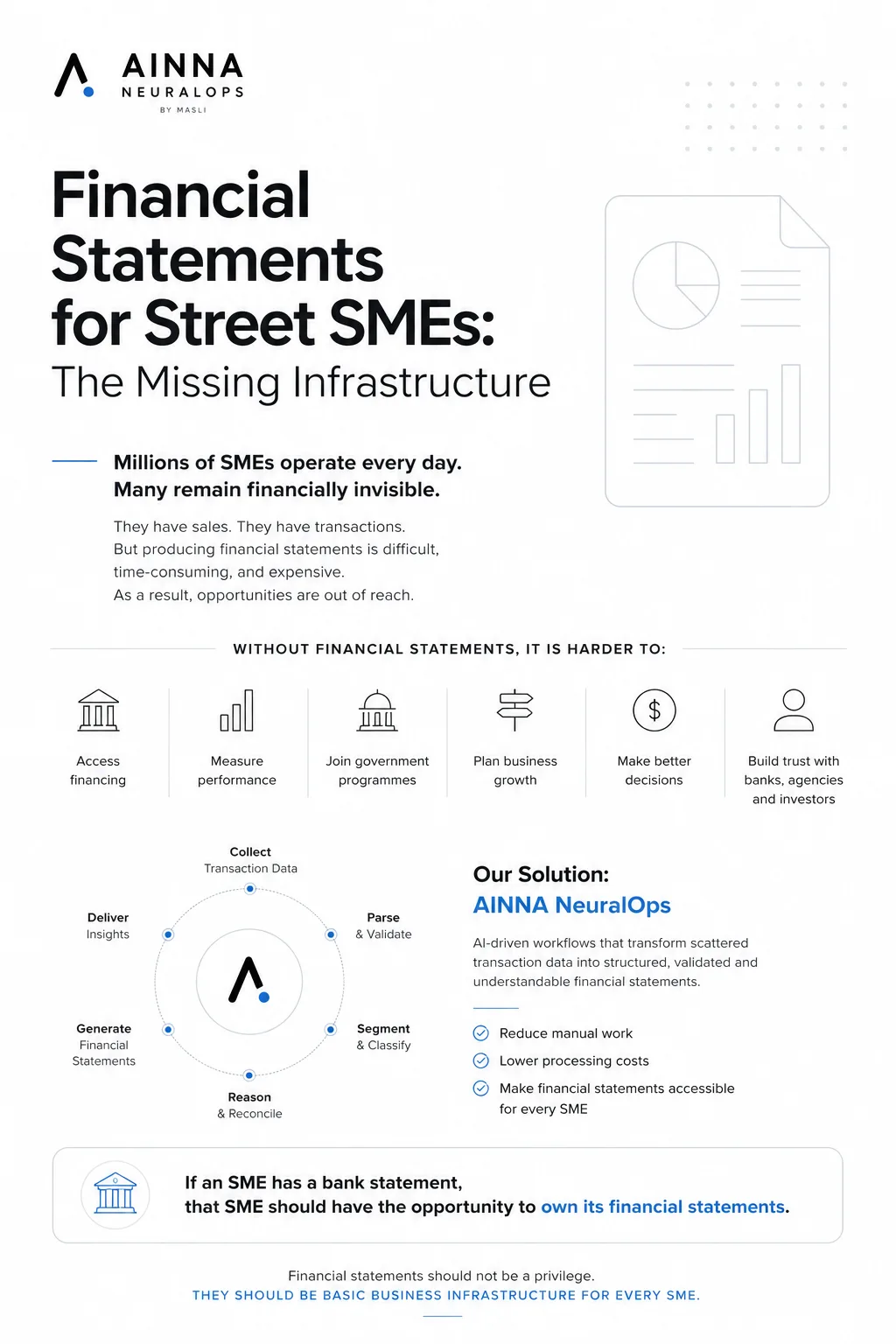
The answer, from an accounting standpoint, starts with the bank statement. Every incoming and outgoing transaction is already recorded there. If those transactions can be extracted, validated, categorised and reconciled correctly, financial statements become a verification process rather than manual reconstruction. If an 中小企业 has a bank statement, that 中小企业 should also have the opportunity to own financial statements.
This is not simply an accounting problem; it is an infrastructure problem. Millions of 中小企业 work hard every day, yet many still struggle to secure financing, attract investors or understand their true financial performance because their business data is not organised into trusted financial records.
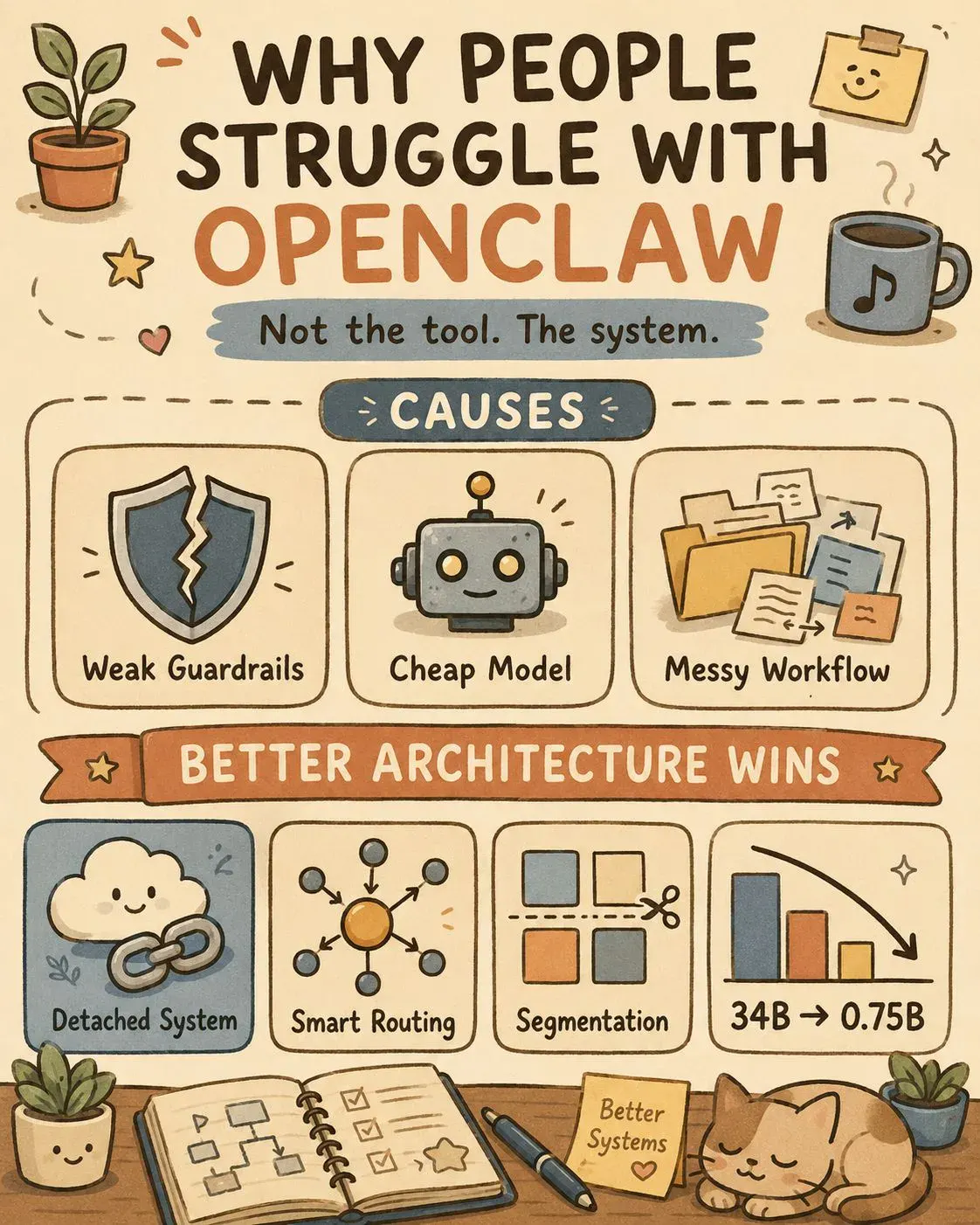
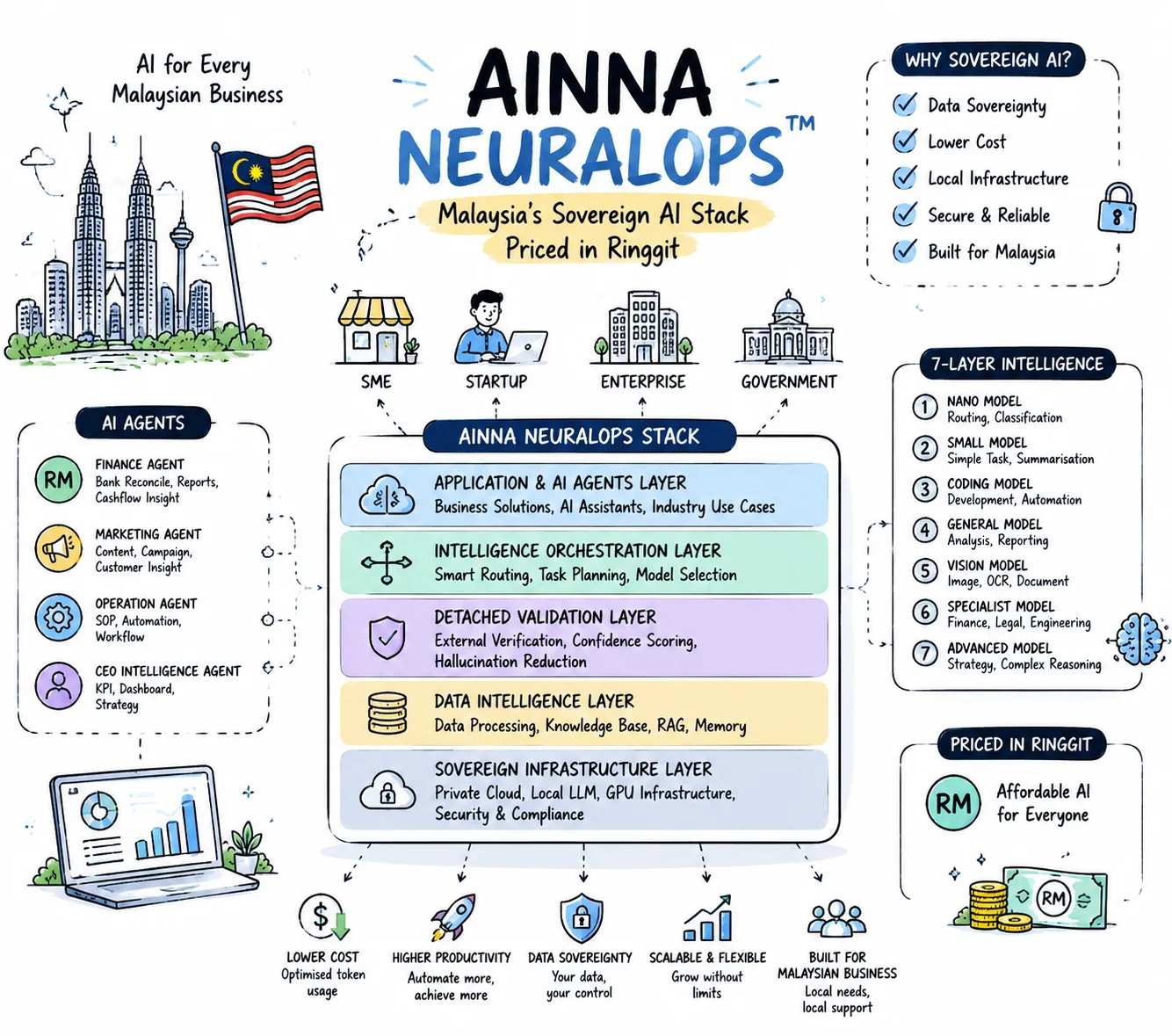
AI will certainly be part of the solution, but AI alone is not enough. 财务 information requires 确定性规则, validation, reconciliation, 审计追踪s and human oversight. In 财务, trust is built on accuracy and consistency, not on generating answers quickly.
Our goal is not to replace accountants. Our goal is to eliminate the repetitive work that prevents 中小企业 from producing reliable financial records. We believe one of the biggest opportunities in 中小企业 digital transformation is not building another AI chatbot or another accounting platform, but building the missing financial infrastructure that enables every street 中小企业 to convert existing financial data into trusted financial information.
Sometimes, the best innovations don't begin with an idea. They begin with a problem you've experienced yourself. We built this because we lived that problem, and we believe millions of 中小企业 deserve a simpler path to reliable financial statements.














Ruang pembaca
Apa pendapat anda?
Komen baharu dihantar untuk semakan terlebih dahulu. 名称 dan email diperlukan, tetapi email tidak dipaparkan kepada pembaca.
我们团队正好在讨论这篇文章,这篇来得及时。
关于这个主题的数字比我平时看到的大多数文章靠谱。
我喜欢文章对orders came from multiple platforms保持务实的态度。
如果有更多every incoming and outgoing transaction的数据和结果会更完整。 这个部分我还需要再想一下。
这篇内容让我更容易理解为什么financial statements become a verification值得关注。
这篇文章适合团队用来开始讨论millions of 中小企业 work hard。
关于everything became far harder的例子很实用,适合团队继续讨论。
同意作者对starts with the bank statement的判断,但执行起来还有难度。
总结部分让reconciliation, 审计追踪s and human oversight的重点更加清楚。