Most SMEs have sales. They have bank statements. They have expenses. But when it is time to prepare accounts and submit to LHDN, everything becomes messy.
Money comes in from many places: online sales, bank transfers, cash payments, COD, refunds, owner capital, and loans. Without proper classification, loan money may wrongly look like sales, or refund recovery may be mixed with normal income.
Money also goes out every day: supplier payments, ads, packaging, salary, part-time workers, petrol, rental, platform fees, postage, utilities, and owner drawings. 问题 is many of these payments do not have proper invoices, receipts, or clear supporting documents.
This creates several common SME 财务 problems:
1. 银行 statement does not match the accounts
The bank shows one figure, but the 利润 & Loss report shows another. This happens when transactions are not recorded properly or are categorized wrongly.
2. 商业 and personal expenses are mixed
Many SME owners use the same bank account for business and personal spending. Later, it becomes difficult to prove which expenses are truly business-related.
3. Loans, capital, sales, and refunds are not separated
贷款 received is not sales. 所有者 capital is not sales. Refund to customer is not normal operating expense. If these are mixed, the final tax report can become inaccurate.
4. Supporting documents are incomplete
LHDN submission is not just about numbers. The business must be able to support the numbers with documents such as invoices, receipts, bank statements, payment proof, and ledgers.
5. 账户 are prepared too late
Many SMEs only start preparing accounts when tax submission is near. By that time, missing receipts, unclear bank entries, and old transactions become hard to trace.
6. 利润 & Loss is prepared, but 资产负债表 is weak
Some SMEs can roughly estimate profit, but they do not have a proper 资产负债表. Assets, liabilities, loans, drawings, retained earnings, and stock are often not properly maintained.
What SMEs need first is not a complicated accounting 系统.
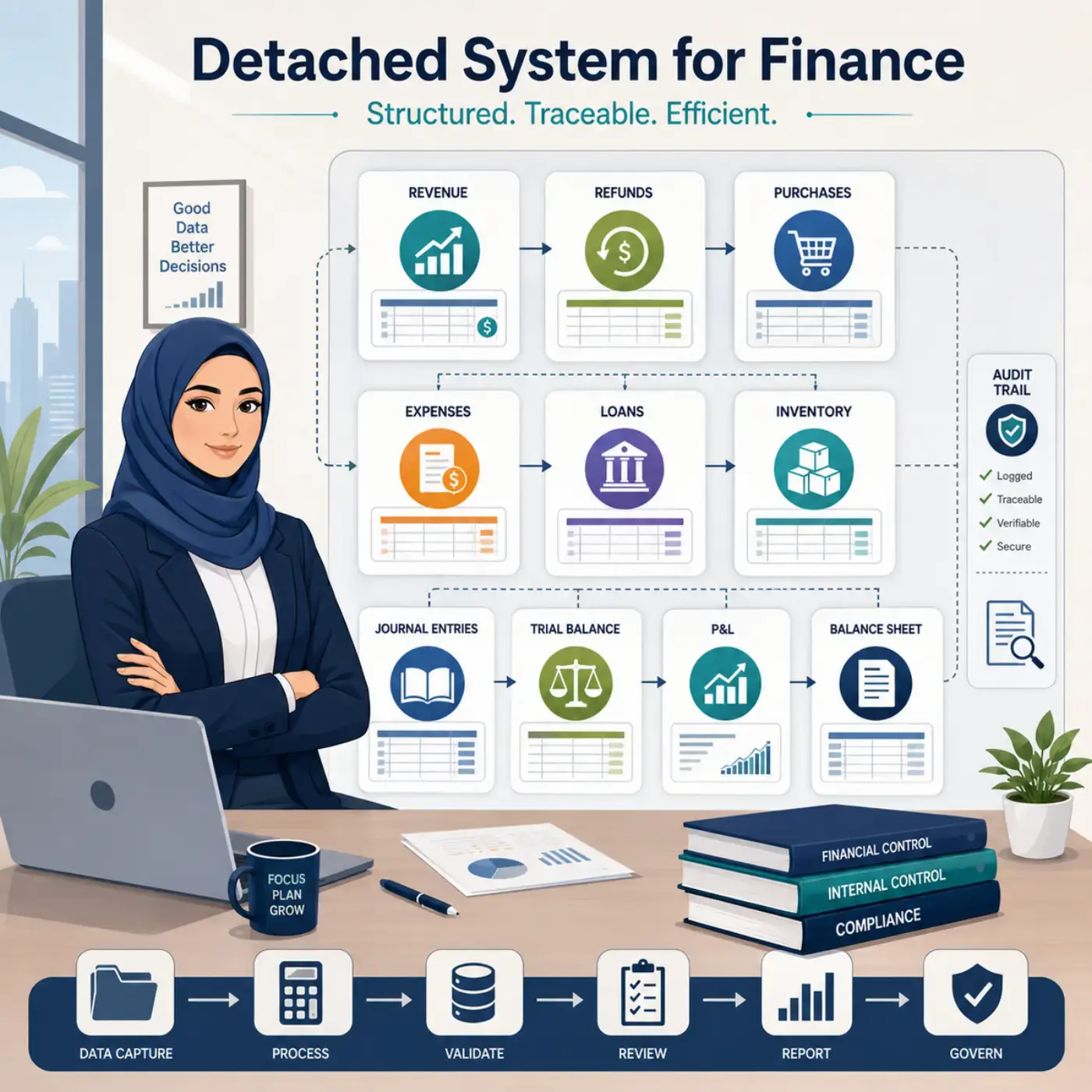
They need a basic 财务 control 系统 that can:
- 导入 or upload bank statements
- Categorize money in and money out
- Separate sales, purchases, expenses, loans, refunds, and owner drawings
- 准备 a clean cash book
- Generate 利润 & Loss
- Generate 资产负债表
- Match transactions with supporting documents
- 准备 a simple tax submission pack for accountant or LHDN review
A strong way to explain this:
The biggest 财务 problem for SMEs is not the lack of business activity. 问题 is messy financial records. 销售 exist, expenses exist, and bank statements exist - but they are not properly categorized, reconciled, and supported with documents. 时间 it is time to submit to LHDN, the owner has to trace old transactions, find missing receipts, separate personal and business expenses, and explain unclear bank entries. SMEs need a basic 财务 系统 that turns daily transactions into clean reports such as 现金 Book, 利润 & Loss, 资产负债表, and tax supporting schedules.