Not necessarily. It all comes down to how well you've engineered your 系统.
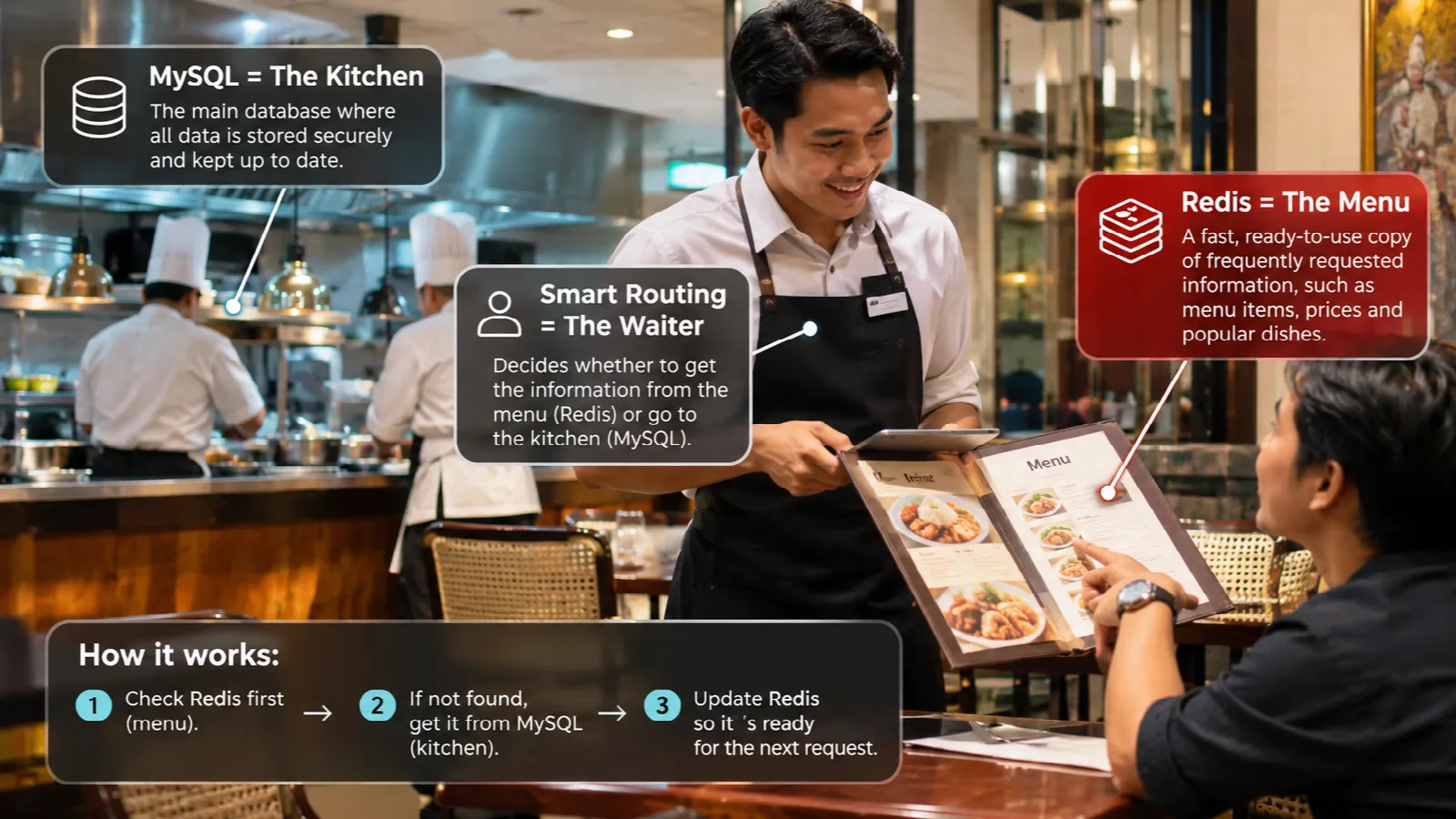
想象 a busy restaurant. Every time a customer asks for the price of fried rice, the waiter runs into the kitchen to ask the chef.
As more customers come in, the owner starts hiring more chefs, buying more equipment and expanding the kitchen.
But hang on. Why not just print a menu?
That's basically how Redis and MySQL work together. MySQL is the kitchen, Redis is the menu, and 智能路由 is the waiter who knows when to use the menu and when to consult the kitchen.
Instead of making the database answer the same question thousands of times, Redis handles frequently requested information while MySQL focuses on actual transactions and critical operations.
Now imagine applying this concept across an entire business ecosystem. More customers, faster response times, lower infrastructure costs and better profit margins.
Sometimes, the problem isn't a lack of resources. It's how you're using them.
Anyone can throw money at bigger servers, more RAM and more processing power. The real advantage comes from knowing how to achieve more with less.
Don't build a bigger kitchen just to answer questions about the menu.
增长 is about getting more customers. 可扩展性 is about serving more customers without letting your costs grow at the same rate.
That's not just good engineering. That's good business.
Less brute force. More intelligence. Better economics.
#Redis #MySQL #SmartRouting #可扩展性 #UnitEconomics #系统架构 #成本优化 #AI工程 #AINNA #NeuralOps

















Ruang pembaca
Apa pendapat anda?
Komen disemak sebelum diterbitkan. 电子邮件 diperlukan untuk moderasi dan tidak dipaparkan kepada pembaca.
关于every time a customer asks的例子很实用,适合团队继续讨论。
如果可以继续说明anyone can throw money的真实案例,我会想继续阅读。
我们团队正好在讨论这篇文章,这篇来得及时。
关于这个主题的数字比我平时看到的大多数文章靠谱。
视觉和结构让now imagine applying this concept的概念更容易掌握。
总结部分让that's basically how redis的重点更加清楚。
如果有更多don't build a bigger kitchen的数据和结果会更完整。
It's how you're using这个说法我要拿回去跟同事讨论。