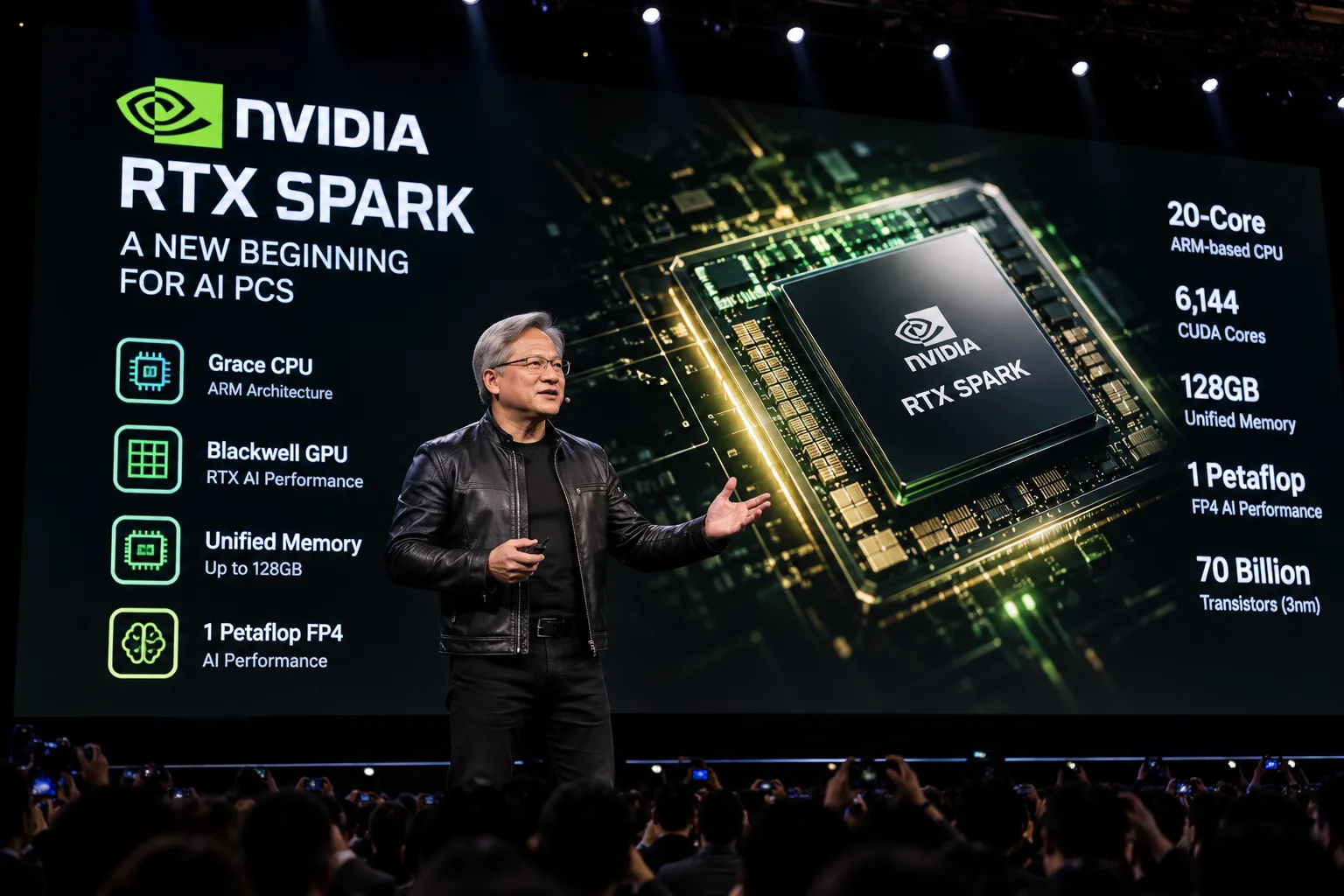
Jensen Huang's latest NVIDIA announcement points at something those of us on the deployment side have been working toward for a while: AI compute is getting smaller, denser and more energy-efficient.
At AINNA, that tracks directly with how we've been engineering NeuralOps.
✅ WHERE WE ARE TODAY
Our server-based NeuralOps stack is built around one constraint: doing more work per unit of compute. Concretely, that means:
⚡ 多-阶段 智能路由
⚡ Intelligent Caching
⚡ Specialised Parsers & 分离式 执行
⚡ 本地 SLM/LLM 集成
⚡ 多-代理 编排 (under development)
⚡ WebCLI & Telegram 访问
🚀 WHERE WE ARE HEADING
🟢 第一阶段 - NeuralOps Mini PC
Move NeuralOps off generic server infrastructure and onto dedicated PCB-based AI mini computers.
🔵 第二阶段 - Embedded NeuralOps
端口 and integrate NeuralOps into progressively tighter ARM/NVIDIA AI compute modules.
🟣 Phase 3 - NeuralOps on Future AI 硅
Tune our intelligence architecture for next-generation miniaturised silicon, likely through semiconductor 合作伙伴hips.
The hardware roadmap is our future direction, not a claim of existing deployment.
The target is straightforward: 中小企业, factories and industrial devices running their own specialised agents locally, with as little cloud dependency as the workload will tolerate.
We're not taping out our own semiconductor chip today.
We're building an intelligence architecture designed to shrink as the compute underneath it evolves.
Maximum 智能. Minimum 计算.
今天: 服务器-Based NeuralOps
下一步: PCB Mini PC
Future: Embedded AI → Chip-Level 智能
#AINNA #NeuralOps #NVIDIA #JensenHuang #EdgeAI #AgenticAI #EmbeddedAI #DeepTech #AI基础设施 #马来西亚Tech
















Ruang pembaca
Apa pendapat anda?
Komen disemak sebelum diterbitkan. 电子邮件 diperlukan untuk moderasi dan tidak dipaparkan kepada pembaca.
如果有更多embedded AI的数据和结果会更完整。
看第二遍才注意到🔵 第二阶段 - embedded neuralops的细节。
视觉和结构让likely through semiconductor 合作伙伴hips的概念更容易掌握。
文章对neuralOps mini PC move neuralops提供了很好的起点,值得继续跟进。