It doesn't.
A well-built platform isn't measured by how many prompts it fires or how many GPUs it keeps warm. It's measured by how efficiently it delivers the same outcome-with lower runtime cost, lower energy draw, and less wasted computation.
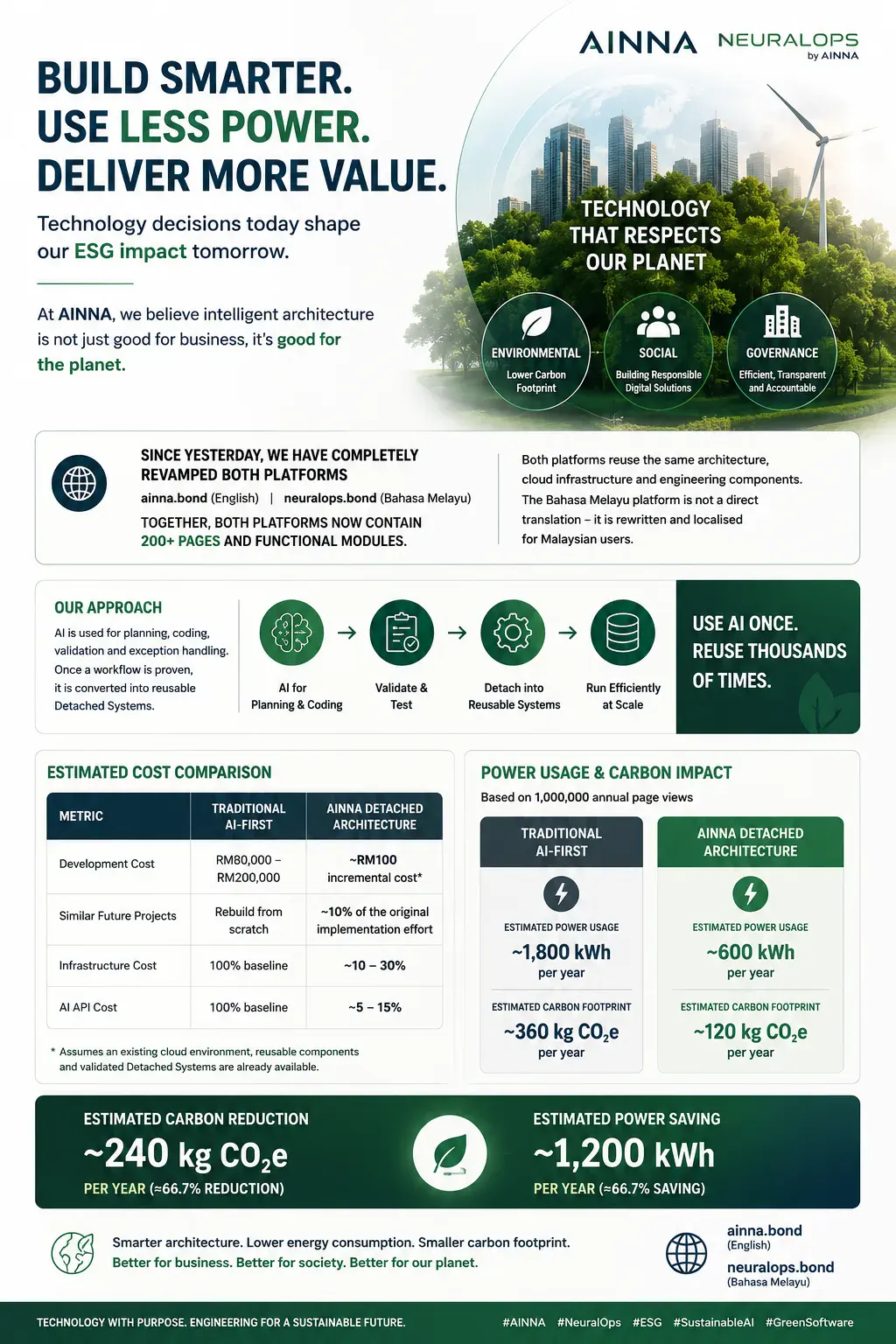
Yesterday my team and I rolled out a complete production refresh of both ainna.bond (英语) and neuralops.bond (Bahasa Melayu).
Between them, the two platforms now contain 200+ pages and functional modules. The Bahasa Melayu instance isn't a direct translation-it was rewritten and localised for Malaysian users-while both run on the same architecture, cloud infrastructure and reusable engineering components.
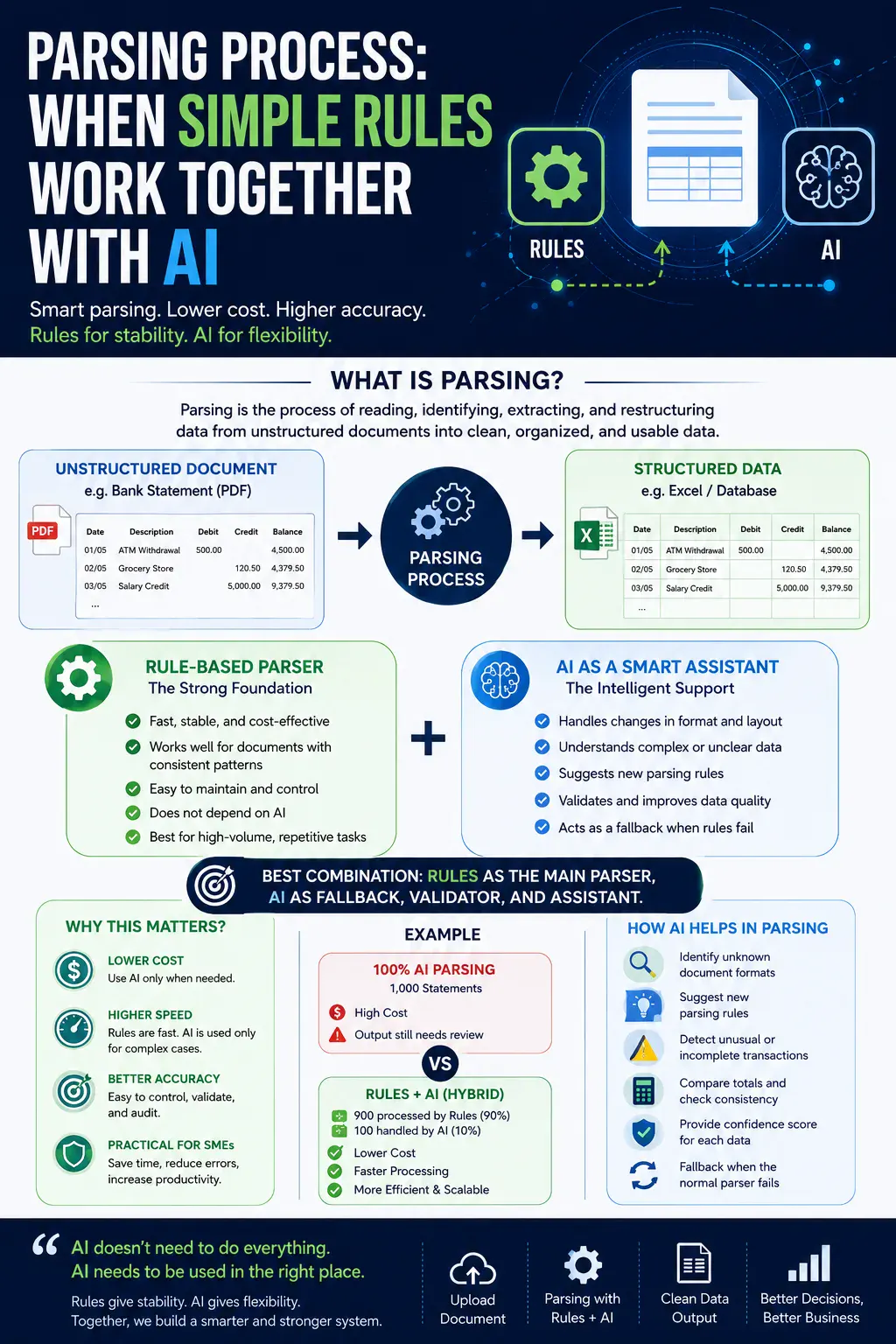
Unlike a lot of AI-first builds, we don't call a model on every page or every request.
At AINNA, AI earns its keep in planning, code generation, validation and exception paths. Once a workflow is proven in production, we freeze it into 分离式系统: PHP services, rule engines, databases, templates, caching and automation workers that run without hitting an LLM.
The objective is simple:
Use AI once. 再利用 the result thousands of times.
估算 成本 & 碳 对比 指标
传统 AI-首先
• Development cost: RM80,000–RM200,000
• Every similar project is largely rebuilt from scratch
• 基础设施 cost: 100% baseline
• AI API cost: 100% baseline
• 估算 website carbon footprint: ~360 kg CO₂e/year
AINNA 分离式 架构
• Incremental implementation cost: ~RM100*
• Similar future projects: ~10% of the original implementation effort
• 基础设施 cost: ~10–30%
• AI API cost: ~5–15%
• 估算 website carbon footprint: ~120 kg CO₂e/year
• 预计碳排放降低: ~240 kg CO₂e/year (≈66.7%)
* Assumes an existing cloud environment, reusable components and validated 分离式系统 are already available.
The biggest advantage isn't just a lower bill.
Once a 独立系统 has been built and validated, it becomes a reusable engineering asset. Instead of rebuilding the same logic for each 新 deployment, we configure and integrate existing components. Future projects ship with a fraction of the original effort, and we avoid unnecessary AI inference at runtime.
The future of AI won't go to the teams that consume the most compute.
It will go to the teams that know when a model 是必需的-and when deterministic code is enough.
构建 the intelligence once. Detach it. 再利用 it.
🌐 ainna.bond (英语)
🌐 neuralops.bond (Bahasa Melayu)
#AINNA #NeuralOps #ArtificialIntelligence #DetachedSystems #SmartRouting #自动化 #SoftwareArchitecture #GreenSoftware #CarbonFootprint #SustainableAI #CostOptimization #DigitalTransformation
Official Cross-Network Resource