In 企业 deployments, we still hear this assumption: if we just scale the model-more 参数, more data, more compute-hallucinations will eventually disappear. That misses how LLMs actually work. They are probabilistic 系统. Better training and bigger weights can push accuracy up, but the probability of a wrong, inconsistent, or ungrounded output never drops to zero. In production, you have to engineer for that non-zero risk, not wish it away.
So the better engineering question isn't "How do we eliminate hallucinations?" It's "Why are critical business processes wired directly to a stochastic output?" The real vulnerability usually isn't the model itself. It's the 系统 architecture that lets one probabilistic component analyse data, make decisions, grant approval, and trigger execution all in the same path, with no separation of control.
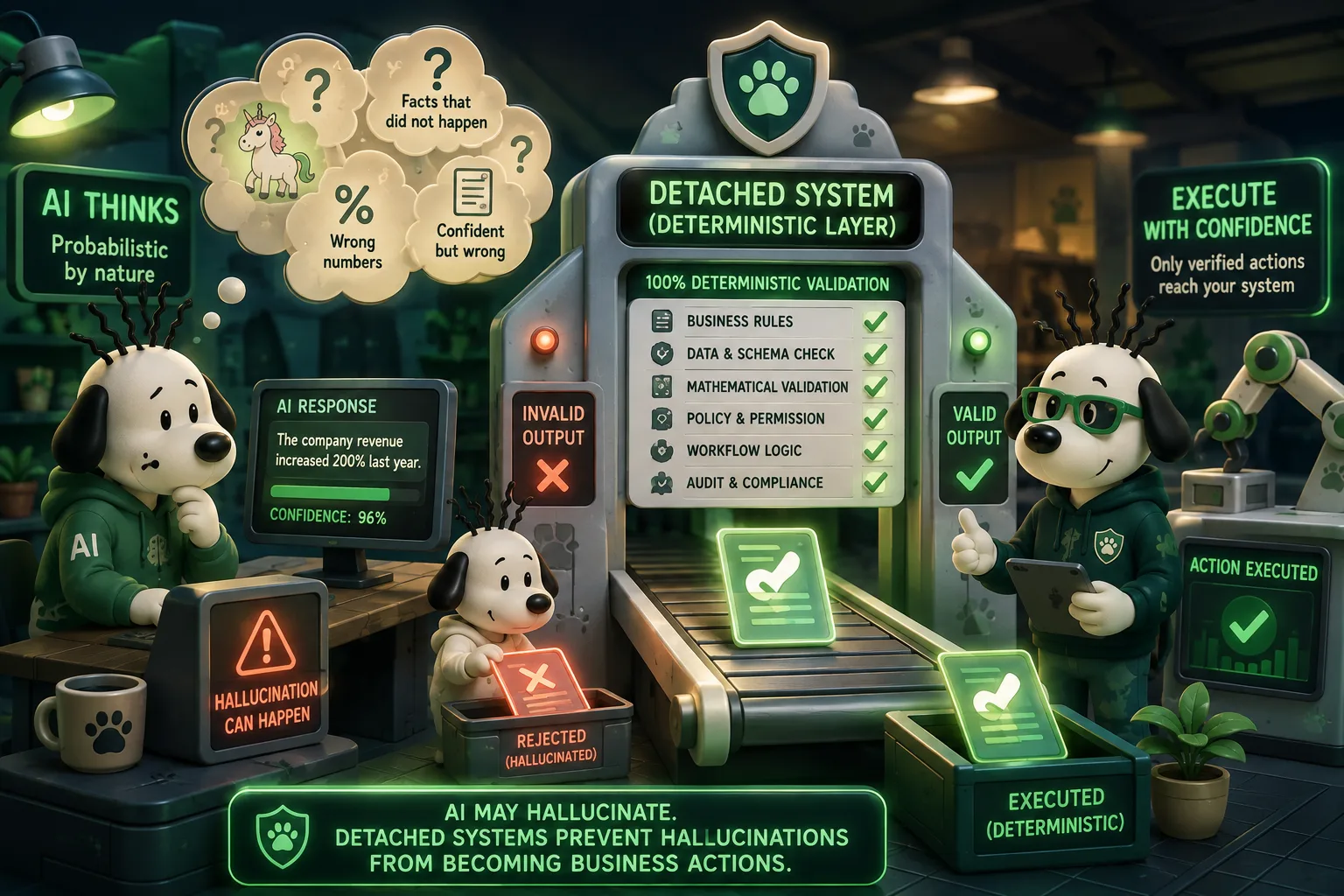
What we deploy in practice is a control boundary: a 100% deterministic 独立系统 that sits between AI reasoning and operational execution. The LLM is free to interpret data, surface patterns, draft recommendations, and suggest next steps. But it never touches the final business process directly. Its output is just another payload-an input that has to be validated before anything real happens downstream.
Before execution, the 独立系统 runs the proposed action through 确定性检查: business rules, schema integrity, math consistency, role-based permissions, security policy, workflow state, and audit requirements. If any 关卡 fails, the process is blocked or routed to a human operator. The model can still generate a bad recommendation, but that recommendation can't automatically turn into a journal entry, a shipment, a payment, or a configuration change.
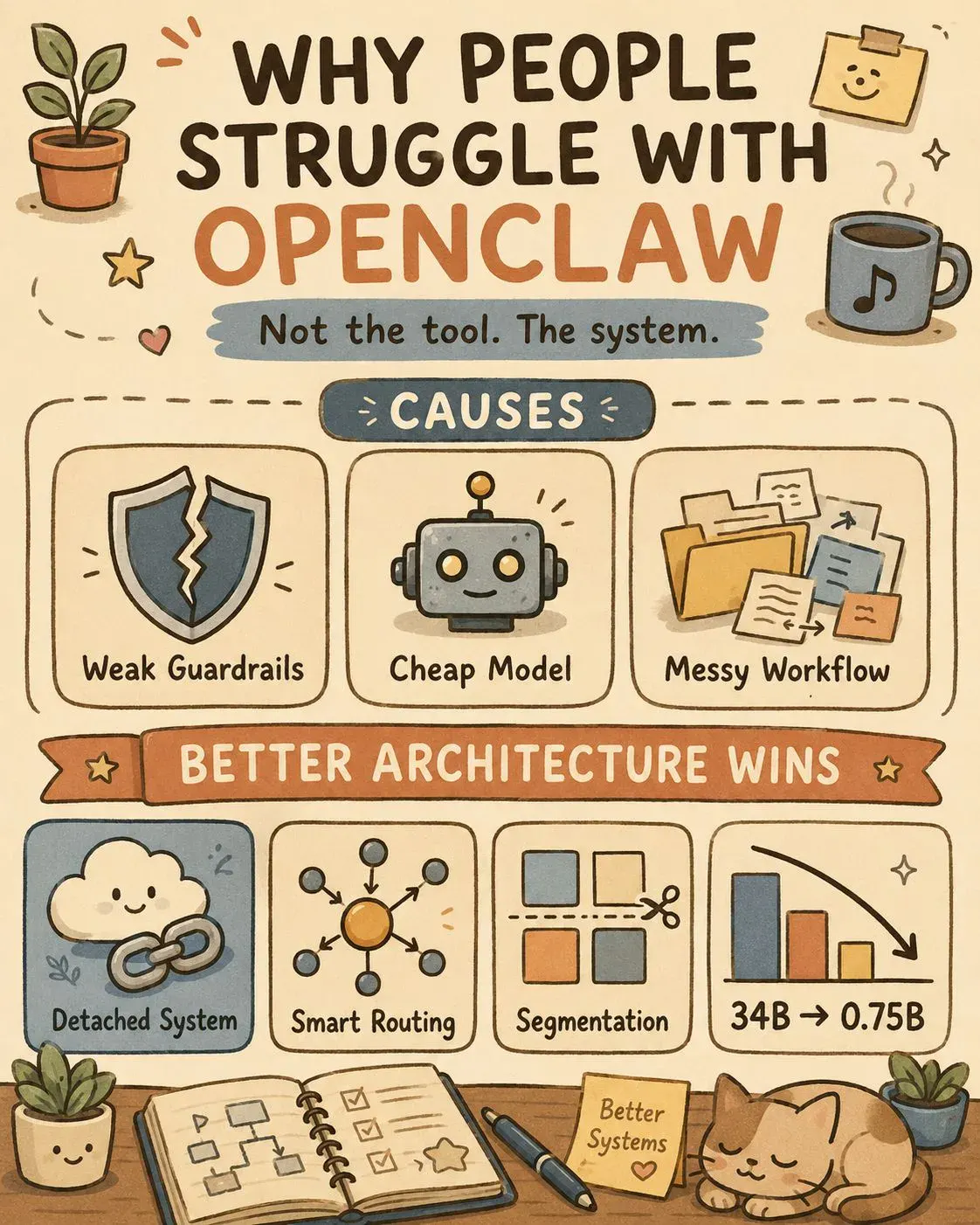
Trustworthy 企业 AI won't arrive when we finally build a hallucination-free LLM. It arrives when we build hallucination-safe 系统 architecture. By decoupling intelligence from execution, reasoning from validation, and recommendation from control, we get the flexibility of AI where it helps-while keeping probabilistic outputs out of critical paths where they can break things.