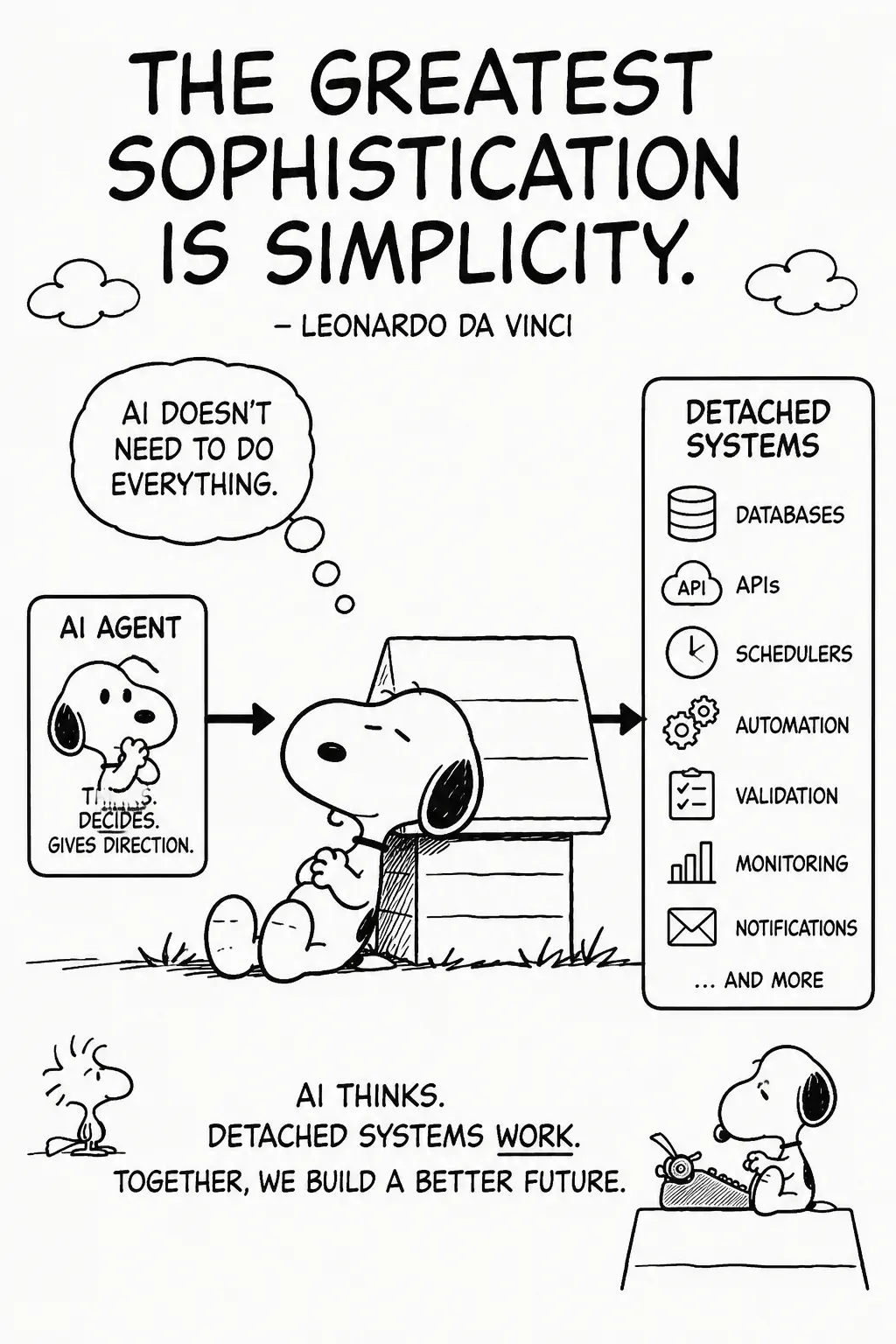
"The greatest sophistication is simplicity." This quote by Leonardo da Vinci feels even more relevant today as the world moves deeper into artificial intelligence. Many people believe the future depends on bigger AI models, more computing power, and more complex 系统. But in reality, the most powerful future may come from 系统 that are simpler, cleaner, and more efficient.
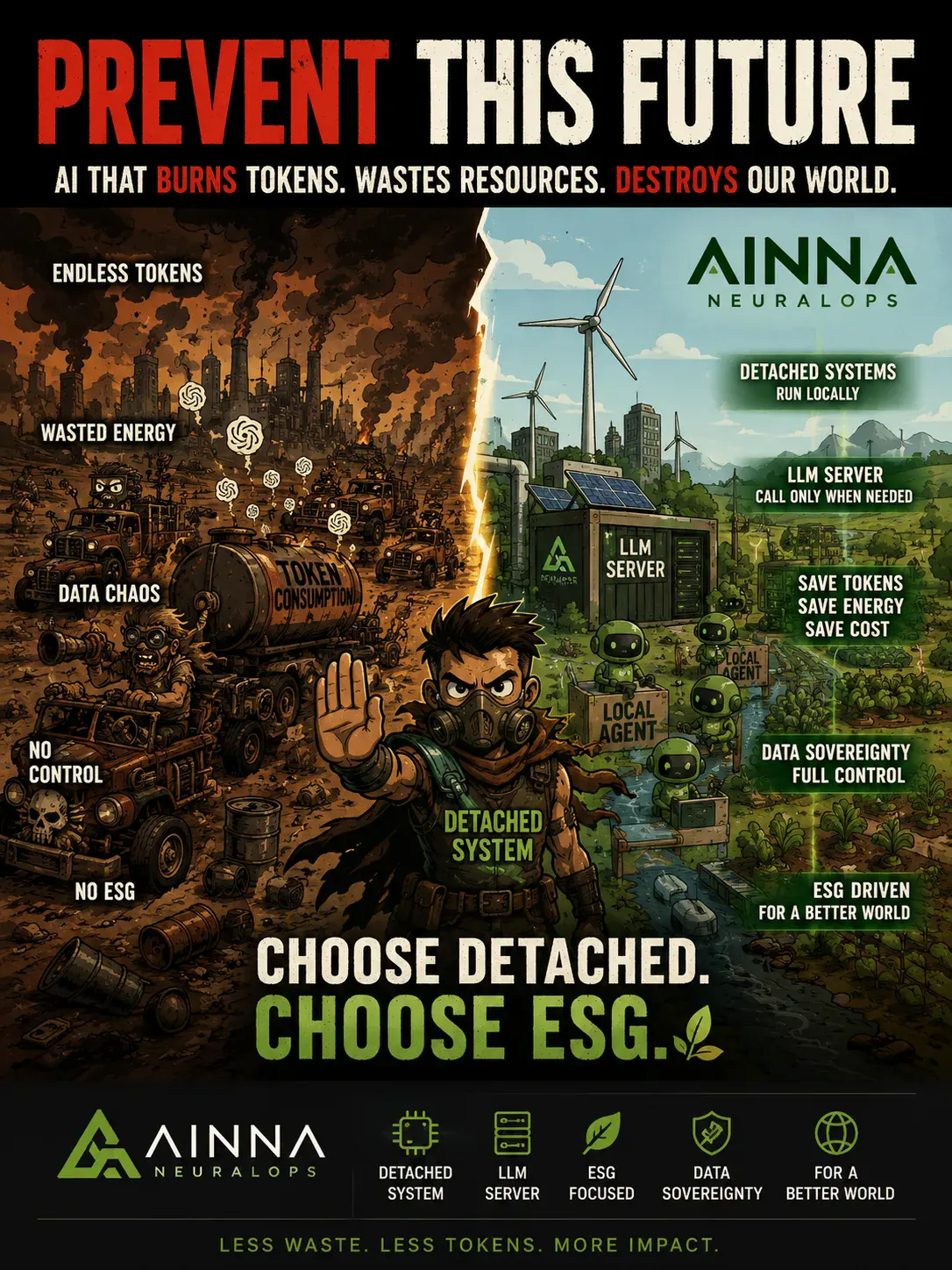
This is where the idea of a 独立系统 becomes important. A 独立系统 separates thinking from execution. The AI does not need to do every task by itself. Instead, AI makes decisions, gives direction, and handles reasoning, while normal 系统 such as databases, APIs, automation scripts, schedulers, and monitoring 工具 carry out the actual work.
At first, this sounds like a paradox. Why build powerful AI, then reduce the amount of work given to AI? The answer is simple: intelligence should be used where intelligence 是必需的. Repetitive tasks should not waste expensive AI resources. Just like a CEO should not spend the whole day packing parcels, AI should not be forced to handle every small operational task.
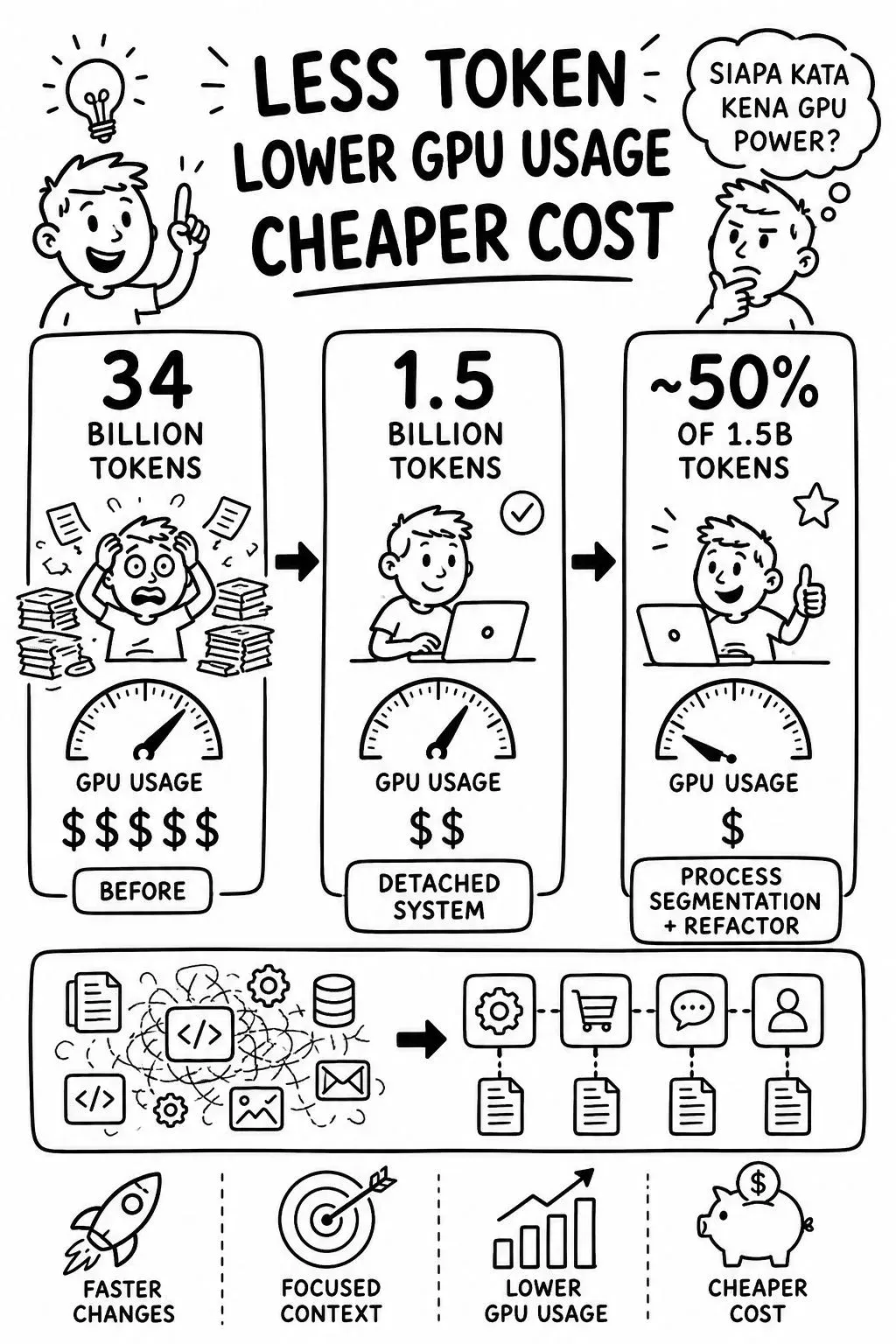
This approach can make the world better because it reduces cost, saves energy, and makes AI more accessible. 小 businesses do not need huge budgets or massive GPU infrastructure to benefit from AI. 采用 独立系统, they can use AI for planning, strategy, and decision-making, while lightweight 系统 handle daily operations.
It also makes technology more sustainable. Every unnecessary AI request consumes computing power and energy. If a simple 系统 can complete a task accurately, then using AI for that task is wasteful. 分离式系统 help ensure that AI is used only when it truly adds value.
In the future, the smartest companies may not be the ones using the most AI. They may be the ones that know how to use AI wisely. The real sophistication is not in making everything complex, but in designing simple 系统 that work beautifully. That is why 分离式系统 may become one of the most important ideas in building a better, smarter, and more sustainable world.