Many Malaysian 中小企业 are currently building their AI investment around one assumption:
Select the most powerful 大 语言 模型, connect it to company data, and deploy it across every process.
That may work for a pilot or proof of concept.
It is unlikely to deliver a positive return at operational scale.
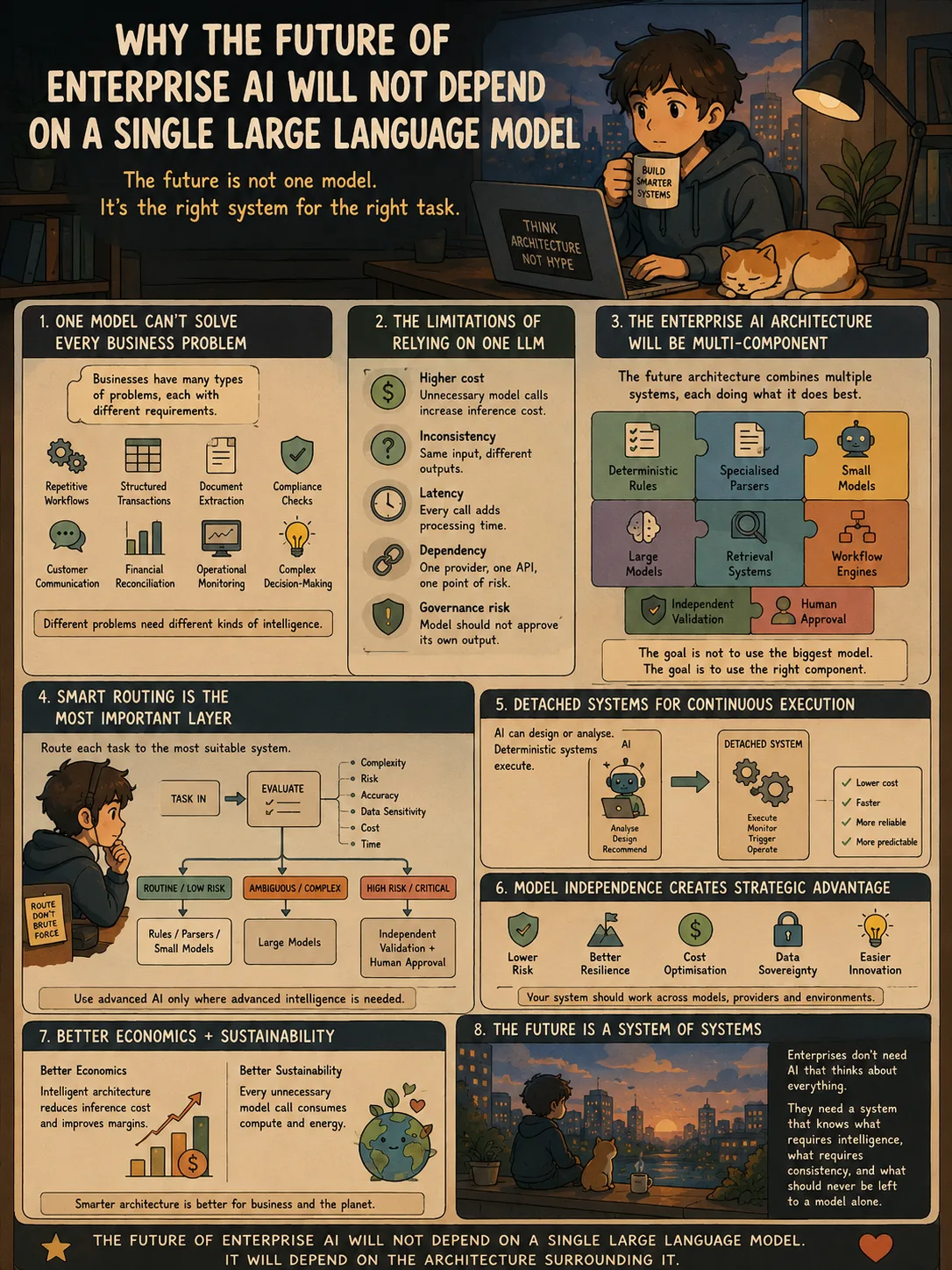
A 财务 and operations function does not have only one type of problem.
It has:
repetitive 工作流
structured transactions
invoice and receipt capture
compliance checks
customer communication
bank and GL reconciliation
operational monitoring
complex decision-making
Each task has different accuracy, speed, and cost requirements.
Some require advanced reasoning.
Others require speed, consistency, data privacy, deterministic accuracy, or very low 每项任务成本.
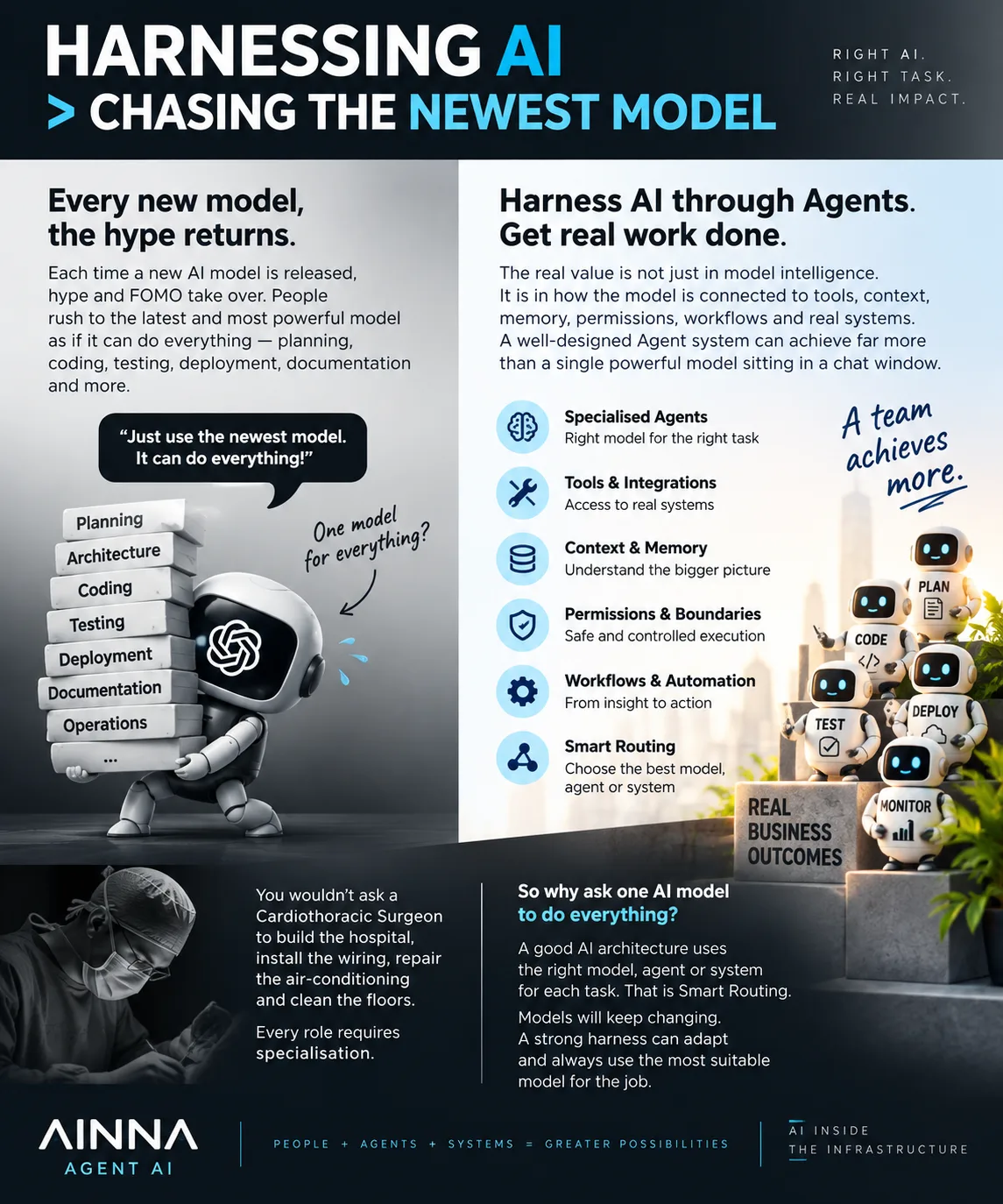
Many 财务 tasks do not require a 大 语言 模型 at all.
Using a large model to validate a posting date, check a closing balance, or extract a known field is often unnecessary. It increases cost, latency, and vendor dependency without creating proportional value.
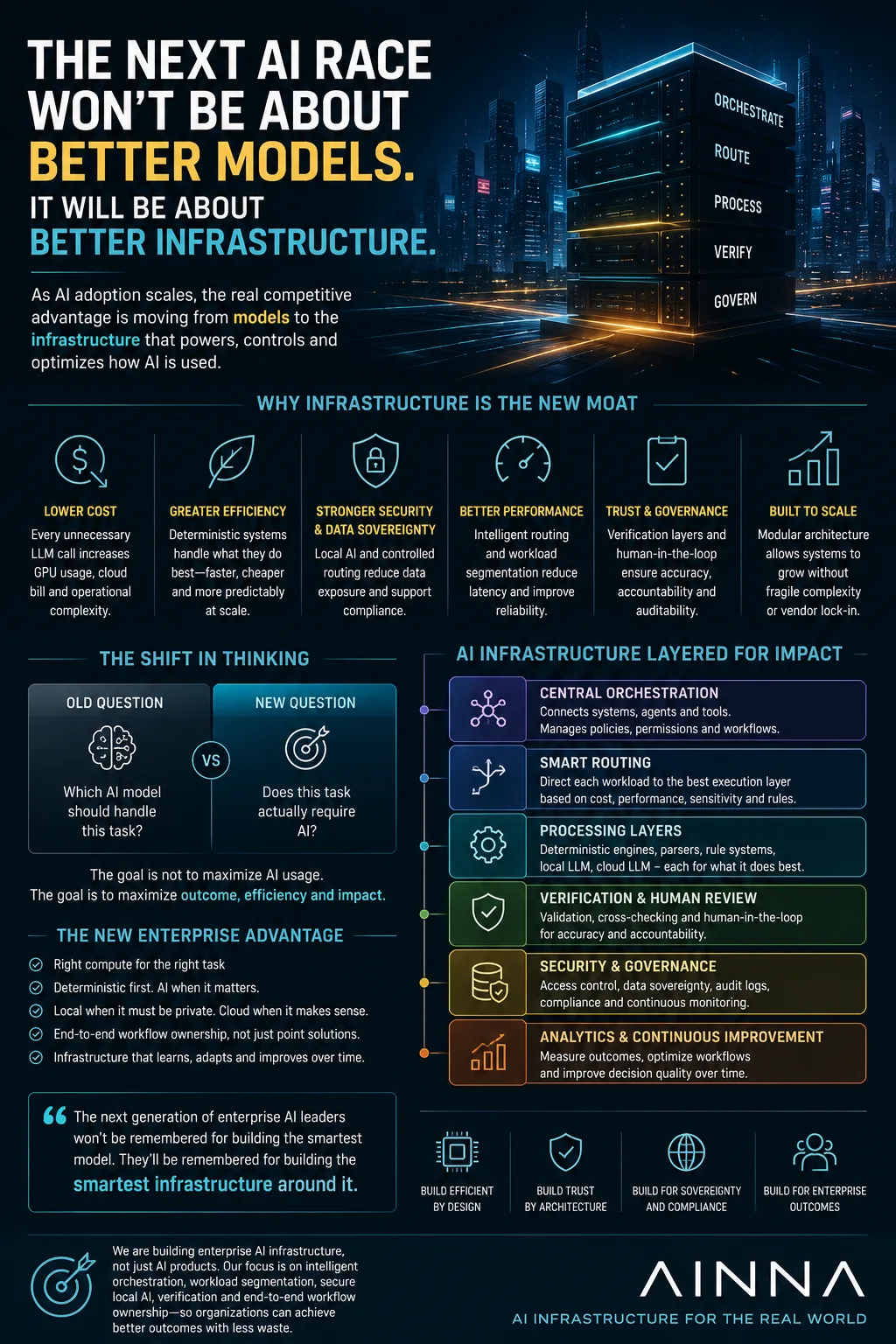
The stronger operating architecture for 财务 teams will combine multiple components:
deterministic business rules
specialised document parsers
小 语言 Models
大 语言 Models
retrieval 系统
workflow engines
independent validation
human approval
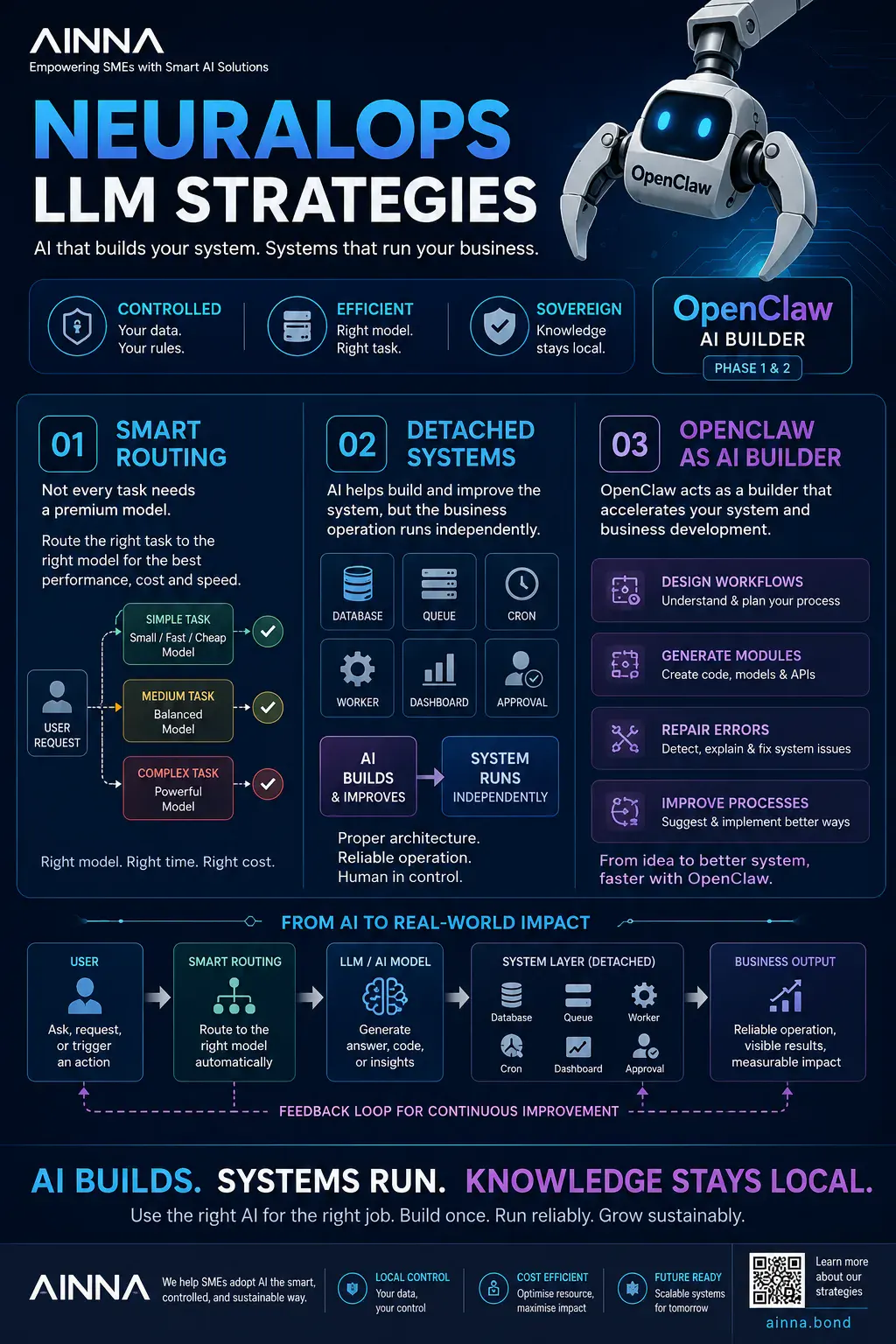
The critical layer will be 智能路由.
Before processing a task, the 系统 should evaluate its complexity, financial risk, required accuracy, data sensitivity, and unit cost.
常规 tasks can be handled by lightweight, low-cost 系统.
Ambiguous or complex tasks can be escalated to more capable models only when justified.
高-risk outputs should be validated independently before they hit the ledger or a customer record.
This leads to another important principle:
AI governance must exist outside the model.
A model should not generate, validate, and approve its own output without external controls.
财务 系统 need schema checks, reconciliation, permissions, audit logs, transaction limits, and escalation mechanisms.
There is also a growing role for 分离式系统.
AI can 设计, analyse, or modify a workflow, while deterministic software executes that workflow continuously without calling the model for every transaction.
This can reduce inference cost, improve reliability, and make monthly close, asset tracking, and compliance automation more predictable.
The future of 中小企业 财务 operations is therefore not one universal model controlling everything.
It is a coordinated 系统 of 系统.
大型模型s will remain important, but they will become one component inside a broader architecture of routing, validation, specialised processing, and independent execution.
The long-term winners may not be the companies using the most AI.
They may be the companies that allocate advanced AI only where advanced intelligence genuinely improves margins, controls, or decision quality.
#EnterpriseAI #AIInfrastructure #ArtificialIntelligence #LLM #AIAgents #自动化 #DigitalTransformation #SovereignAI #SmartRouting #TechStrategy














Ruang pembaca
Apa pendapat anda?
Komen baharu dihantar untuk semakan terlebih dahulu. 名称 dan email diperlukan, tetapi email tidak dipaparkan kepada pembaca.
如果有更多financial risk, required accuracy, data的数据和结果会更完整。
这段关于这篇文章的说明帮我把之前的问题连起来了。 读完之后还有一些疑问。
还在消化这个主题这一段。
我会把low-cost这一段分享给需要了解技术的同事。
如果可以继续说明asset tracking, and compliance automation的真实案例,我会想继续阅读。
同意作者对analyse, or modify a workflow的判断,但执行起来还有难度。
这篇文章把connect it to company data讲得比一般的AI介绍更具体。
文章对low-cost 系统.Ambiguous or complex tasks的结论比较平衡,不只是强调好处。