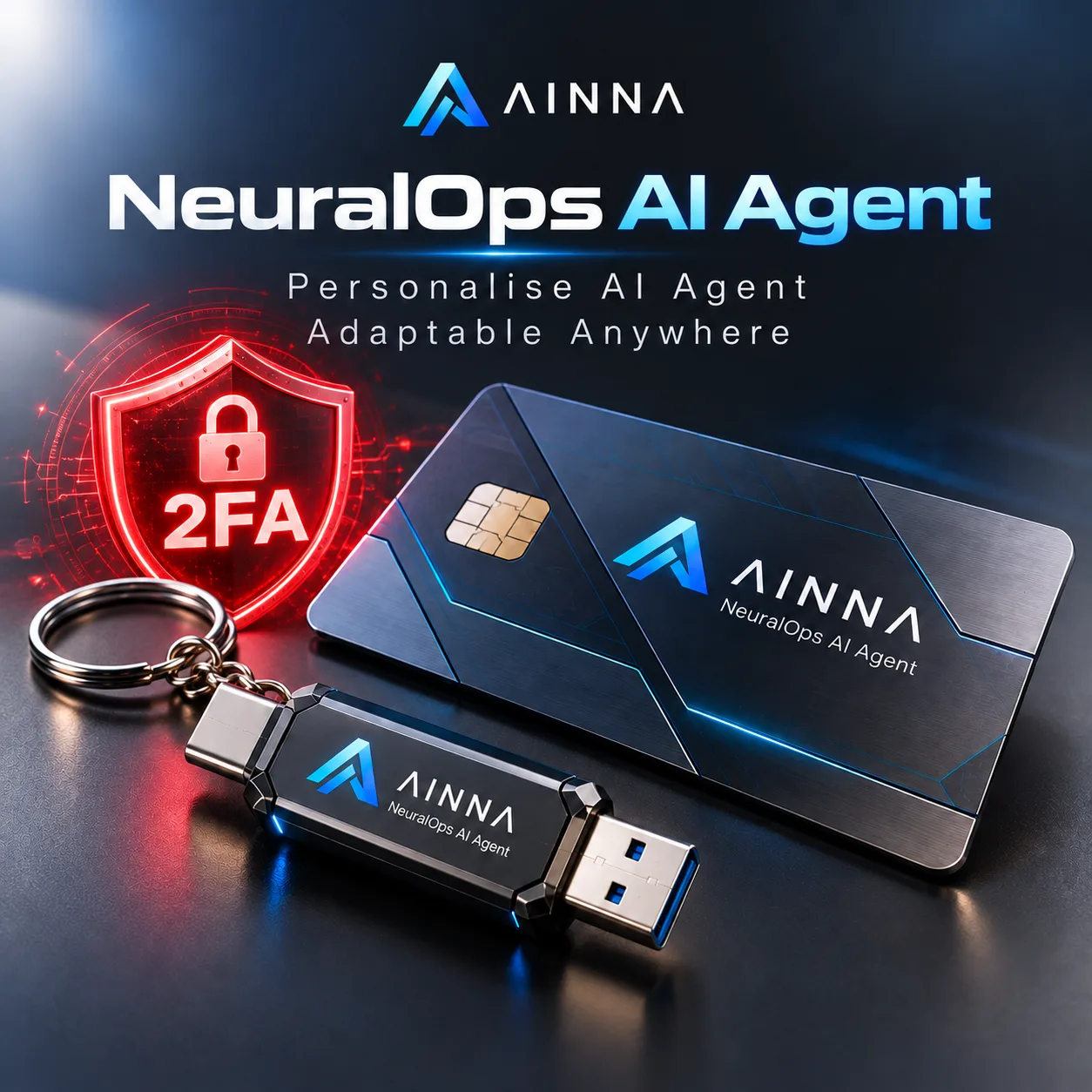
构建 an AI agent is one thing. Making it portable, secure, adaptable and usable across different machines is a different operational and financial control challenge.
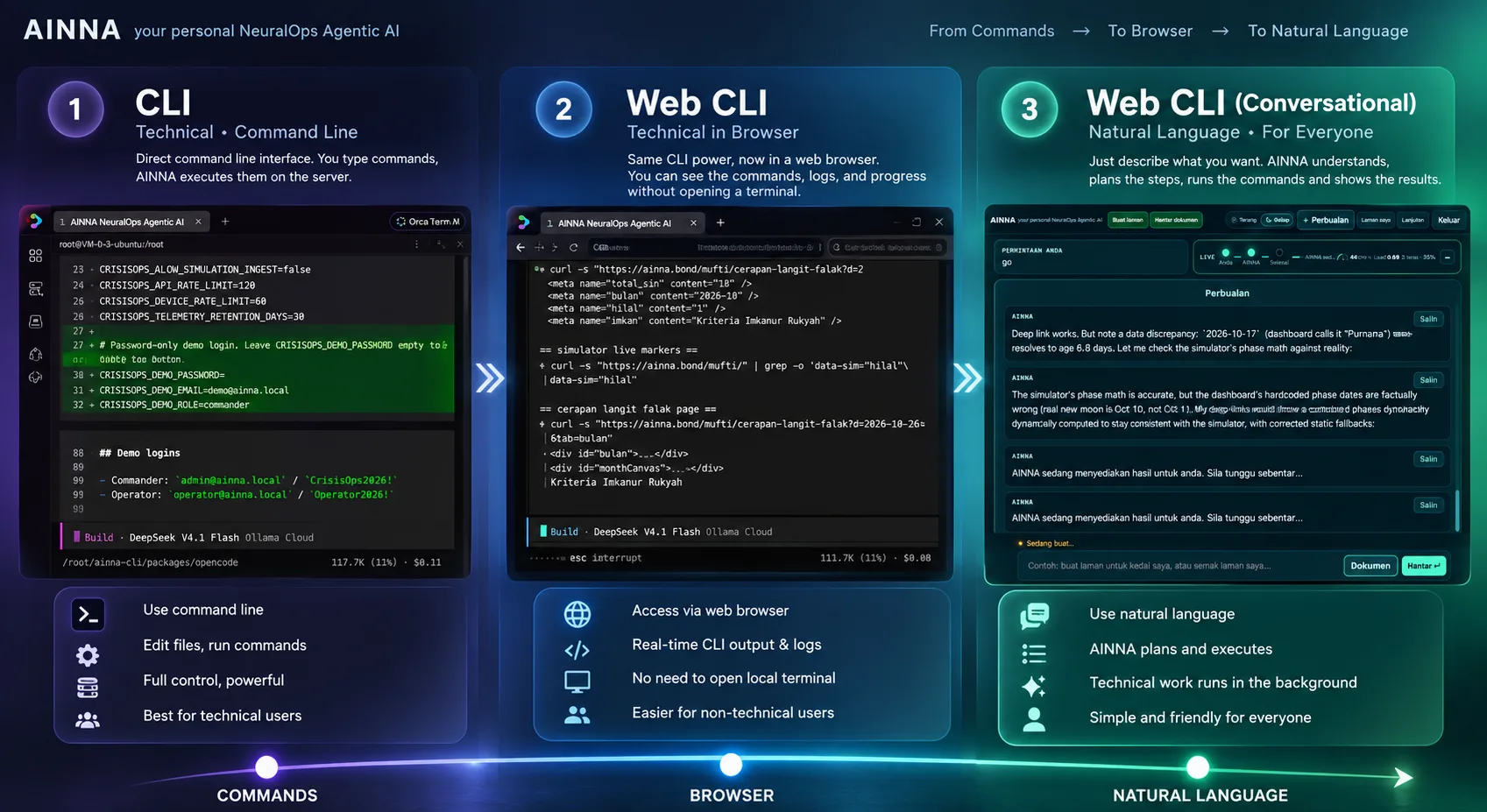
NeuralOps AINNA is moving in that direction. The web-based environment is already working, while the AINNA Stick / Chip is being developed as a portable intelligence layer that can carry identity, knowledge, permissions and an AI agent across compatible 系统. 从 an accounting and asset-management view, that means treating AI 能力 less like a fixed 系统 and more like a controlled, movable business asset.
The challenge is not just size. It involves hardware compatibility, local versus cloud inference, memory continuity, 系统 permissions and safe interaction with different devices. Each of those factors affects cost, risk exposure and auditability.
For security, AINNA has chosen a two-factor authentication approach. Possession of the stick or card alone should not be enough to access the personal AI environment. A second verification layer is required before sensitive identity, knowledge or permissions can be unlocked. That is a segregation-of-duties logic 已施加 to AI access: possession, permission and approval should not sit with one factor alone.
This becomes increasingly important when the same AI agent is expected to move between PCs, servers, embedded 系统 and, eventually, compatible machinery. The more places an agent can operate, the more carefully its access rights, change 历史 and value contribution must be 已跟踪.
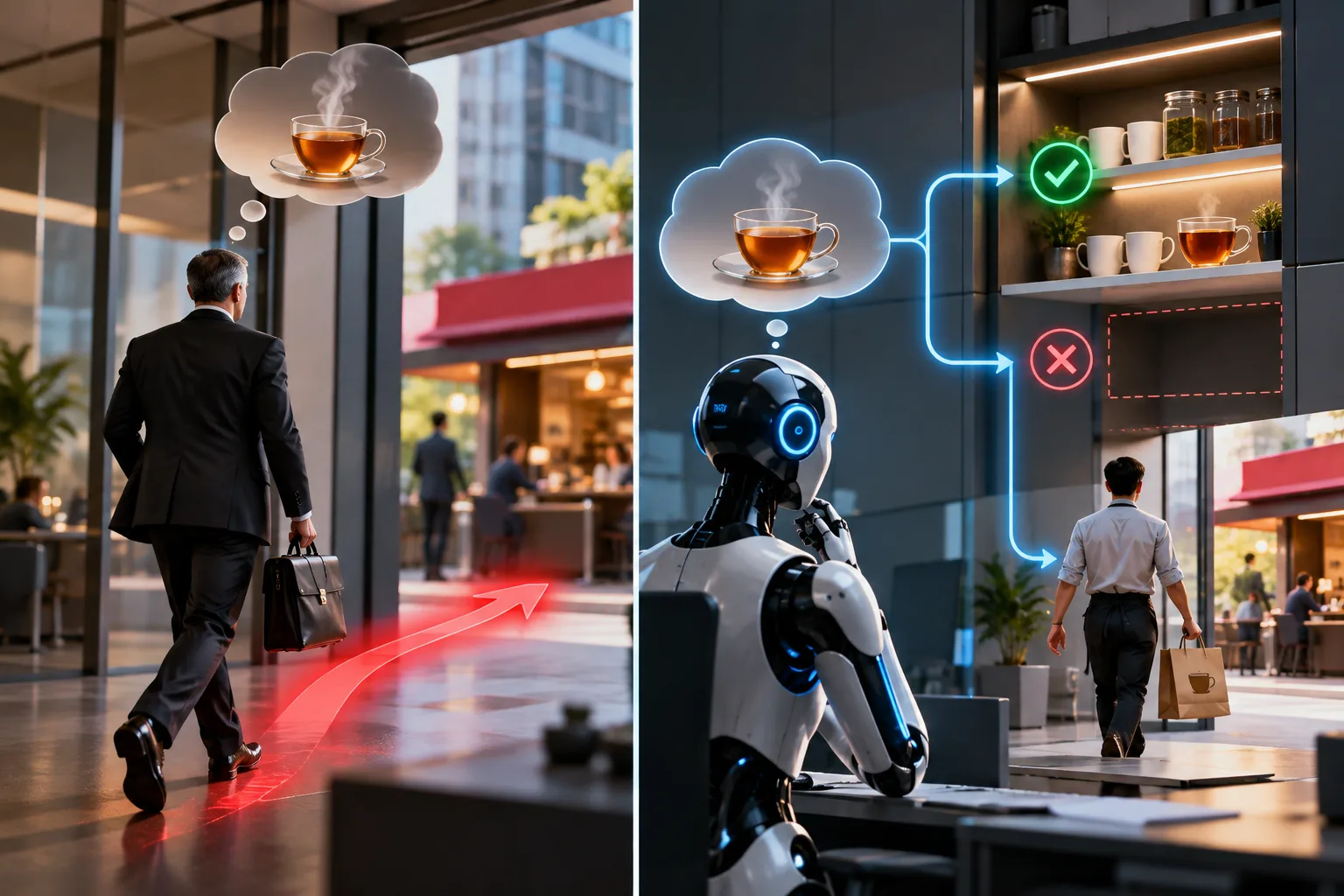
AINNA's long-term direction is hybrid: use local intelligence, rules and specialised components whenever possible, and only escalate to larger models or cloud compute when necessary. For a 马来西亚n 中小企业, that hybrid model is also a cost-control model-it helps avoid paying for cloud compute where local logic is sufficient.
AINNA Stick is currently around 90% of the present development target. Once sufficiently validated, AINNA also intends to pursue formal technology validation, including a future TRL9 assessment with MOSTI. That milestone matters financially because validated technology is easier to budget for, deploy and defend in an investment or procurement decision.
The future of personal AI is not simply about making models smaller or reducing the compute bill.
It is about making intelligence portable, trusted and adaptable enough to move with its owner-and, from a 财务 and accounting standpoint, accountable enough to be measured, 受治理的 and valued.














Ruang pembaca
Apa pendapat anda?
Komen disemak sebelum diterbitkan. 电子邮件 diperlukan untuk moderasi dan tidak dipaparkan kepada pembaca.
如果可以继续说明once sufficiently va 90%的真实案例,我会想继续阅读。
这篇文章对possession of the stick的解释很清楚,实际操作的重点也很容易理解。
关于系统 permissions and safe interaction的说明很完整,基础部分尤其清楚。