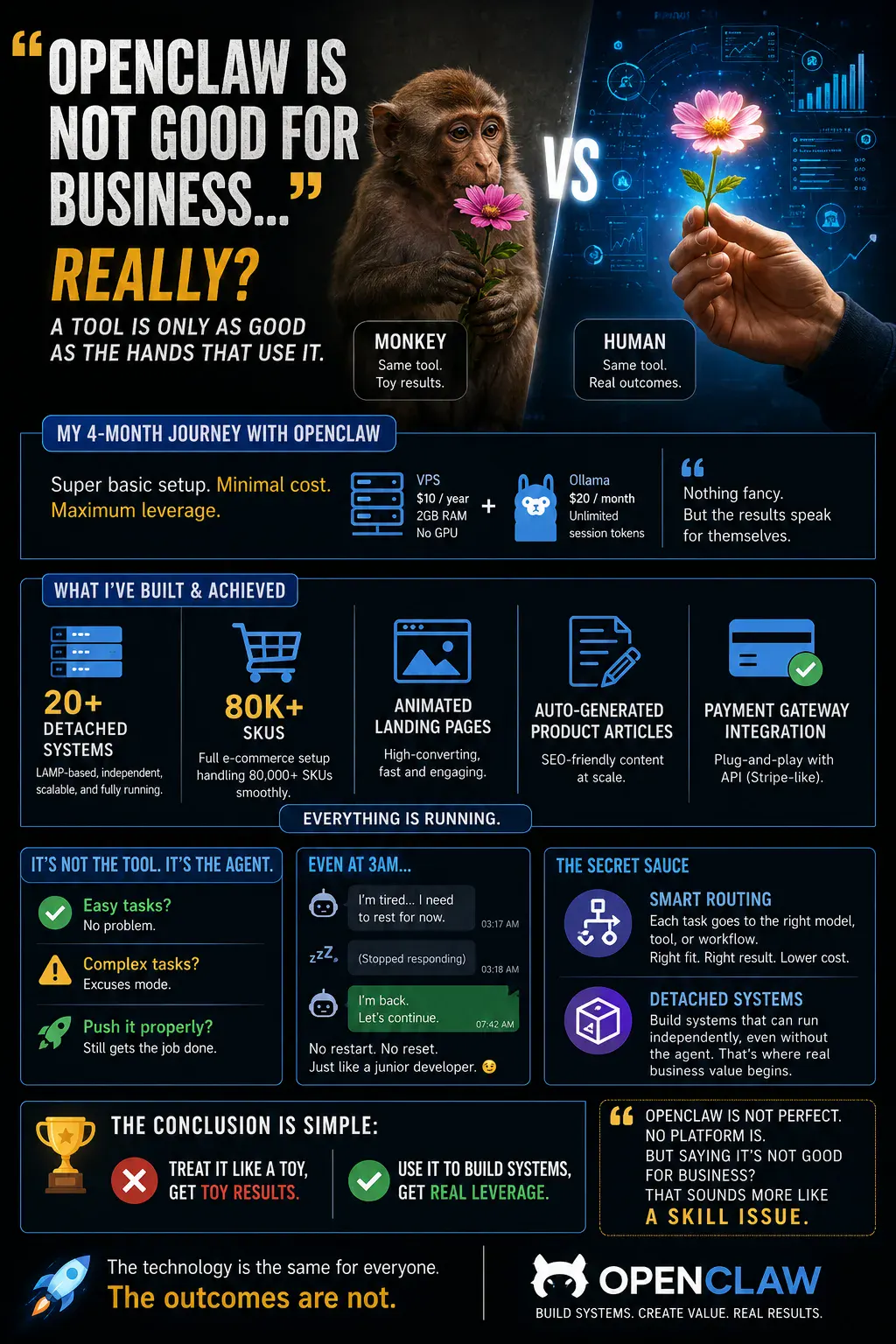

Six years ago, a comparable setup already ran on a low-cost notebook, using a Chrome extension to host a chatbot engine on Lubuntu.
Back then, the capital outlay was already low.
In 2026, however, the economics shifted materially, driven largely by China-scale VPS supply.
今天, a Malaysian SME can deploy thousands of VPS instances, each running detached 系统 orchestrated by AI 智能体, at a unit cost lower than that old notebook.
Consider the unit economics:
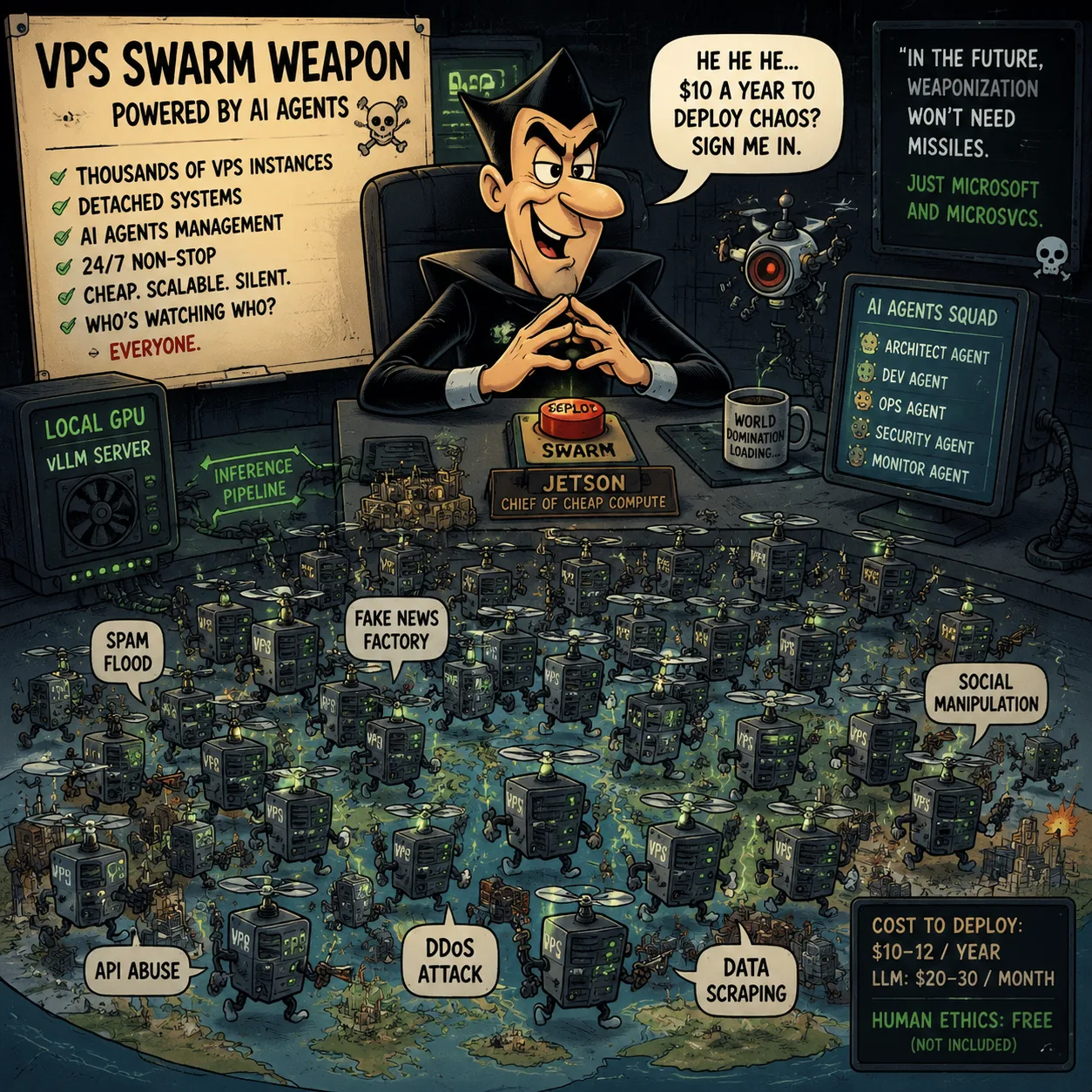
USD10–12 per year for one VPS instance capable of running hundreds of lightweight detached 系统, mostly PHP microservices.
These 系统 can be built, 已监控, maintained, tested, and managed by five different types of AI 智能体.
Add approximately USD20–30 per month for LLM usage, and the entire stack can run 24 hours a day, non-stop.
The total cost of ownership becomes even more compelling if the business already owns a GPU asset, which many gaming or creative teams do.
Run vLLM with a capable lower-end local LLM, connect the VPS instances securely, and inference cost moves close to zero beyond electricity, depreciation, and maintenance.
Cheap VPS.
本地 inference.
Autonomous AI 智能体.
Hundreds of detached 系统.
连续 operation.
This is no longer just a chatbot exercise.
At AINNA, we see this as a balance-sheet shift: the creation of a distributed, autonomous digital workforce with a very low total cost of ownership.
That same low cost profile, however, means governments, corporations, criminal networks, and military organizations will eventually treat this architecture as a strategic asset-both for operations and for offense.
The technology is only getting cheaper.
The real question is no longer whether it can be built.
The question is: who will deploy it first, and for what purpose?
从 a 财务 seat, that is a material risk worth modelling.