Most organisations I work with are deploying AI to increase productivity.
But there is an engineering problem we rarely talk about:
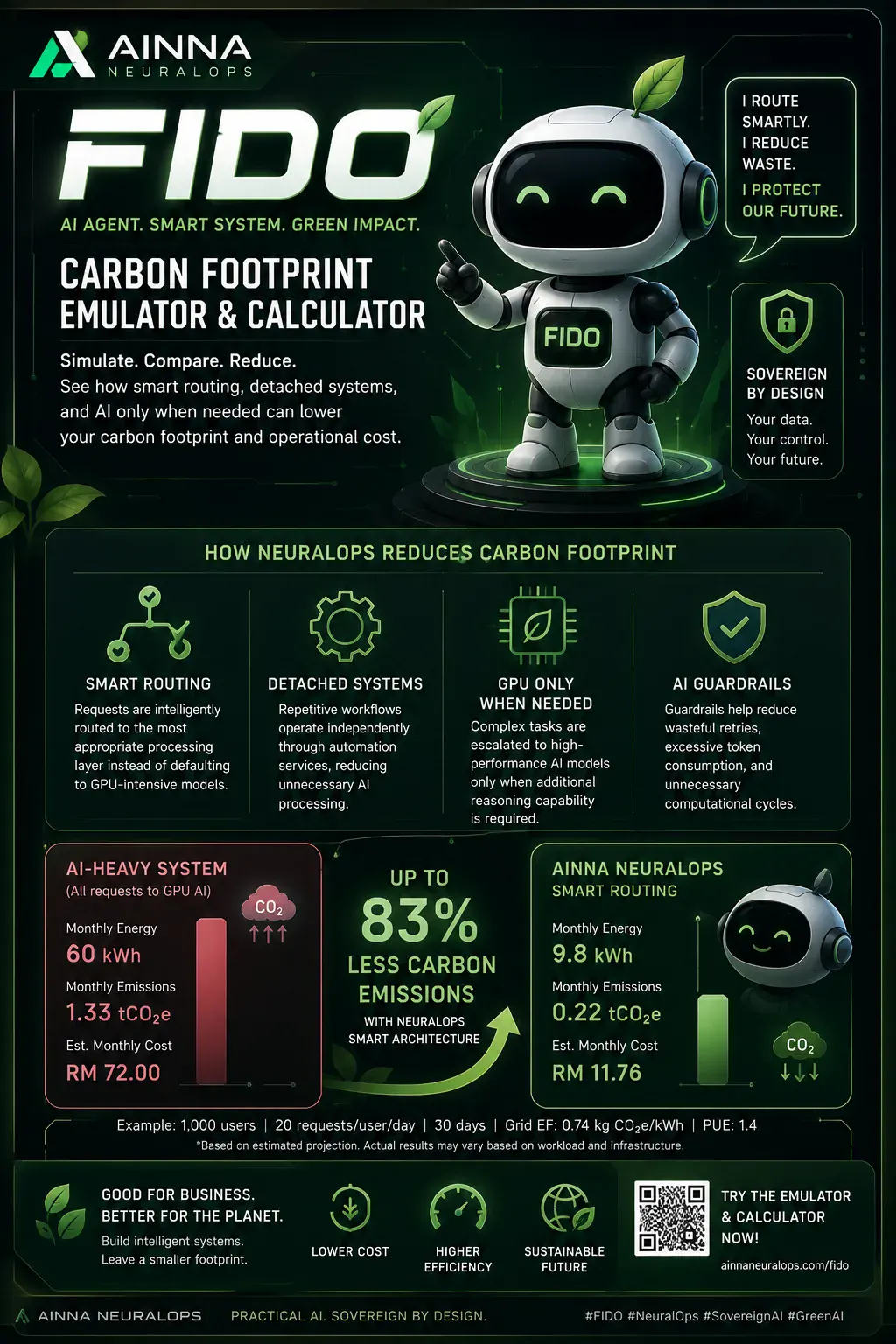
The more AI we push into production, the more GPU cycles, energy, 令牌, and infrastructure we consume.
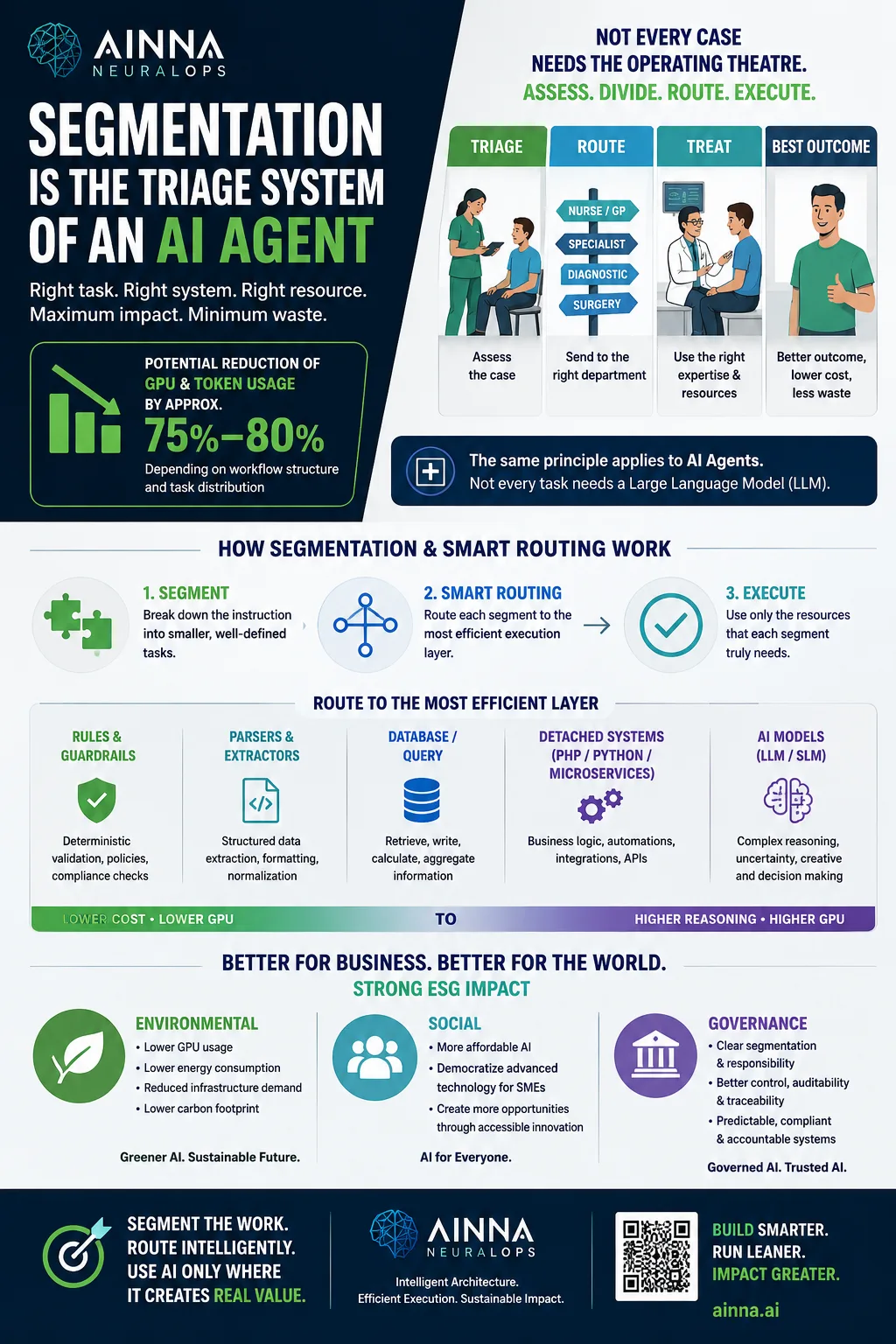
At AINNA, I see routine business tasks being sent to large language models even when they do not need advanced reasoning. That inflates operating costs, wastes processing capacity, and adds unnecessary environmental load.
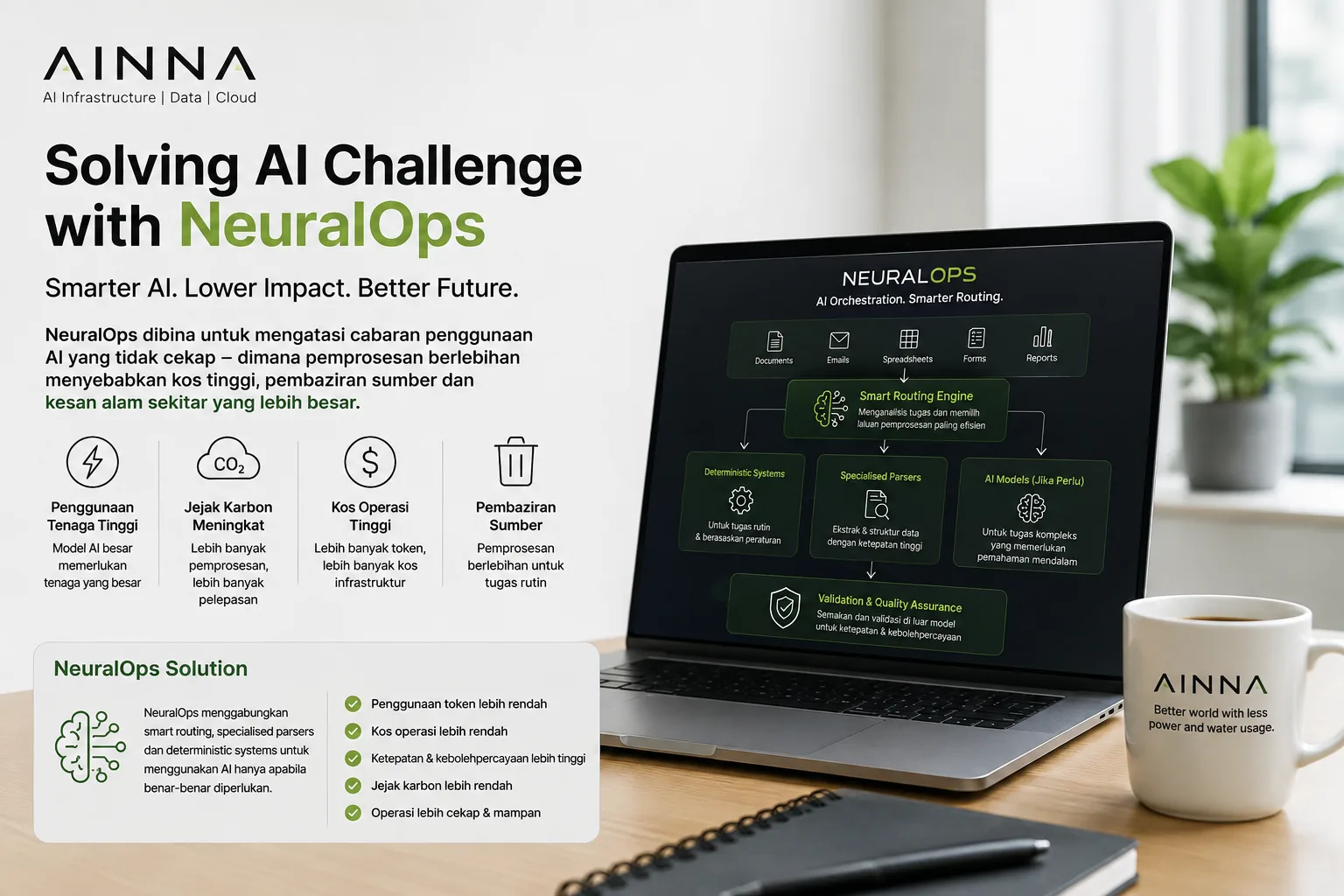
That is exactly the problem NeuralOps was built to solve.
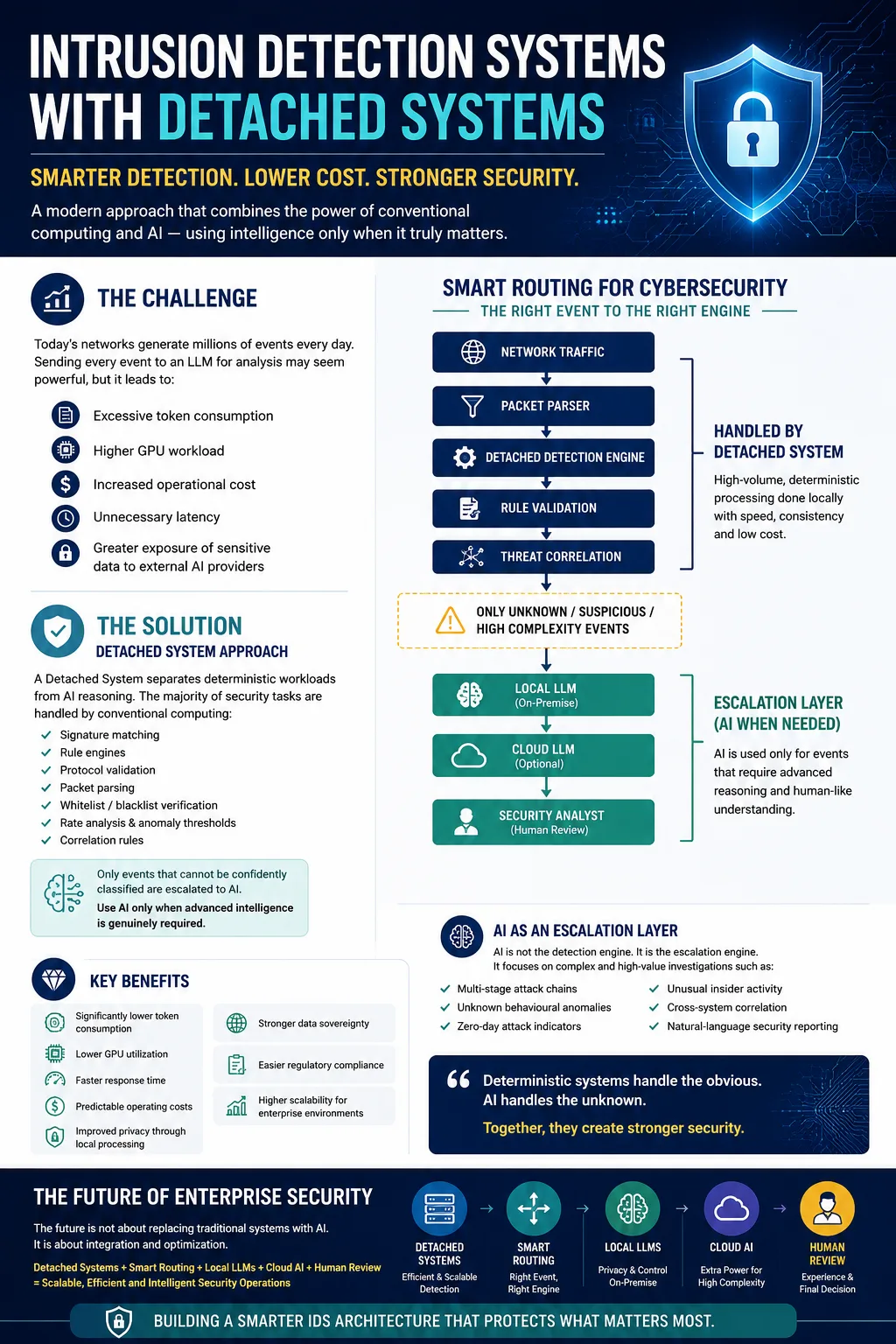
NeuralOps combines model routing, specialised parsers, workflow automation, and deterministic detached 系统. It classifies each task and sends it to the right engine: LLMs where reasoning is required, conventional software where it is not.
In production, we apply it to document extraction, financial data processing, validation, reconciliation, reporting, and business analysis.
The result is a leaner digital architecture:
• 更低 token consumption
• Reduced compute demand
• 更低 operating costs
• 已改进 accuracy and validation
• More scalable and sustainable AI adoption
The engineering principle is simple:
仅在确实需要高级智能时才使用高级 AI。
可持续 AI is not only about using smaller models.
It is about designing tighter 系统.
#NeuralOps #ArtificialIntelligence #SustainableAI #GreenTechnology #自动化 #DigitalTransformation #ESG #DataSovereignty #AINNA