An AI 驱动 网站 Shouldn't 保留 the LLM Awake for Every 请求.
A common myth I run into when deploying AI 系统: if a site is “AI-powered,” the LLM has to handle every click, search, recommendation, and transaction.
That is expensive, slow, and operationally unnecessary.
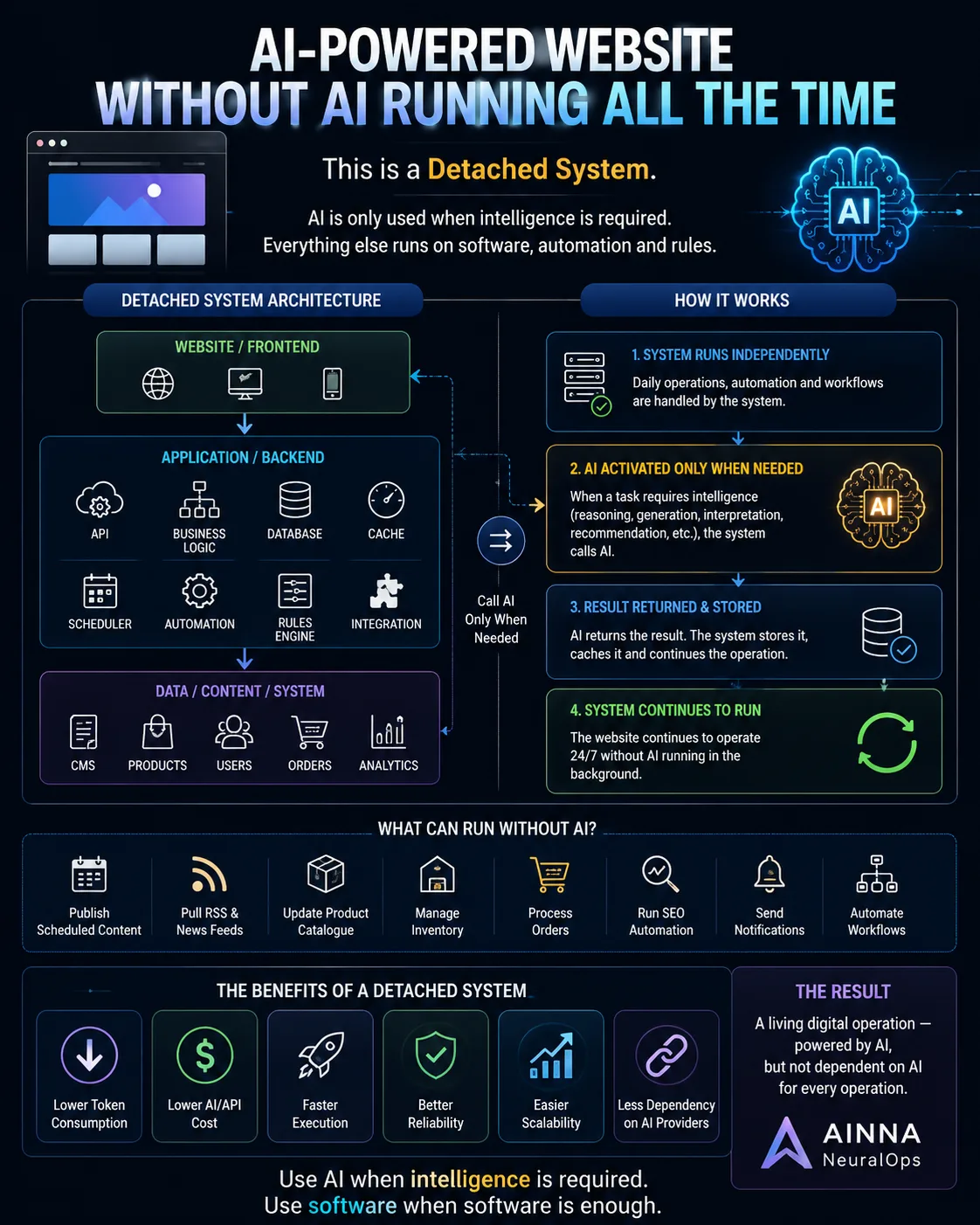
With the right 系统 architecture, the neural layer is only invoked when the workload actually needs reasoning or generation.
Everything else should run on the conventional stack:
Database + 规则引擎 + Scheduler + API + Cache + 自动化
That is the 独立系统 model.
It separates repetitive, predictable, structured workloads from the LLM.
Instead of routing everything through the model, ordinary software executes the routine tasks:
• publishing scheduled content
• ingesting RSS feeds
• refreshing product catalogues
• syncing inventory
• processing orders
• automating SEO metadata
• dispatching notifications
• running recurring 工作流
The LLM is only called when the task genuinely needs reasoning, interpretation, generation, or contextual decision-making.
In plain engineering terms:
The intelligence layer does not need to stay awake 24/7.
The 独立系统 keeps the digital operation running independently, while AI acts as an on-demand intelligence layer.
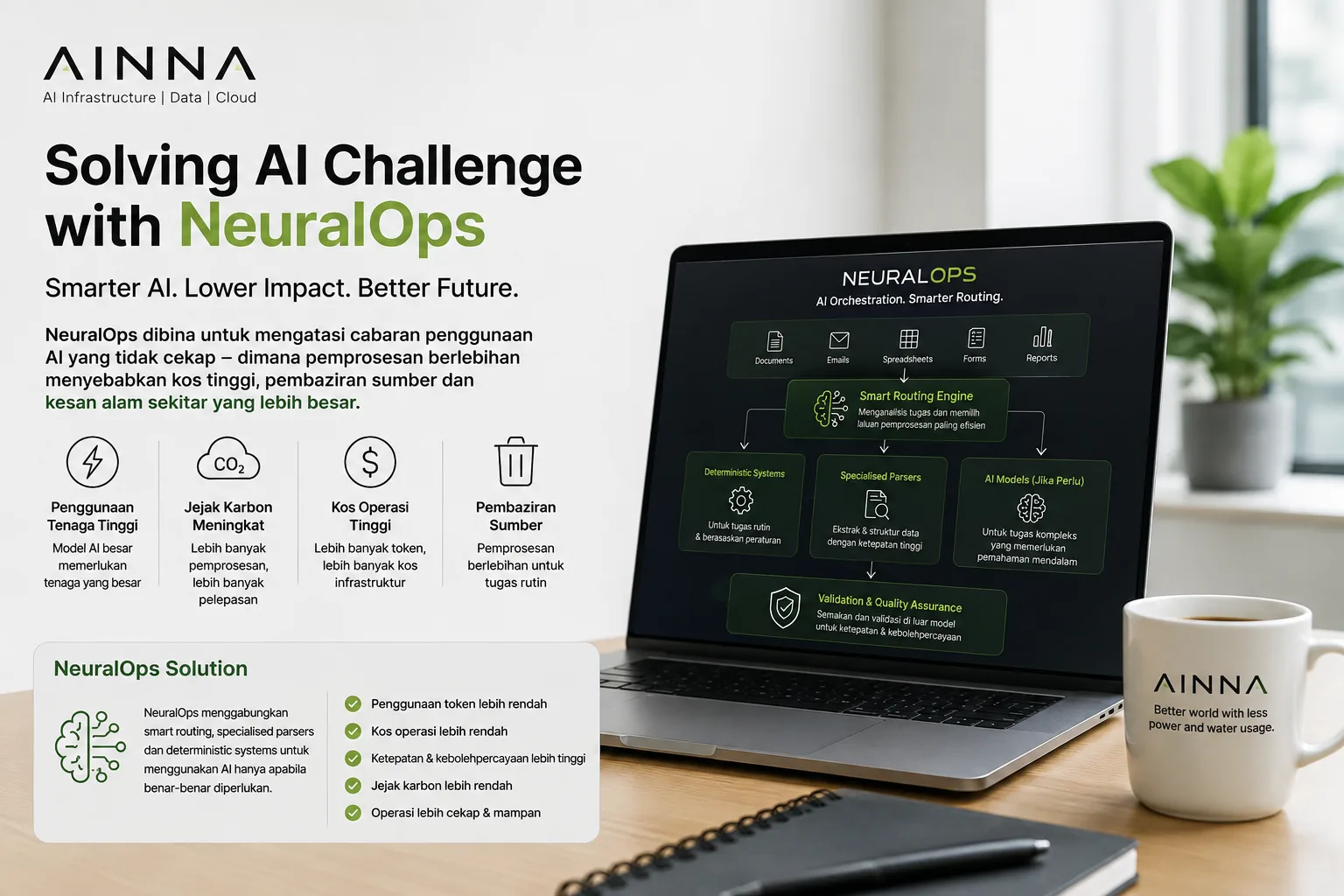
This is one of the core principles we engineer into AINNA NeuralOps:
Call the model when intelligence is required.
Run software when software is enough.
The operational result:
✅ 更低 token burn
✅ Reduced AI/API cost
✅ 更快的执行
✅ Better reliability
✅ Easier scaling
✅ Less dependency on external AI providers
A site built this way stops being a static front-end.
It becomes a living digital operation - AI-enabled, but not dependent on AI for every operation.
That is the role of the 独立系统 in production.
#ArtificialIntelligence #AI #自动化 #NeuralOps #DetachedSystem #DigitalTransformation #WebDevelopment #BusinessAutomation #AIAgents