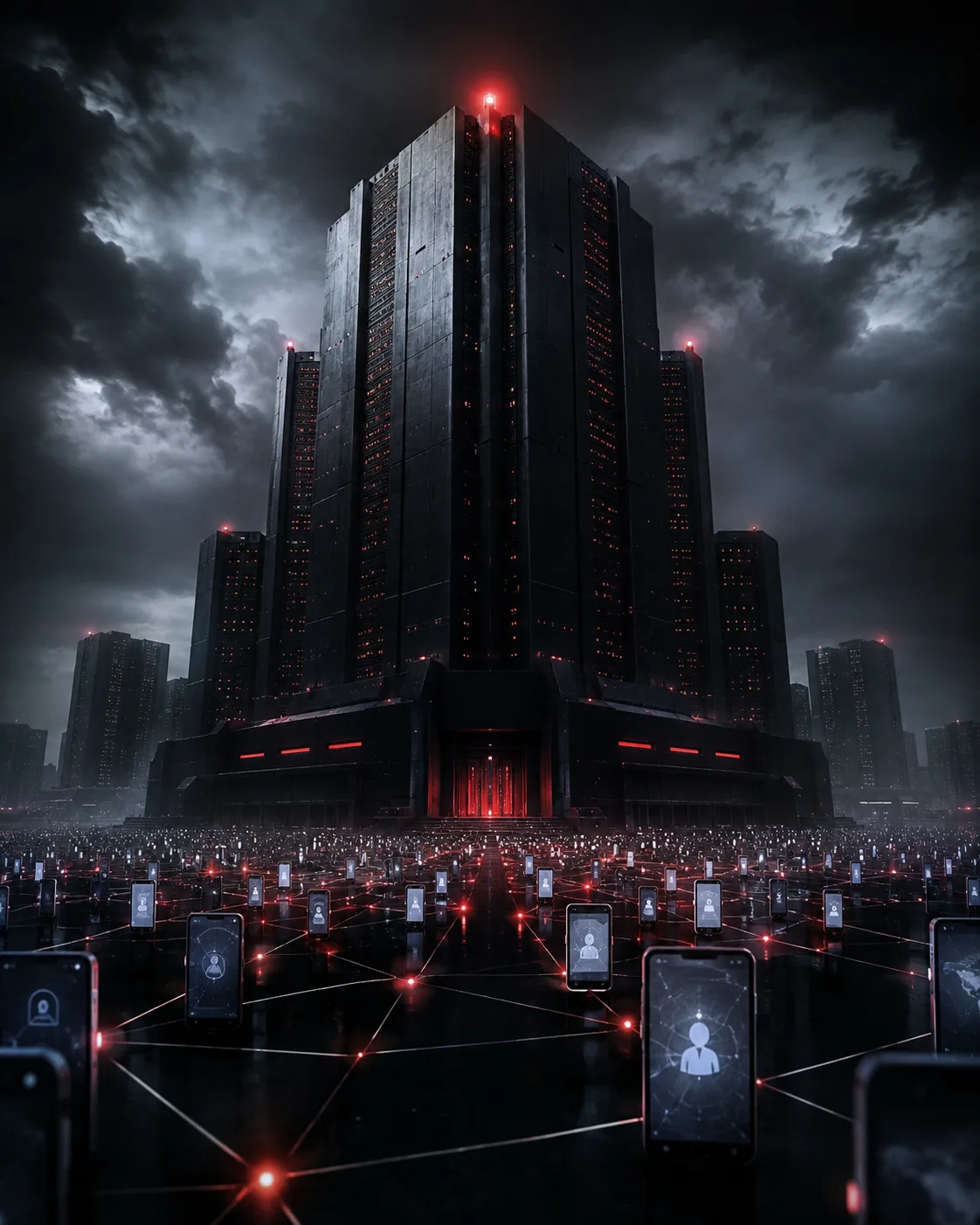
By 2039, we may be running less of the world's compute workload out of centralized data centres. Instead, billions of smartphones could act as nodes in a distributed compute and storage fabric.
There are roughly 10 billion smartphones in the field, with an average usable capacity heading toward 4 TB. The raw storage pool is on the order of 40 ZB. If even 20% of that capacity is made available through secure, consent-based participation, you are looking at about 8 ZB of distributed storage-without pouring concrete for an equivalent centralized build-out.
These devices are not just storage bins. They already ship with capable CPUs, GPUs, NPUs, large RAM footprints, and local LLMs that run on-device. That 空闲 capacity can be repurposed for:
• Distributed object and file storage
• Containerized compute workloads
• 本地 and federated AI inference
• 已加密 backup and recovery services
• 边缘 routing, caching and service delivery
The architecture we are building toward shifts from the classic star topology:
*Device → 数据 中心 → Device*
to a mesh-plus-core topology:
*Device ↔ Device ↔ 边缘 ↔ 数据 中心*
数据 centres do not go away. Their job changes: orchestration, high-throughput training, cold storage, policy enforcement, and resilience fallback. They become the control plane and backplane rather than the only plane.
从 an ESG and engineering standpoint, the model is interesting because it increases hardware utilization, keeps processing close to the data source, cuts unnecessary wide-area transfers, and reduces demand for 新 concrete-and-steel capacity.
That said, the hard problems are real: secure identity and attestation, device trust boundaries, erasure coding and replication, dynamic routing, battery and thermal protection, bandwidth metering, and energy-aware scheduling. These are integration problems, not just algorithmic ones.
At AINNA, through *AINNA NeuralOps, we are building the operating layer that lets billions of devices cooperate as a 全球 Distributed 智能 基础设施*. That means mesh networking, device lifecycle management, policy-driven resource sharing, and fault tolerance at scale.
The question we are trying to answer is less about capacity planning and more about coordination:
*“How efficiently can billions of devices work together?”*
And the real engineering follow-up: how do we keep that fabric secure, available, and maintainable over time?
#AINNA #NeuralOps #P2P #DistributedComputing #EdgeAI #AIInfrastructure #ESG #GreenComputing #DecentralizedComputing #ArtificialIntelligence
There are roughly 10 billion smartphones in the field, with an average usable capacity heading toward 4 TB. The raw storage pool is on the order of 40 ZB. If even 20% of that capacity is made available through secure, consent-based participation, you are looking at about 8 ZB of distributed storage-without pouring concrete for an equivalent centralized build-out.
These devices are not just storage bins. They already ship with capable CPUs, GPUs, NPUs, large RAM footprints, and local LLMs that run on-device. That 空闲 capacity can be repurposed for:
• Distributed object and file storage
• Containerized compute workloads
• 本地 and federated AI inference
• 已加密 backup and recovery services
• 边缘 routing, caching and service delivery
The architecture we are building toward shifts from the classic star topology:
*Device → 数据 中心 → Device*
to a mesh-plus-core topology:
*Device ↔ Device ↔ 边缘 ↔ 数据 中心*
数据 centres do not go away. Their job changes: orchestration, high-throughput training, cold storage, policy enforcement, and resilience fallback. They become the control plane and backplane rather than the only plane.
从 an ESG and engineering standpoint, the model is interesting because it increases hardware utilization, keeps processing close to the data source, cuts unnecessary wide-area transfers, and reduces demand for 新 concrete-and-steel capacity.
That said, the hard problems are real: secure identity and attestation, device trust boundaries, erasure coding and replication, dynamic routing, battery and thermal protection, bandwidth metering, and energy-aware scheduling. These are integration problems, not just algorithmic ones.
At AINNA, through *AINNA NeuralOps, we are building the operating layer that lets billions of devices cooperate as a 全球 Distributed 智能 基础设施*. That means mesh networking, device lifecycle management, policy-driven resource sharing, and fault tolerance at scale.
The question we are trying to answer is less about capacity planning and more about coordination:
*“How efficiently can billions of devices work together?”*
And the real engineering follow-up: how do we keep that fabric secure, available, and maintainable over time?
#AINNA #NeuralOps #P2P #DistributedComputing #EdgeAI #AIInfrastructure #ESG #GreenComputing #DecentralizedComputing #ArtificialIntelligence
LikeComment
Official 跨-网络 Resource