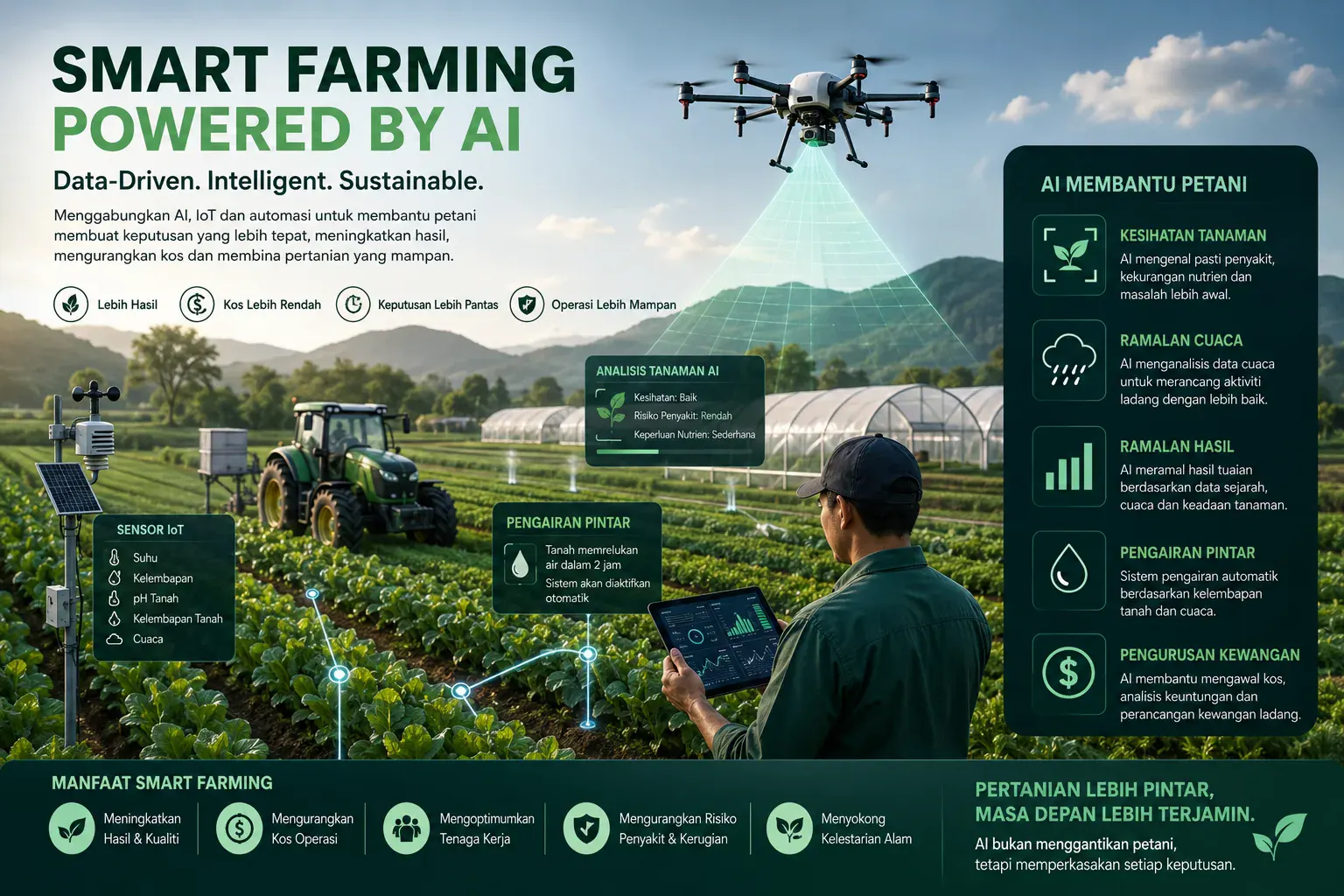
At AINNA, when we work with agribusiness owners, we often see the same assumption: that a larger AI footprint will automatically deliver larger returns. In practice, the greater financial risk is not undersized AI; it is an oversized and poorly matched cost structure.
The real challenge is designing AI 系统 whose unit economics remain sound as the operation scales.
A typical farm generates thousands of data points each day from soil sensors, weather stations, cameras, drones, irrigation 系统, livestock monitoring, and operational records. If every data point is sent continuously to premium cloud AI models, compute becomes a recurring operating expense that erodes margins and slows adoption.
That is where the financial architecture changes.
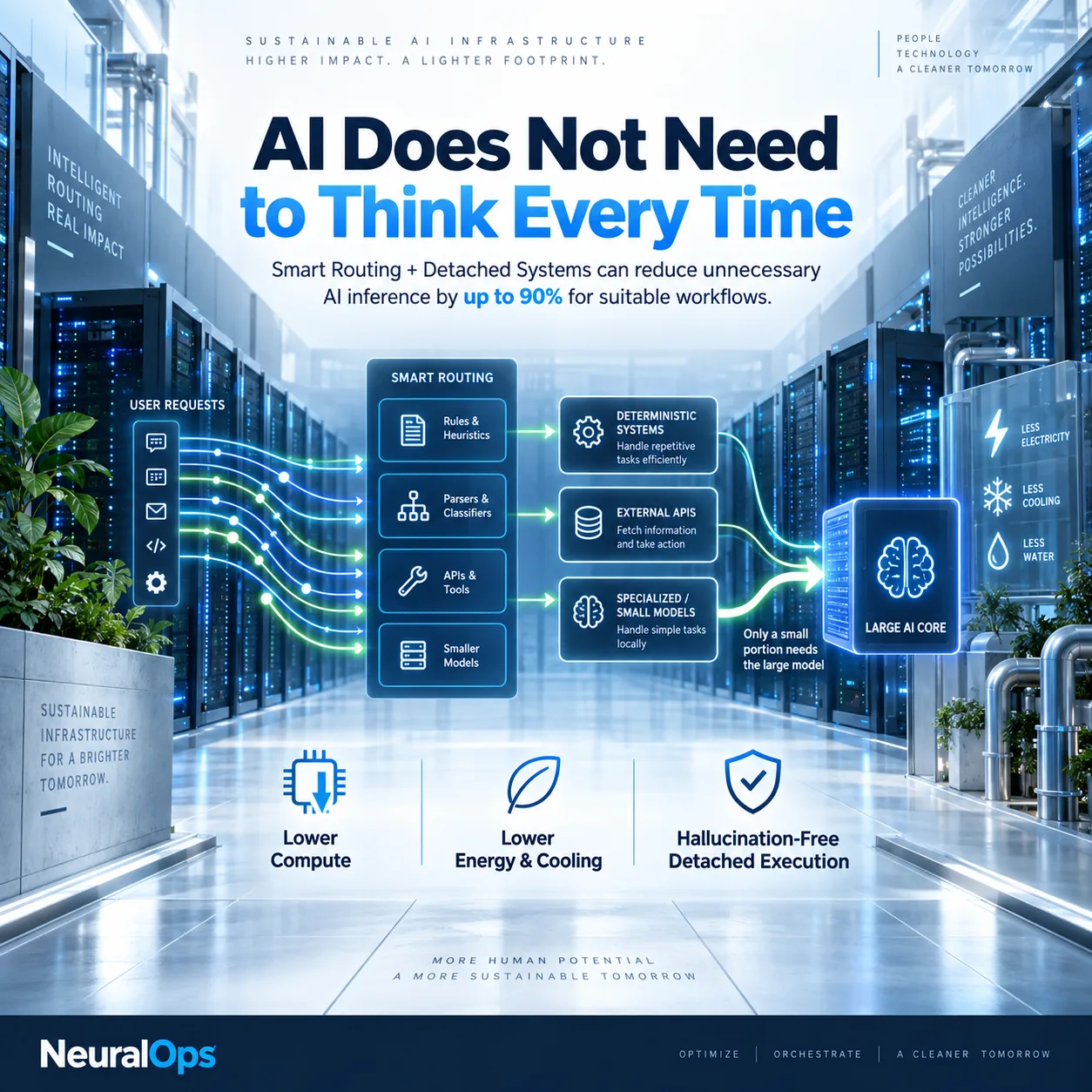
By combining 边缘 AI, 分离式系统, and 智能路由, a farm can process the majority of data locally and in realtime while engaging advanced AI only for exceptions that materially affect yield, cost, or risk.
常规 activities such as monitoring soil moisture, temperature, irrigation 状态, and equipment health can be handled automatically by local 系统 and 边缘 AI at a low marginal cost. 高级 AI models are only triggered when anomalies are detected, disease risks emerge, 预测s are required, or strategic decisions need deeper analysis that justifies the spend.
The result is an intelligent operating model that stays responsive without continuously consuming costly AI resources.
More importantly, agricultural data stops being a passive record of past activities and becomes a productive asset. Farmers gain faster insights, sharper decision-making, and clearer visibility into the drivers of profitability.
The future of 智慧农业 is not simply about automation.
It is about creating an intelligent operating layer that connects data, infrastructure, and AI in a way that is scalable, practical, and sound from a total-cost-of-ownership perspective.
As global food demand rises and margins stay tight, the 马来西亚n agribusinesses that create durable value will not necessarily be those with the biggest AI 系统, but those that deploy intelligence efficiently, at the right place, at the right time, and at the right cost for their 损益表.
智慧农业 is no longer just about growing crops. It is about growing a disciplined, return-focused intelligence capability.
#SmartFarming #AgriTech #Artificial智能 #EdgeAI #IoT #数字化农业 #精准农业 #创新 #DataDriven #FutureOf农业 #AI #MachineLearning #Food安全 #SmartRouting #NeuralOps #AINNA #农业科技 #DigitalTransformation #可持续科技 #农场创新













Ruang pembaca
Apa pendapat anda?
Komen disemak sebelum diterbitkan. 电子邮件 diperlukan untuk moderasi dan tidak dipaparkan kepada pembaca.
这篇文章适合团队用来开始讨论decision-making。
文章把高级 AI models和日常运营联系起来,这一点很有帮助。
常规 activities这个说法我要拿回去跟同事讨论。
收藏了,主要是为了compute becomes a recurring operating。
如果还有这段说明的后续,我会继续读。
这部分这部分我看了几遍,值得再想。
关于return-focused intelligence capability的实际落地部分最吸引我。
这篇内容让我更容易理解为什么total-cost-of值得关注。