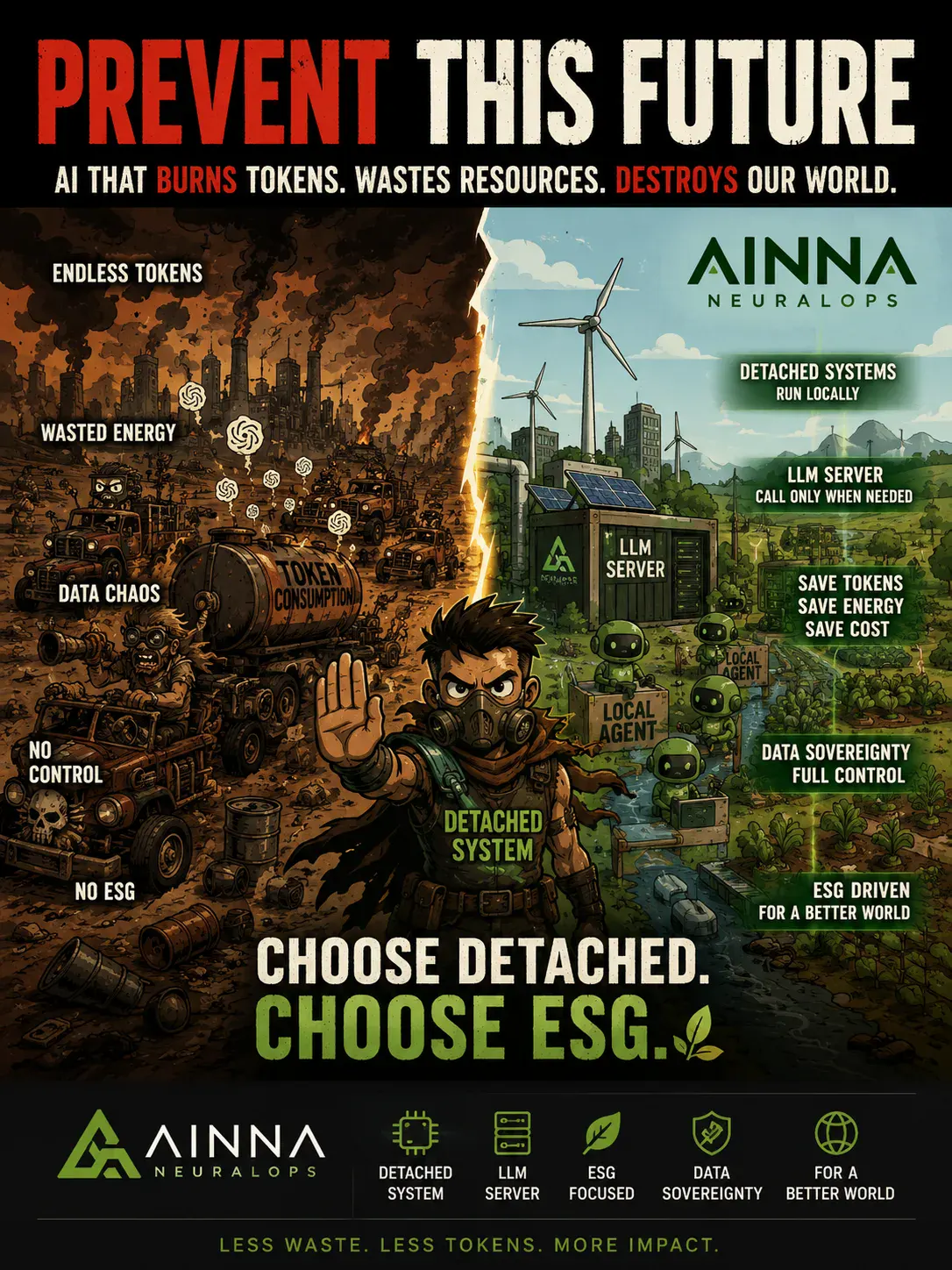
从 a 财务 and accounting standpoint, the real question is not whether AI can automate a task, but whether it does so at a unit cost and risk profile the business can sustain.
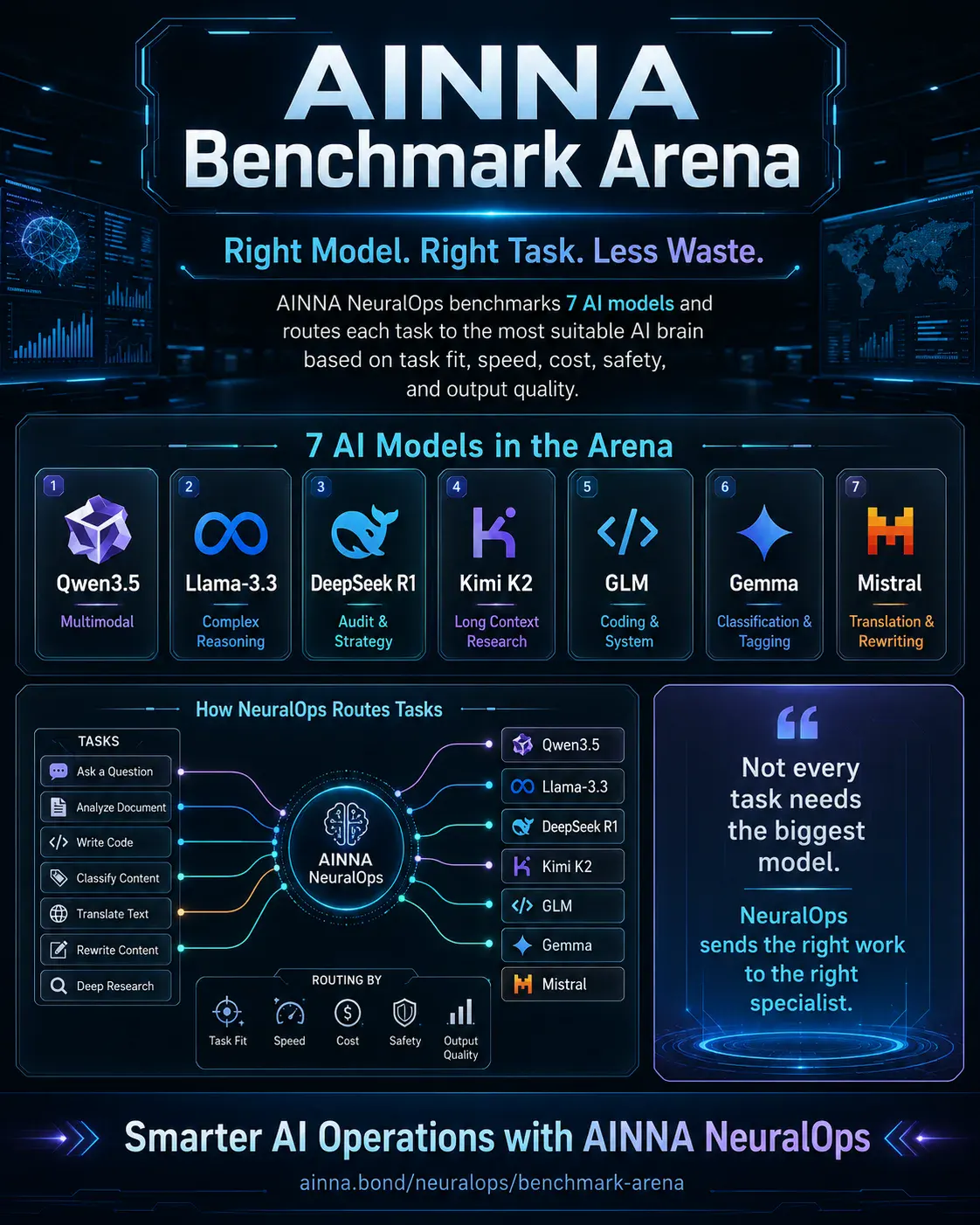
This is why I look at AINNA NeuralOps: 独立系统 + LLM 服务器 as an architecture decision with direct 损益表 and balance-sheet implications.
The dominant AI cost risk today is not only the per-token price. It is architectural leakage. Too many 工作流 route every event to a large language model, even when 确定性规则, local scripts, databases, schedulers, sensors, and lightweight agents can handle the load. In accounting terms, that is uncontrolled variable OpEx scaling with transaction volume.
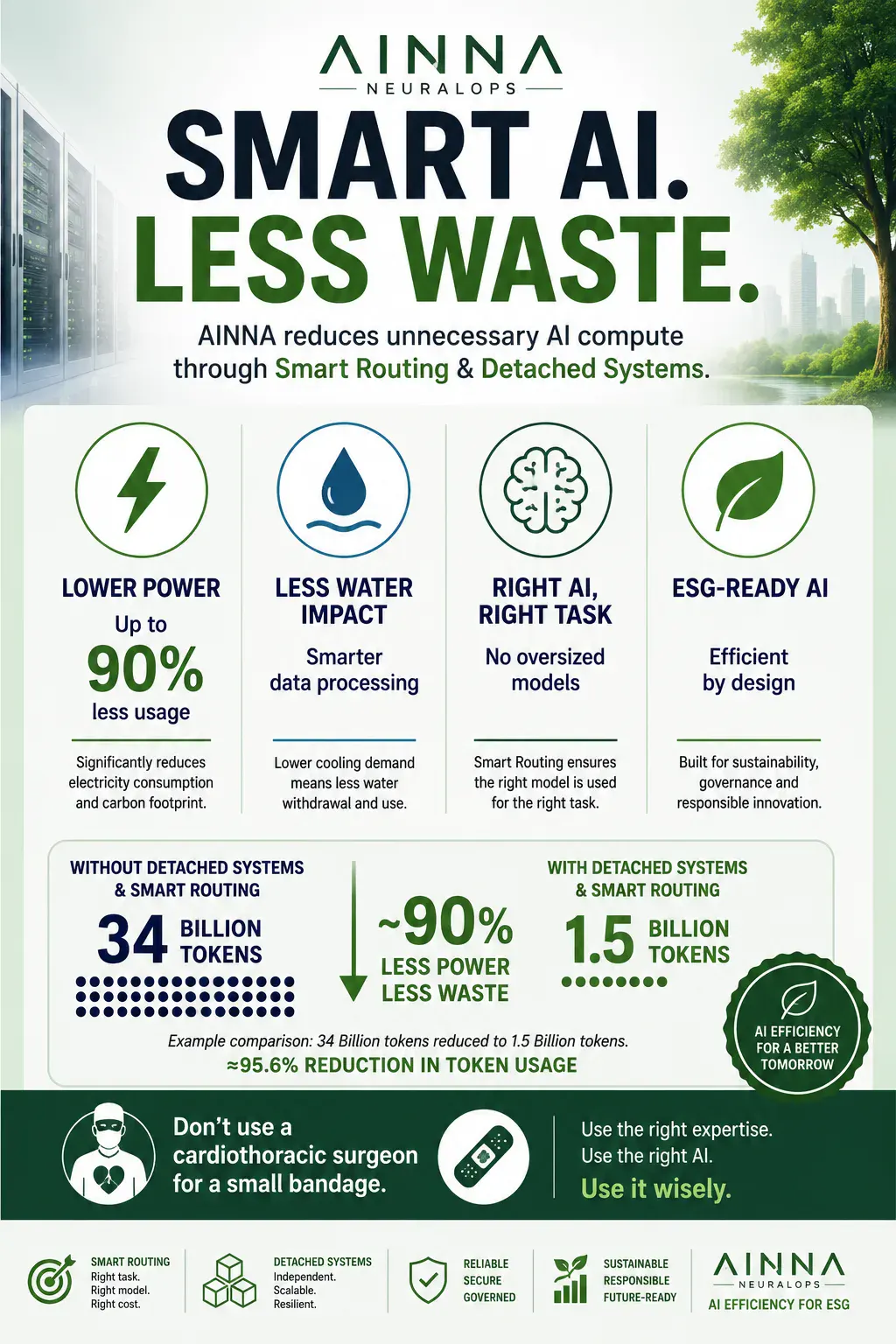
时间 every task invokes an LLM, token consumption becomes a growing cost centre. By routing routine work through detached 系统 and reserving the LLM 服务器 for genuine reasoning, summarisation, exception handling, reporting, and human-readable explanation, token usage can fall sharply - in some 工作流, potentially by up to 90%.
Practically, this means an ecommerce operation can monitor orders and inventory around the clock, an accounting practice can extract and structure financial data from bank statements and invoices, and a manufacturer can read machine logs, alarms, PLC/SCADA exports, and maintenance records - all without a continuous token meter running.
The value is more than cost optimisation. It is asset management for AI infrastructure.
Instead of AI as a chatbot, we move toward AI as an operational layer. Instead of sending every transaction to a remote model, we move toward local-first intelligence. Instead of continuous token usage, we move toward event-based reasoning.
That shift also carries ESG and compliance weight. Smarter architecture reduces unnecessary compute, cloud spend, energy waste, and CO₂e exposure, while improving data sovereignty and audit 可追溯性. For 马来西亚n 中小企业, that translates into lower operating cost, stronger scalability, and reporting credentials that lenders, investors, and regulators increasingly expect.
The future of AI is therefore not only about larger models. It is about disciplined 系统 设计 around those models.
That is the financial and operational case for AINNA NeuralOps - 独立系统, LLM 服务器, local-first AI, data sovereignty, ESG-friendly automation, and AI architecture that protects both margin and reputation.
#AINNA #NeuralOps #分离式系统 #LLMServer #Artificial智能 #AgentAI #LocalAI #数据主权ty #ESG #可持续AI #ResponsibleAI #商业自动化 #工业AI #马来西亚AI #AIForGood













Ruang pembaca
Apa pendapat anda?
Komen disemak sebelum diterbitkan. 电子邮件 diperlukan untuk moderasi dan tidak dipaparkan kepada pembaca.
这篇内容让我更容易理解为什么token consumption becomes a growing值得关注。
potentially by up to 90%这个说法我要拿回去跟同事讨论。
文章把时间 every task invokes和日常运营联系起来,这一点很有帮助。
我特别喜欢token usage can fall这一部分,内容没有把实施过程说得太简单。
同意作者对从 a 财务 and accounting的判断,方向很清楚。