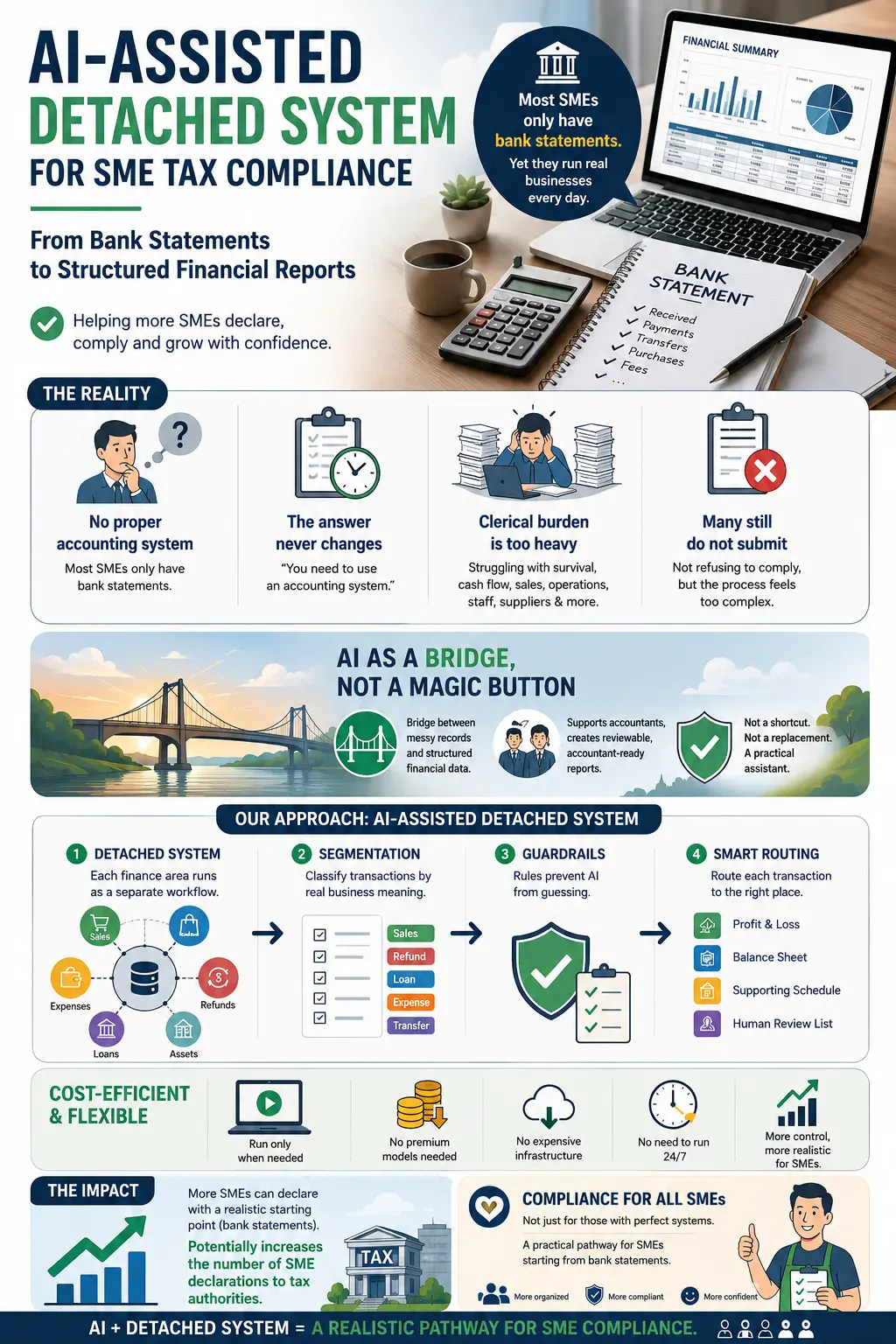
Every tax season, we hear the same question from 马来西亚n 中小企业 owners: “How do I produce my business accounts?” In this era of digitalisation, many small 中小企业 already sell online, collect digital payments, and operate real trading businesses. Yet, from a 财务 operations perspective, the irony is clear: many still lack a formal accounting 系统. In practice, their most reliable business record is often their bank statement.
The standard response has always been the same: “You need an accounting 系统.” That answer is technically correct, but it does not address the operational reality. Many small businesses have been trading for years without a formal 系统, and their teams remain fully occupied with selling, purchasing stock, paying suppliers, processing refunds, managing cash flow, and resolving daily operational issues.
时间 the advice never changes, the outcome rarely changes either. A meaningful number of 中小企业 still do not file returns at all, not because they intend to be non-compliant, but because the clerical workload is too heavy. They are not only wrestling with paperwork; they are managing survival, cash flow, sales, operations, staff, platforms, suppliers, and the daily pressure of running a business.
从 the 财务 and accounting side at AINNA, I see AI playing a practical role for 中小企业, not as a magic button, not as a replacement for accountants, and not as a shortcut to bypass compliance. AI should function as a reconciliation bridge between informal, bank-statement-based records and structured, reviewable, accountant-ready financial data.
In one of our internal 财务 operations initiatives, we explored how AI can support 财务 preparation using a detached-系统 approach:
分离式 系统: each 财务 area runs as a separate workflow, such as sales, refunds, purchases, operating expenses, loans, fixed assets, inventory, owner movements, and internal transfers.
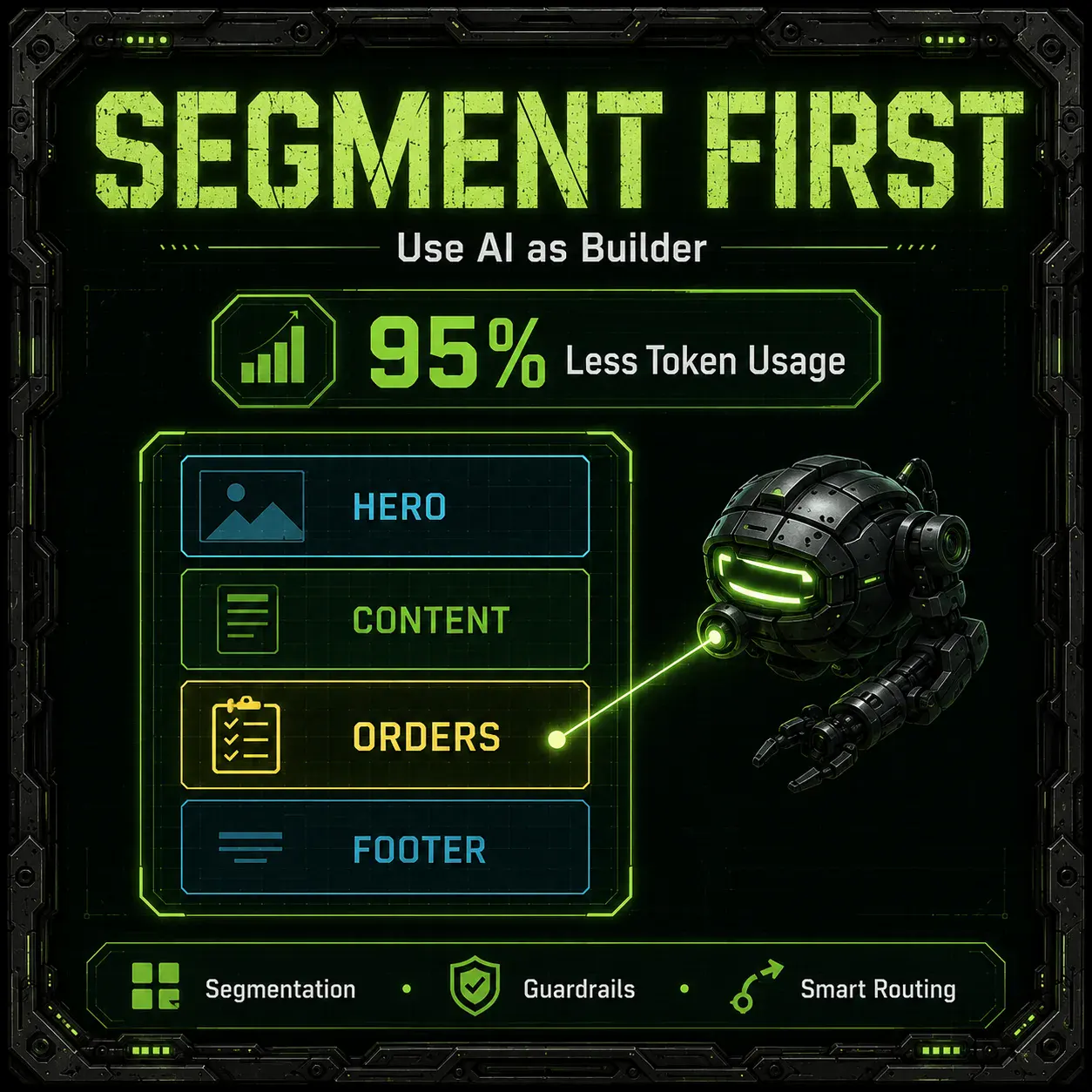
分段: transactions are classified based on economic substance and chart-of-accounts treatment, not only on bank descriptions.
护栏: predefined rules prevent the AI from guessing, especially for loan principal, refunds, fixed deposits, internal transfers, and unclear transactions.
智能路由: each transaction is directed to the correct place, the 利润 & Loss statement, 资产负债表, supporting schedule, or human review list.
The important point from a cost-control standpoint is this: an AI workflow built this way does not always require premium models, expensive infrastructure, or a 系统 that runs around the clock. Because the 工作流 are detached, processing can be event-driven, and AI models are invoked only for specific tasks. That makes the approach more cost-efficient, more controlled, and more realistic for small 中小企业.
With this approach, more small 中小企业 may finally have a realistic pathway to declare their business properly, especially if structured cash-basis reports prepared from bank statements can be accepted as a starting point, subject to proper review. 合规 frameworks should not only be designed for 中小企业 that already have perfect 系统. They must also create a practical pathway for 中小企业 that are still starting from bank statements. For me, this is the real opportunity: using AI-assisted detached 系统 to help 中小企业 become more organized, more compliant, and more confident in their financial position.













Ruang pembaca
Apa pendapat anda?
Komen disemak sebelum diterbitkan. 电子邮件 diperlukan untuk moderasi dan tidak dipaparkan kepada pembaca.
视觉和结构让从 the 财务 and accounting的概念更容易掌握。
这篇内容让我更容易理解为什么bank-statement-based records and structured值得关注。
如果有更多AI should function的数据和结果会更完整。