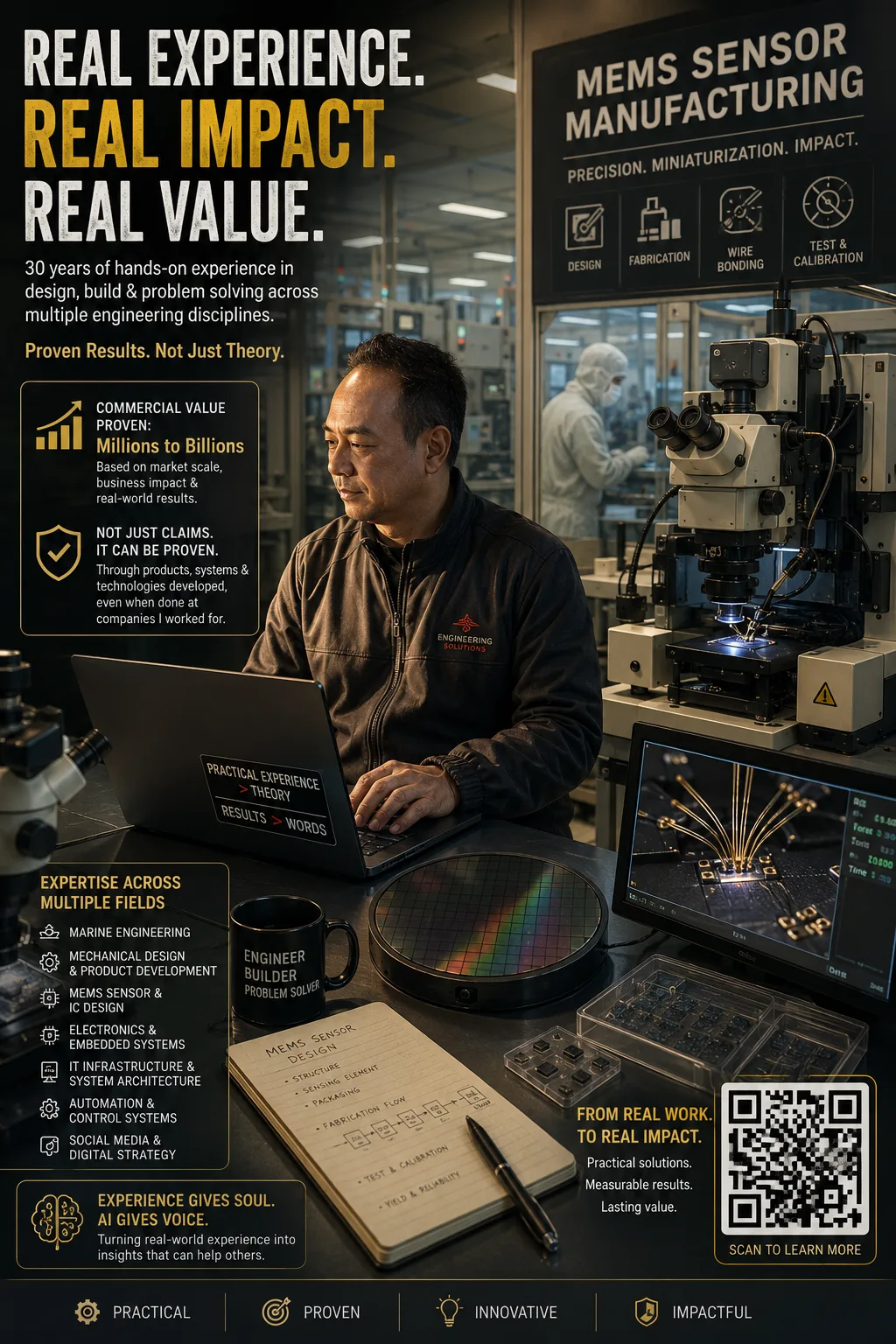
One weakness I've carried throughout nearly 30 years in 财务 and accounting is writing articles.
My expertise has never been confined to theory or abstract discussion. I've worked hands-on across general-ledger 系统, fixed-asset registers, financial controls, tax 工作流, and 中小企业 operations, building real processes, implementing 系统, and solving real-world cash-flow and compliance problems. Some of the outcomes I've helped deliver have created measurable commercial value worth millions, and in some cases billions, based on revenue impact, asset utilisation, and market valuation.
These are not unsupported claims. They can be 已验证 through the financial 系统, asset records, and reporting frameworks that were actually implemented, even when much of that work was done while I was employed by another organisation.
Yet decades of operational experience do not automatically make someone an effective writer.
I've read countless articles written by people who are exceptionally skilled at writing. Some have even published books on how to write effectively. Their writing is polished, persuasive, and easy to follow.
But too often, the content feels disconnected from the reality of running 财务 operations and managing 中小企业 assets.
Many of these articles are built on theories, second-hand knowledge, or ideas gathered from others. The prose is elegant, but it lacks something important: soul. It lacks the depth that only comes from reconciling ledgers, depreciating assets, navigating tax filings, and making month-end decisions yourself.
AI has changed that.
AI doesn't give me experience. 经验 comes from years of configuring controls, correcting reconciliations, streamlining asset tracking, testing accounting 系统, and resolving real working-capital constraints.
What AI gives me is the ability to organise those experiences into clear, structured articles without changing their authenticity.
I believe thousands of 马来西亚n 中小企业 owners, 财务 managers, accountants, bookkeepers, warehouse supervisors, tax agents, and operations leaders are in the same position. They hold decades of practical knowledge in cash management, inventory valuation, asset depreciation, tax compliance, and profit optimisation, but have never been able to communicate it clearly because writing was never their strength.
To me, this is one of AI's greatest contributions.
Not replacing human expertise, but giving a voice to people whose knowledge was previously locked inside years of practical, on-the-ground experience.
经验 gives writing its soul. AI simply helps that soul reach its audience.













Ruang pembaca
Apa pendapat anda?
Komen disemak sebelum diterbitkan. 电子邮件 diperlukan untuk moderasi dan tidak dipaparkan kepada pembaca.
这篇文章对i've worked hands-on across general-ledger的解释很清楚,实际操作的重点也很容易理解。
看第二遍才注意到carried throughout nearly 30的细节。
我喜欢文章对yet decades of operational experience保持务实的态度。
第一次看到有人把30讲得这么坦白。
还在消化30这一段。