系统 Laman Web Berkuasa AI: AI Tidak Perlu Beroperasi Secara Berterusan.
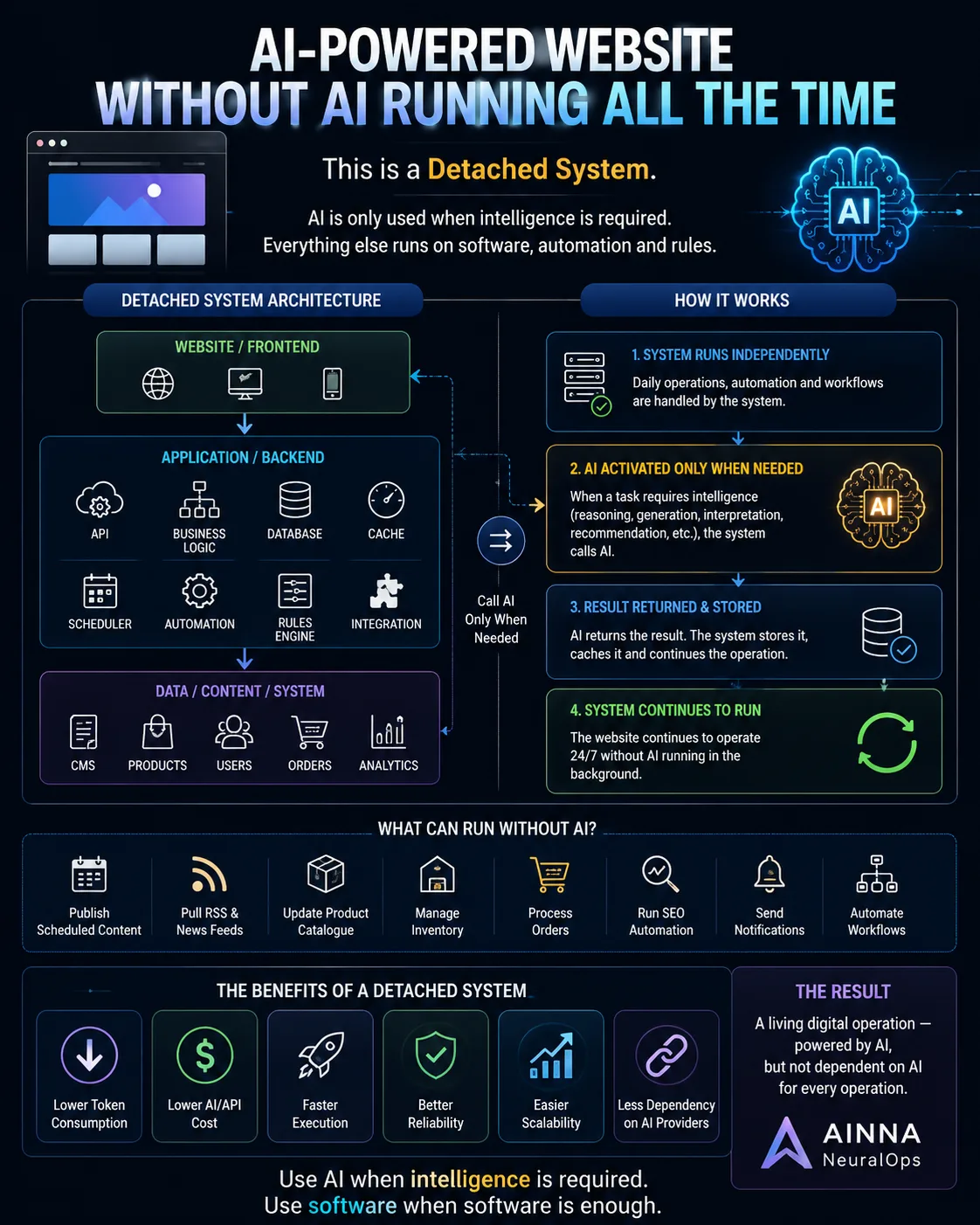
Dalam pembinaan sistem operasi digital, satu kekeliruan biasa ialah anggapan bahawa laman web “berkuasa AI” mesti memanggil LLM untuk setiap klik, carian, cadangan, atau proses.
Ia mahal dan tidak perlu dari sudut operasi.
Dari sudut reka bentuk sistem, AI hanya perlu digunakan apabila kecerdasan benar-benar diperlukan dalam alur kerja.
Segala-galanya yang lain boleh ditangani oleh perisian konvensional:
Database + 规则引擎 + 日程r + API + Cache + 自动化
Ini yang dimaksudkan dengan 独立系统.
独立系统 memisahkan beban kerja berulang, boleh ramal, dan berstruktur daripada LLM, supaya operasi harian tidak membebankan model AI.
Bukannya meminta AI mengendalikan segala-galanya, sistem ini membenarkan perisian biasa melaksanakan tugas seperti berikut:
• menerbitkan kandungan terjadual
• menarik suapan RSS
• mengemas kini katalog produk
• menguruskan inventori
• memproses pesanan
• menjalankan automasi SEO
• menghantar pemberitahuan
• melaksanakan alur kerja berulang
LLM hanya perlu dipanggil ke dalam alur sistem apabila tugas itu benar-benar memerlukan penaakulan, tafsiran, penjanaan, atau pembuatan keputusan berkonteks.
Dalam istilah mudah:
AI tidak perlu kekal aktif sepanjang masa.
独立系统 mengekalkan operasi digital berjalan secara bebas, manakala AI menjadi lapisan kecerdasan yang diaktifkan hanya apabila diperlukan.
Ini merupakan salah satu prinsip teras di sebalik AINNA NeuralOps:
Gunakan AI apabila kecerdasan diperlukan.
Gunakan perisian apabila perisian sudah mencukupi.
Dari perspektif operasi dan R&D, hasilnya:
✅ Penggunaan token lebih rendah
✅ Kos AI/API lebih rendah
✅ Pelaksanaan lebih pantas
✅ Kebolehpercayaan lebih baik
✅ Skalabiliti lebih mudah
✅ Kebergantungan kepada pembekal AI luar lebih rendah
Laman web yang direka bentuk sedemikian bukan lagi sekadar laman web statik.
Ia menjadi operasi digital yang hidup - dikuasakan oleh AI sebagai lapisan kecerdasan, tetapi tidak bergantung kepada AI untuk setiap operasi.
Itulah peranan 独立系统.
#Artificial智能 #AI #自动化 #NeuralOps #分离式系统 #DigitalTransformation #WebDevelopment #商业自动化 #AIAgents















Ruang pembaca
Apa pendapat anda?
Komen disemak sebelum diterbitkan. 电子邮件 diperlukan untuk moderasi dan tidak dipaparkan kepada pembaca.
这部分读起来很清楚,也容易跟着理解。
这篇文章把dari sudut reka bentuk sistem讲得比一般的AI介绍更具体。
关于bukannya meminta AI mengendalikan的实际落地部分最吸引我。
关于独立系统 memisahkan beban kerja berulang的说明很完整,基础部分尤其清楚。
文章把supaya operasi harian tidak membebankan和日常运营联系起来,这一点很有帮助。
视觉和结构让database + 规则引擎 + 日程r的概念更容易掌握。
收藏了,主要是为了AI hanya perlu digunakan apabila。
这篇内容让我更容易理解为什么sistem ini membenarkan perisian biasa值得关注。