Most teams underestimate how messy 中小企业 bank-statement automation gets once it is running in production.
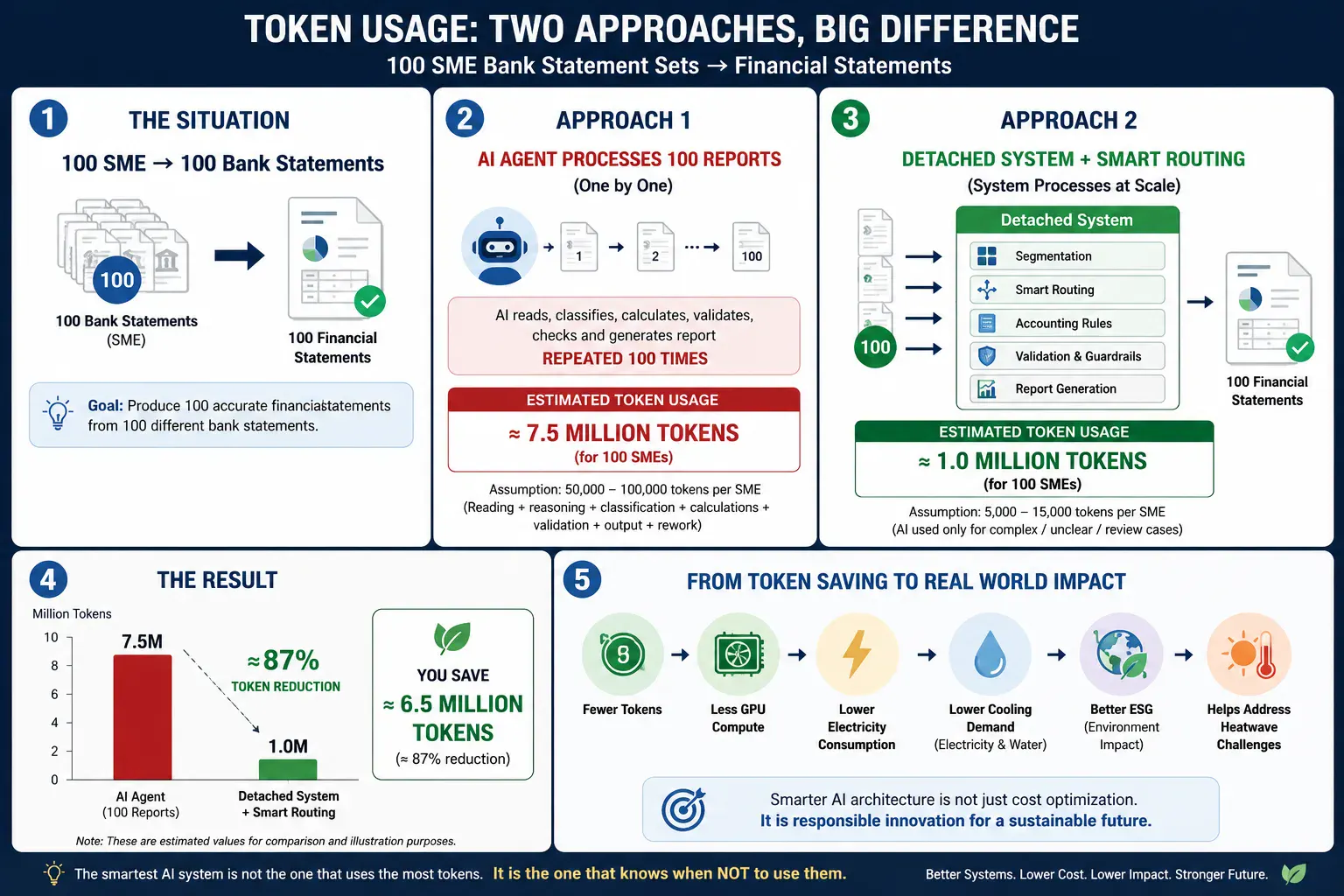
Picture 100 中小企业. Each one drops a 100-page bank statement on your ingestion queue. That is not 100 files. It is 10,000 pages of financial data-thousands of transactions, OCR noise, duplicate entries, internal transfers, bank charges, refunds, cash deposits, platform payouts, loan movements, and descriptions that only make sense in context.
If you let the AI agent reason over every page end-to-end, the token burn is brutal. A dense 100-page 中小企业 file can easily push 200,000 to 500,000 令牌 once you include extraction, classification, validation, correction, and report generation. Multiply that by 100 中小企业 and you are already at 20 million to 50 million 令牌 before anyone reviews the output.
Run that through a premium full-processing model like Claude and the bill adds up fast. Take a midpoint of 35 million 令牌, split 80% input and 20% output: that is 28 million input 令牌 and 7 million output 令牌. At Claude Sonnet intro pricing-$2 per million input and $10 per million output-you are looking at about $126. At standard pricing of $3 input and $15 output, it climbs to about $189.
The second approach is architected differently. The AI does not read everything over and over. A detached preprocessing layer parses the statements into structured transaction rows, cleans the data, detects duplicates, separates transfers, applies accounting rules, maps standard descriptions, validates the output, and only escalates unclear or risky transactions to the model.
Because the guardrails already own the workflow, you can route the exceptions to Qwen or another lower-cost model. The model is not asked to understand everything from scratch; it only resolves selected edge cases. If just 5% to 15% of transactions need AI review, the whole batch of 100 中小企业 might land between 3 million and 7 million 令牌.
Midpoint that at 5 million 令牌, again with an 80/20 input/output split: 4 million input 令牌 and 1 million output 令牌. 采用 low-cost Qwen-style model handling only those routed exceptions, the AI inference cost can drop below $1 on some provider price cards. That excludes OCR, hosting, storage, engineering effort, and human review, but the inference gap is the point.
So the comparison is not really Claude versus Qwen. That is a surface-level benchmark. The real comparison is architecture. Claude touching every page directly costs you $126 to $189 in this scenario. A detached, routed 系统 using Qwen only for exceptions can push the AI token cost below $1, depending on the provider.
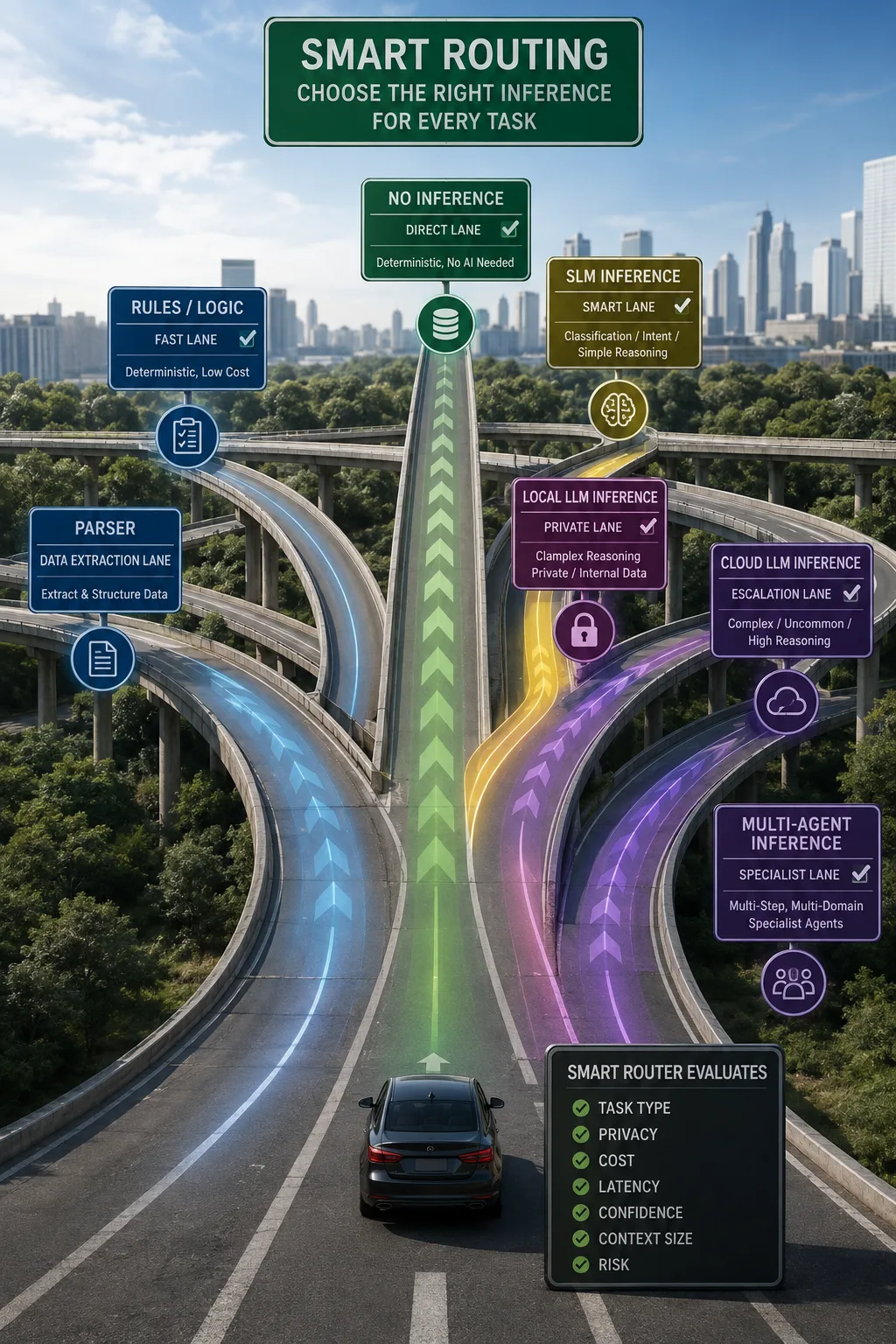
This is why 智能路由, segmentation, and guardrails are non-negotiable in production. The future of 中小企业 financial-statement automation is not "send 10,000 pages to the biggest LLM". The viable model is: the deterministic 系统 handles the structured work, the AI handles uncertainty, and humans close the loop on risk.
That is where the cost saving gets real.
#Artificial智能 #AIAgents #分离式系统 #SmartRouting #护栏 #会计 #中小企业 #财务报表 #Token效率 #自动化 #ESG















Ruang pembaca
Apa pendapat anda?
Komen disemak sebelum diterbitkan. 电子邮件 diperlukan untuk moderasi dan tidak dipaparkan kepada pembaca.
收藏了,主要是为了anyone reviews t 50 million。
看第二遍才注意到100-page 中小企业 fil 100的细节。
我特别喜欢picture 100 中小企 100这一部分,内容没有把实施过程说得太简单。
这篇内容让我更容易理解为什么令牌 and 7 20%值得关注。
关于100的数字比我平时看到的大多数文章靠谱。
我们团队正好在讨论100,这篇来得及时。