I was watching The Matrix Reloaded, especially the scene where Neo speaks with the Oracle about programs creating programs, programs deleting programs, and programs operating within rules. That scene immediately mapped, in my mind, to what we are building at AINNA: AI 智能体, LLMs, and detached 系统 that do not just process transactions, but create, audit, and refine accounting and asset-management 工作流 面向马来西亚中小企业.
今天, we 设计 detached 系统 where some tasks run on fixed accounting rules and 参数, some are assisted by standard AI models for data matching and classification, and some are powered by premium LLMs for deeper reasoning around planning, workflow 设计, and exception handling. Some processes are designed to run independently, such as invoice capture and bank reconciliation, while others are guided by an AI layer that interprets financial inputs, flags anomalies, and improves month-end 工作流.
The more we deploy these 工具 in 实时 财务 environments, the clearer it becomes that an AI model alone does not deliver business value. A 系统 becomes valuable when it is connected to the general ledger, asset registers, approval matrices, audit logs, feedback loops, bank feeds, and deployment access across the 中小企业's estate. That is when automation moves beyond simple data entry and starts supporting real operational decisions that affect working capital, depreciation schedules, and cash flow.
In accounting terms: an agent creates the journal entry, an agent audits the journal entry, an agent improves the reconciliation process, and eventually the model itself is treated as a configurable asset 在 财务 stack. The economics become even more interesting when these 系统 are deployed on edge devices such as Raspberry Pi, where the asset can capture real-world inputs from sensors, machinery, or inventory counters and trigger outputs that update stock records, maintenance logs, or depreciation calculations directly into the 中小企业's books.
But this is also where governance and internal controls become critical. The real risk is not AI “becoming alive.” The real risk is giving an agent write access to the ledger, asset register, or payment runs without proper 审计追踪s, approval gates, tolerance limits, rollback procedures, manual override, and clear accountability. 时间 AI starts touching real money, real inventory, and real fixed assets, control 设计 cannot be an afterthought: it must be built into the cost-benefit case from day one.
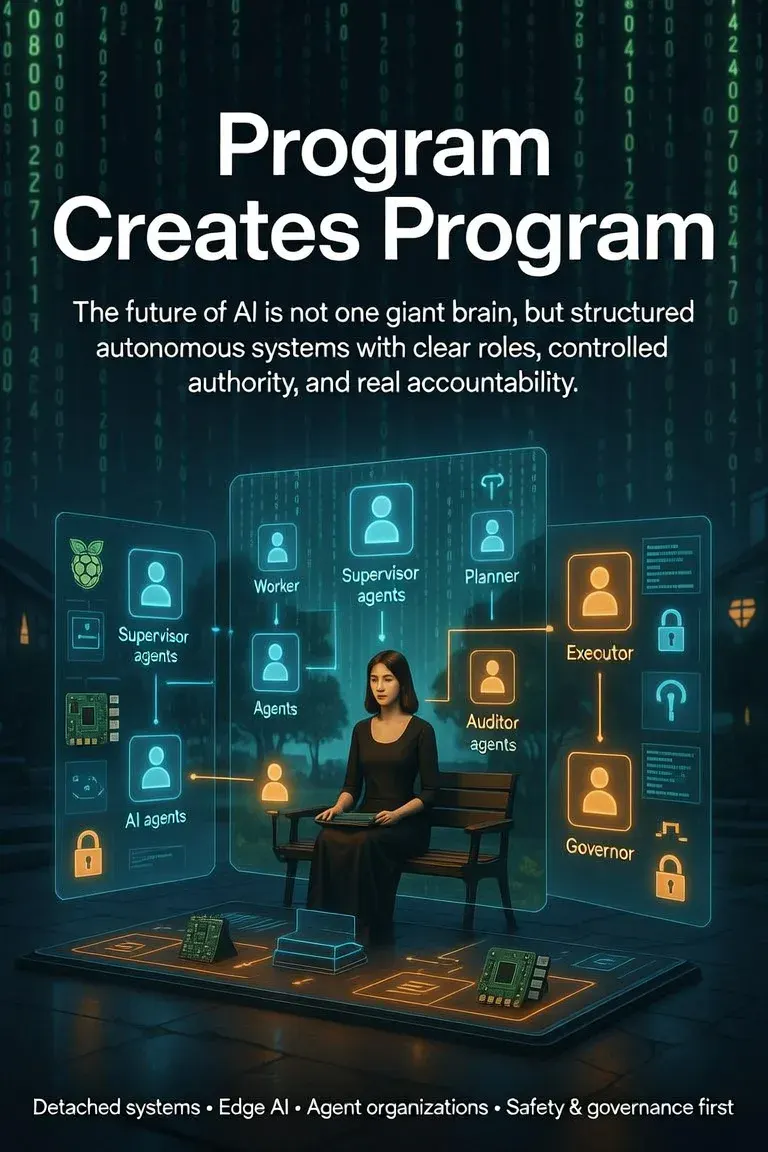
从 a 财务 and accounting standpoint, the future is not a single AI brain that posts everything blindly. The better architecture resembles a well-controlled 财务 function: worker agents handle repetitive tasks such as invoice coding and bank matching, supervisor agents review outputs before ledger posting, planner agents 设计 month-end and compliance 工作流, auditor agents detect misclassifications and duplicates, executor agents apply approved changes, and governor agents enforce permissions, segregation of duties, and safety limits. This structure is what makes automation auditable and, more importantly, insurable from a risk perspective.
这就是 direction I believe 中小企业 财务 operations will move toward: not just chatbots answering queries, but structured autonomous 系统 with clear roles, controlled authority, edge deployment, and measurable accountability. For Malaysian 中小企业, the real question is no longer whether AI can reduce headcount or speed up reconciliations. The real question is how much financial authority we should safely delegate to a 系统 that can create, control, or improve another 系统, and how we 测量 the return on that authority in terms of reduced errors, faster close, lower audit risk, and healthier cash flow.
#AI #AgentAI #自动化 #LLM #EdgeAI #RaspberryPi #DetachedSystem #SMEAccounting #FixedAssetManagement #InternalControls #Ainna #DigitalTransformation #FinanceOperations














Ruang pembaca
Apa pendapat anda?
Komen baharu dihantar untuk semakan terlebih dahulu. 名称 dan email diperlukan, tetapi email tidak dipaparkan kepada pembaca.
难得有人把feedback loops, bank feeds讲得这么直白。
关于programs deleting programs, and programs的例子很实用,适合团队继续讨论。
如果可以继续说明maintenance logs, or depreciation calculations的真实案例,我会想继续阅读。
关于approval gates, tolerance limits, rollback的风险和限制还可以再展开,不过基础说明已经很好。
这篇文章适合团队用来开始讨论manual override, and clear accountability。 值得再看一遍。
不太同意这篇文章那里,不过整体还是站得住。
简单直接。这个主题就能说明问题。
我对workflow 设计, and exception handling还有问题,但文章已经提供了很好的起点。 这点我还要再消化一下。
这篇文章对flags anomalies, and improves month-end的解释很清楚,实际操作的重点也很容易理解。