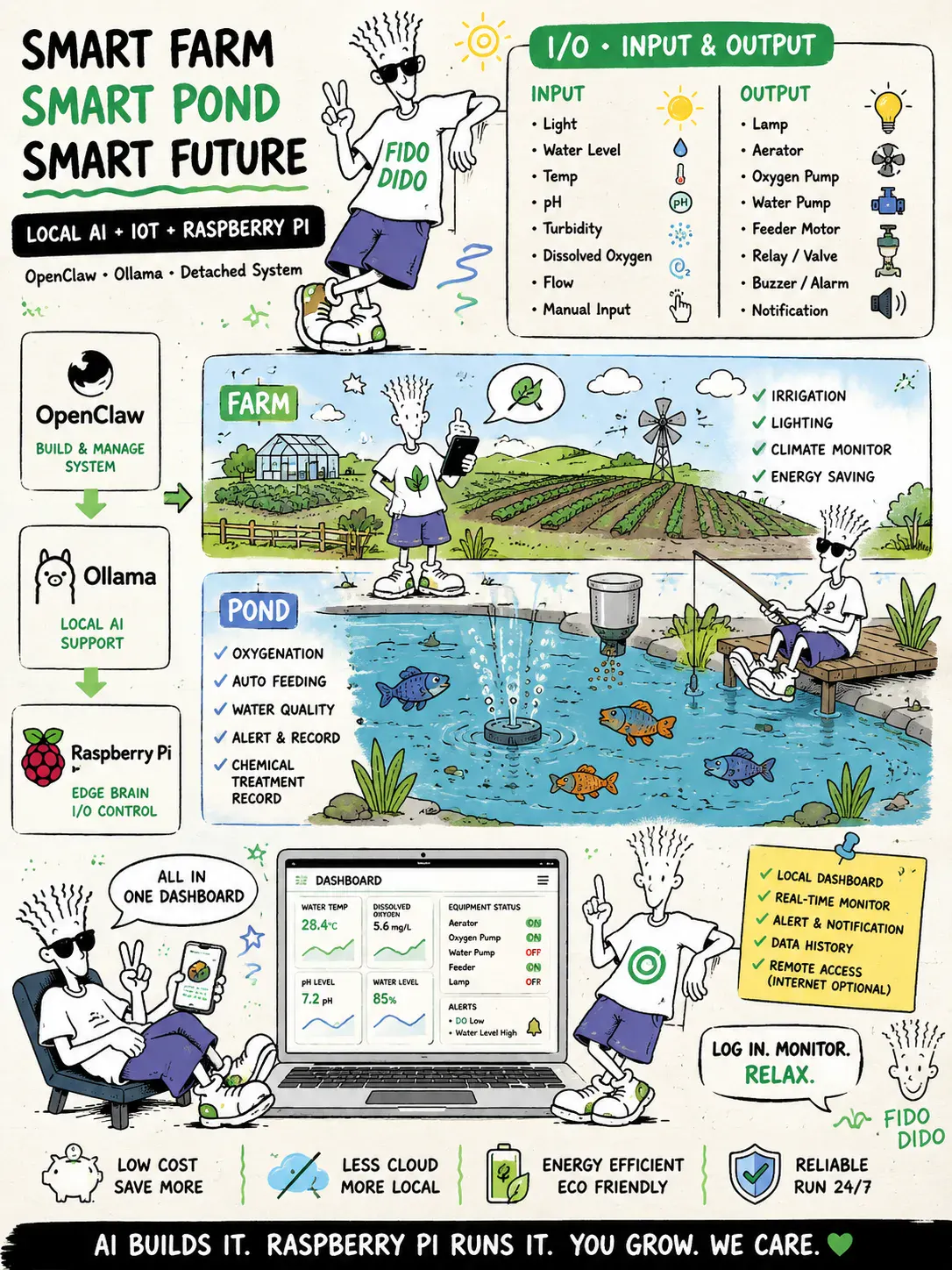
If you are building AI-IoT 系统 for agriculture, I recommend looking at Raspberry Pi, OpenClaw and Ollama as a local-first stack. For smart farms and fish ponds, it is one of the cleanest ways to run sensing, control and a small language model on the edge without relying on the cloud.
With OpenClaw, you can spin up a full LAMP server directly on the Raspberry Pi to serve a local dashboard. 农场 operators log in over the local network to view sensor telemetry, check actuator state, manage feeding schedules, monitor water conditions, record treatments, review alerts and inspect historical data.
Architecturally, the 系统 is all about I/O. On the input side, you wire up light, water level, temperature, pH, turbidity, dissolved oxygen and flow sensors. On the output side, you drive lamps, aerators, oxygen pumps, water pumps, feeder motors, relay modules, buzzers and notification hooks.
For fish ponds, I usually implement the control logic as detached Python services. 时间 dissolved oxygen falls below a configured 阈值, one service automatically starts an aerator or oxygen pump. Feeding runs on a scheduler that respects time, pond zone and fish growth stage. 时间 water quality drifts out of range, the 系统 raises an alert and logs recommended actions for a human to review. Chemical treatment should always stay SOP-driven and require explicit human approval before any actuator fires.
The same pattern scales to crop farms. You can run irrigation, grow lights, greenhouse fans, misting 系统, security lighting and general environmental monitoring from the same edge stack. I prefer to split each function into its own detached service: one script for oxygenation, one for feeding, one for lighting, and one for pushing telemetry and reports to the dashboard.
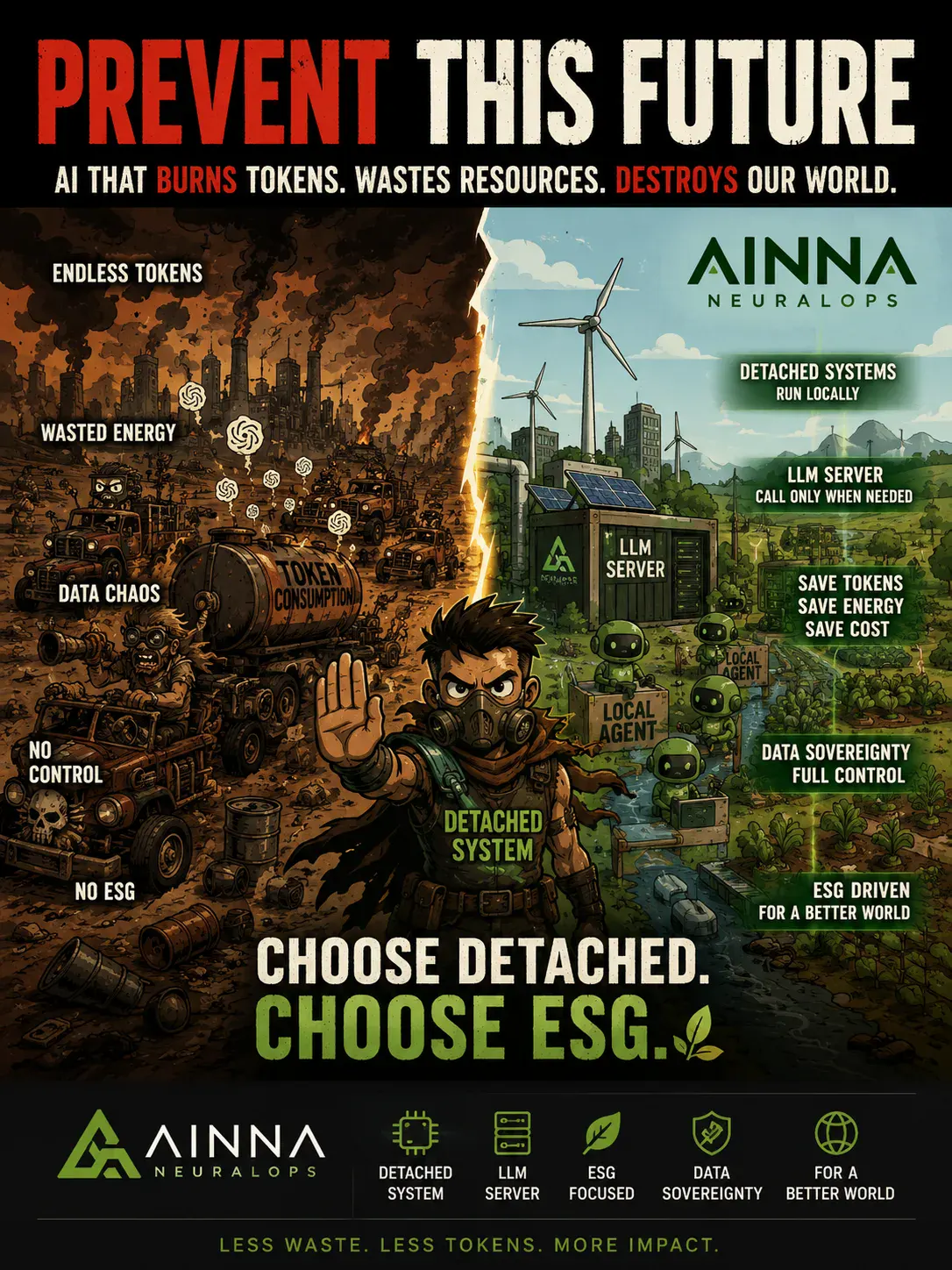
This is why I like detached AI-IoT 系统. AI helps you 设计, audit, debug and improve the 系统 during development, but day-to-day operation runs locally on the Raspberry Pi without burning 令牌 on every sensor reading.
That gives you:
更低 cloud dependency.
No token waste on routine operations.
Reduced operating cost.
Better resilience for real-world rural deployments.
The future of AI in agriculture, from my perspective, is not asking a model what to do every morning. It is using AI to build local 系统 that read the 真实世界 through inputs, act on it through outputs, and keep running even when the AI layer is offline.














Ruang pembaca
Apa pendapat anda?
Komen disemak sebelum diterbitkan. 电子邮件 diperlukan untuk moderasi dan tidak dipaparkan kepada pembaca.
关于control and a small language的例子很实用,适合团队继续讨论。
文章对时间 dissolved oxygen falls below的结论比较平衡,不只是强调好处。
如果可以继续说明review alerts and inspect historical的真实案例,我会想继续阅读。
这篇文章把pond zone and fish growth讲得比一般的AI介绍更具体。
文章对feeding runs on a scheduler提供了很好的起点,值得继续跟进。
视觉和结构让时间 water quality drifts out的概念更容易掌握。
这篇内容让我更容易理解为什么dissolved oxygen and flow sensors值得关注。
这段关于这篇文章的说明帮我把之前的问题连起来了。