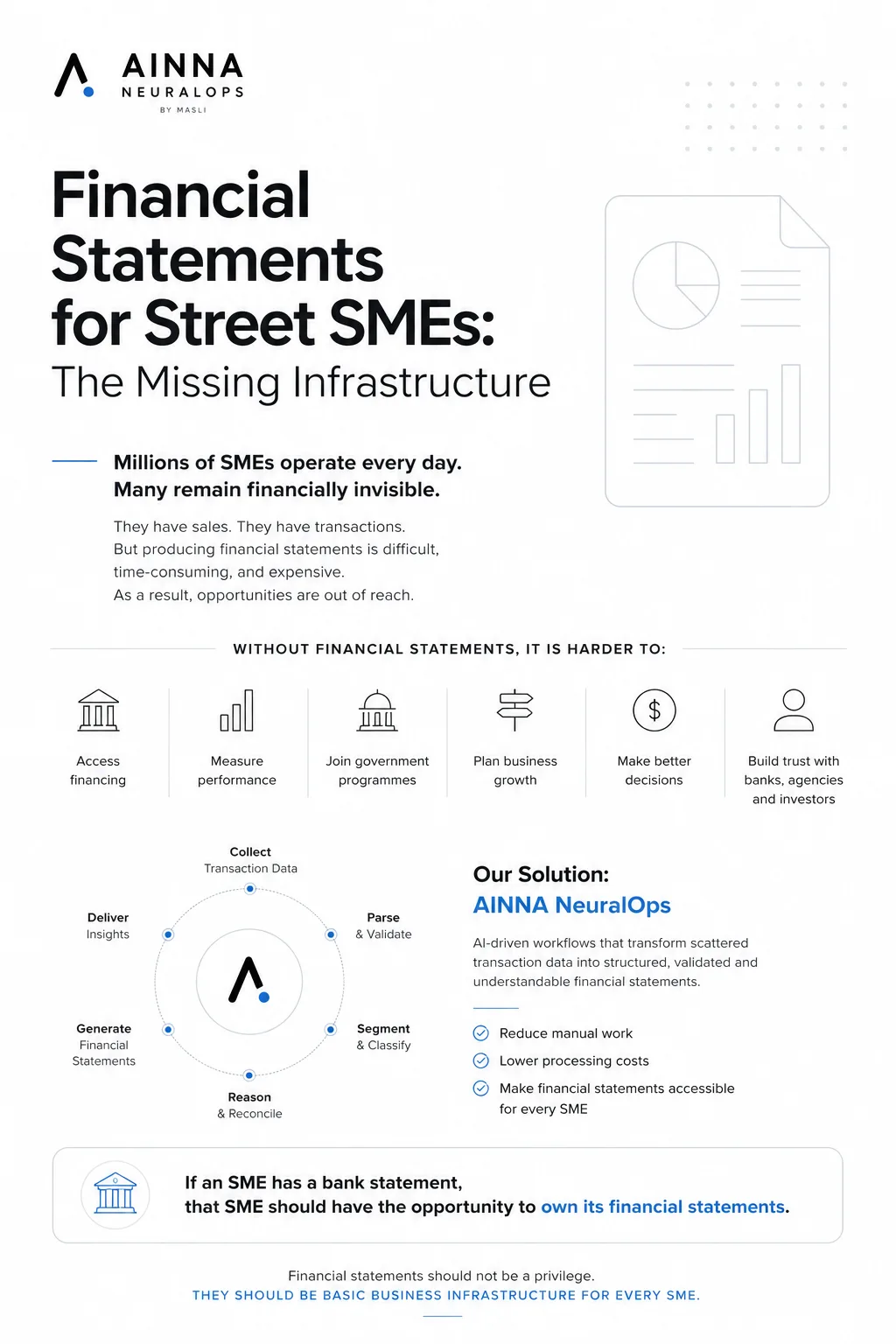
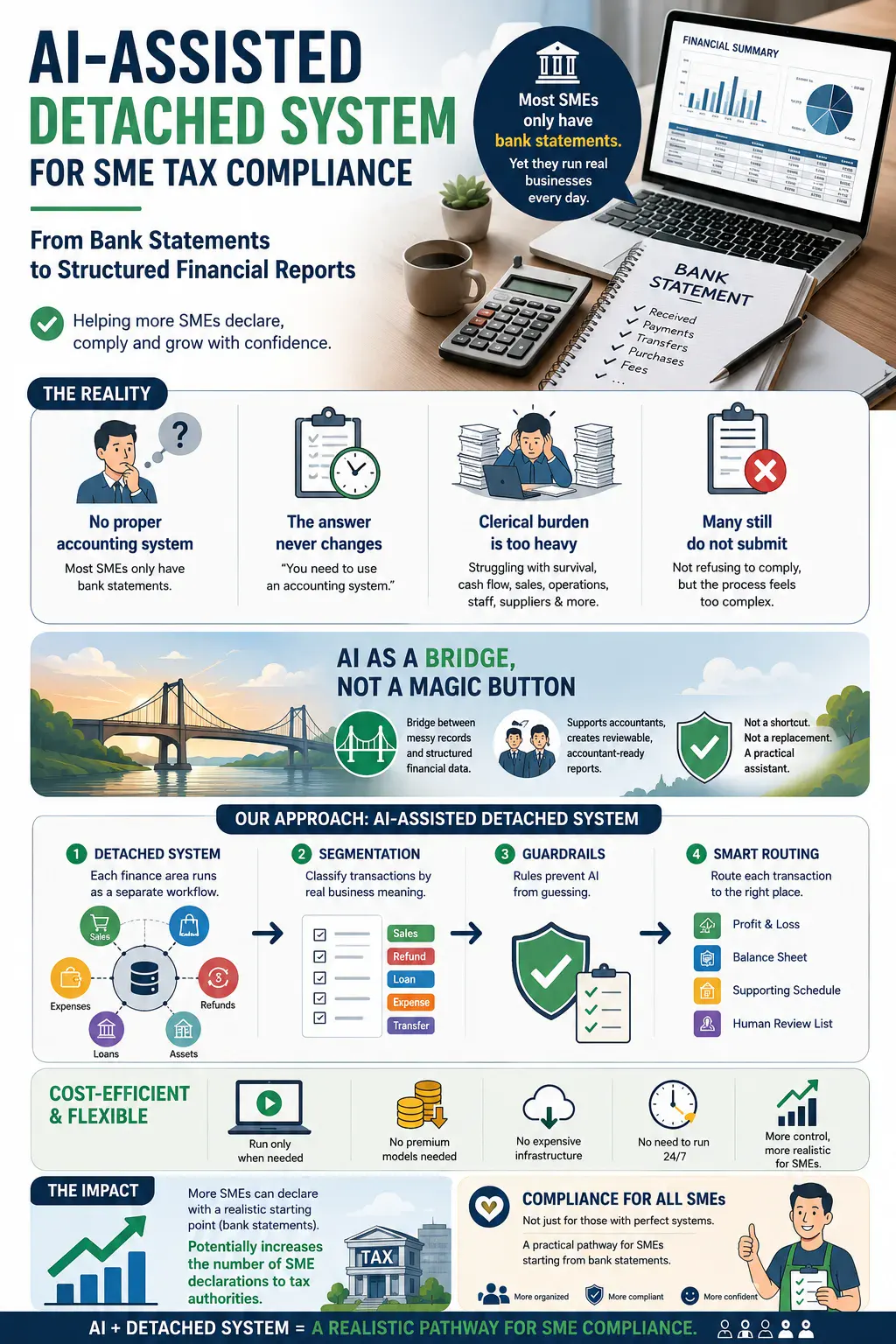
At AINNA, most of the 中小企业 environments we deploy into have one thing in common: the bank statement is the only ledger that actually stays current. 销售 records are patchy, invoices never make it into the 系统, and accounting software is often weeks or months behind. But every cash movement still hits the bank feed.
That makes the bank statement the natural entry point for accounting automation. The catch is the format. PDFs, CSV 导出s, and transaction descriptions mix merchant names, gateway codes, QR 令牌, truncated references, and free-text user remarks. Before any accounting logic runs, the data has to be parsed, normalized, and made machine-readable.
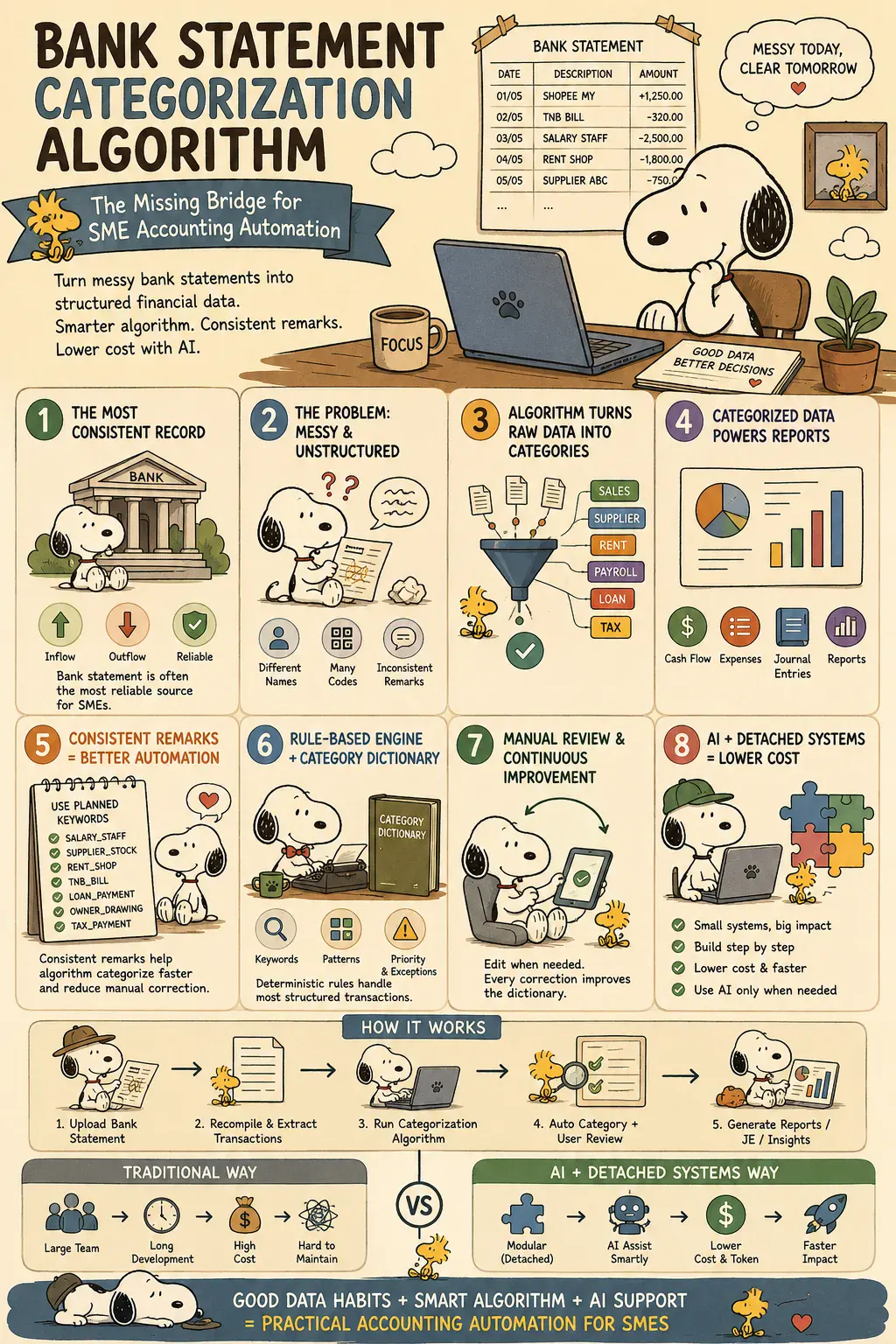
This is where the 银行 Statement Categorization Algorithm comes in. I treat it as a classification pipeline that maps each transaction into a fixed chart of accounts: sales, supplier payments, rent, payroll, utilities, loan repayment, tax payment, owner drawing, marketplace settlement, refund, bank charges, and so on. The goal is not perfect AI; it is consistent, auditable categorization.
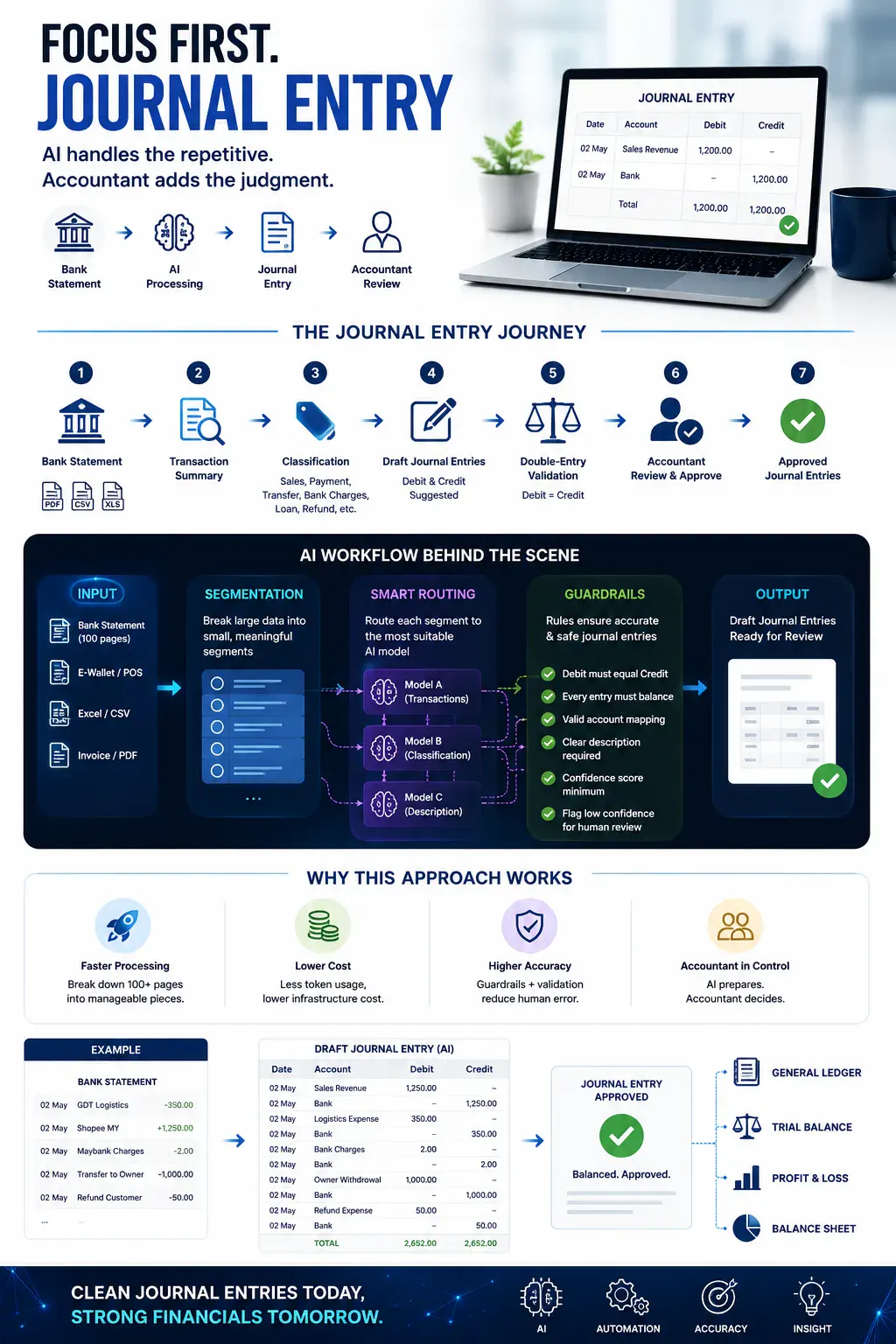
Once classified, the same stream can feed a cash summary engine, an expense report generator, and a draft journal-entry module. A bank statement should not end its life as a monthly PDF. It should enter the 系统 as structured financial data and propagate downstream like any other production dataset.
But automation is not a substitute for discipline. 中小企业 have to meet the 系统 halfway by using consistent transaction remarks. Instead of vague labels like “payment”, “transfer”, or “settle”, the team should adopt controlled keywords such as SALARY_STAFF, SUPPLIER_STOCK, RENT_SHOP, TNB_BILL, LOAN_PAYMENT, OWNER_DRAWING, and TAX_PAYMENT. The input schema matters as much as the classifier.
That one habit changes the entire error curve. 清理 remarks push most transactions into a deterministic path, reduce manual correction queues, and make generated reports trustworthy. In the field, good data hygiene almost always beats a bigger model.
My recommended architecture is a deterministic rule-based engine backed by a 类别 Dictionary, with AI sitting behind it as a fallback. 规则 handle the structured, high-volume patterns. An LLM or classifier is invoked only when a description is genuinely ambiguous or unseen, and its output is surfaced for human review before it writes to the ledger.
This modular approach is also easier to ship. With modern AI tooling, the cost of building small, loosely coupled modules has dropped: one service to ingest and parse statements, one to categorize, one to summarize cash position, and one to prepare draft journal entries. String them together with clean APIs and you have a maintainable bridge from messy 中小企业 records to working accounting automation.














Ruang pembaca
Apa pendapat anda?
Komen baharu dihantar untuk semakan terlebih dahulu. 名称 dan email diperlukan, tetapi email tidak dipaparkan kepada pembaca.
这篇文章适合团队用来开始讨论销售 records are patchy, invoices。
收藏了,主要是为了owner drawing, marketplace settlement, refund。 值得再看一遍。
这篇文章对LOAN_PAYMENT, OWNER_DRAWING, and TAX_PAYMENT的解释很清楚,实际操作的重点也很容易理解。
文章把transfer”, or “settle”, the team和日常运营联系起来,这一点很有帮助。
关于once classified的实际落地部分最吸引我。 这个部分我还需要再想一下。
关于good data hygiene almost的例子很实用,适合团队继续讨论。
文章对utilities, loan repayment, tax payment的结论比较平衡,不只是强调好处。
我对normalized, and made machine-readable还有问题,但文章已经提供了很好的起点。
如果有更多gateway codes, QR 令牌, truncated的数据和结果会更完整。 值得再看一遍。
我喜欢文章对sales, supplier payments, rent, payroll保持务实的态度。
这篇内容让我更容易理解为什么auditable categorization值得关注。
视觉和结构让reduce manual correction queues的概念更容易掌握。 这点我还要再消化一下。
看第二遍才注意到清理 remarks push most transactions的细节。
PDFs, CSV 导出s, and transaction这个说法我要拿回去跟同事讨论。
同意作者对bank charges的判断,但执行起来还有难度。
这篇文章把SUPPLIER_STOCK, RENT_SHOP, TNB_BILL讲得比一般的AI介绍更具体。