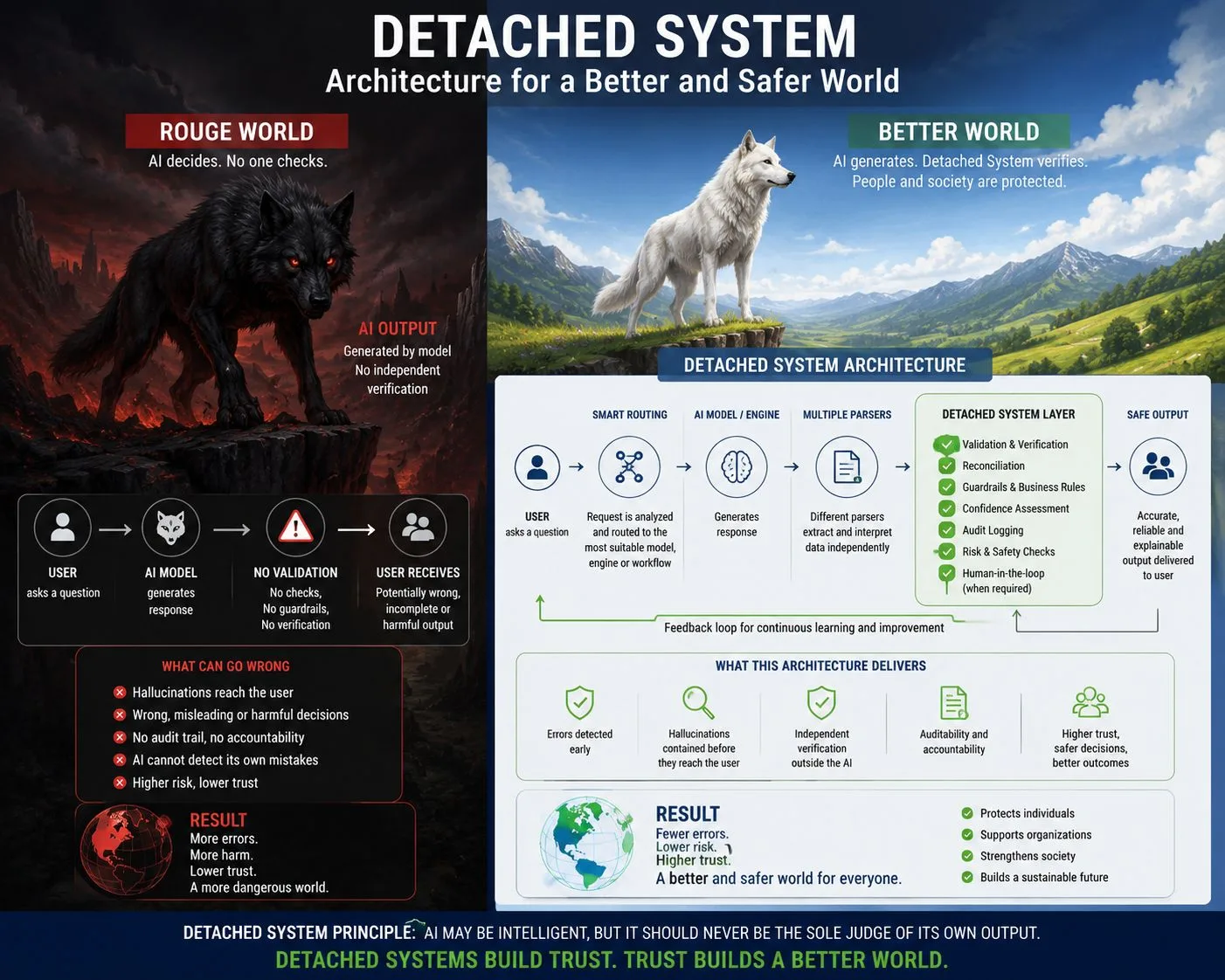
从 a 系统-builder's standpoint, governance only becomes real once it is embedded in the architecture.
A regulation can mandate reliability, auditability, monitoring and independent validation. The engineering question is how those requirements are enforced before an AI output is allowed to influence a business decision.
In the 系统 we 设计 and operate at AINNA, three architectural patterns consistently make the difference:
智能路由
Not every request belongs in the same model.
The routing layer should classify the request by task type, complexity, data format, risk level and required accuracy. It can then send the work to the most appropriate AI model, deterministic engine, rule-based workflow or specialised parser.
风险 is therefore managed at ingress, not only after the answer has already been generated.
多个专用解析器
Relying on a single parser is a single point of failure.
Run the same input through separate parsers with different methods. 比较, reconcile and validate their outputs before the 系统 commits to a result.
If the parsers disagree, the workflow stops, reroutes or flags the transaction. It should never silently forward an unreliable result downstream.
分离式系统
The AI model must not approve its own output.
验证, reconciliation, guardrails, business rules, confidence scoring and audit logging should 实时 in independent components outside the model. The model generates; the 系统 verifies.
With this architecture, hallucination risk is not something you address only at the end of the pipeline. It is controlled continuously, from routing and parsing through validation and acceptance.
It will not eliminate hallucinations entirely. It will detect and contain unreliable outputs so they cannot reach the final decision layer.
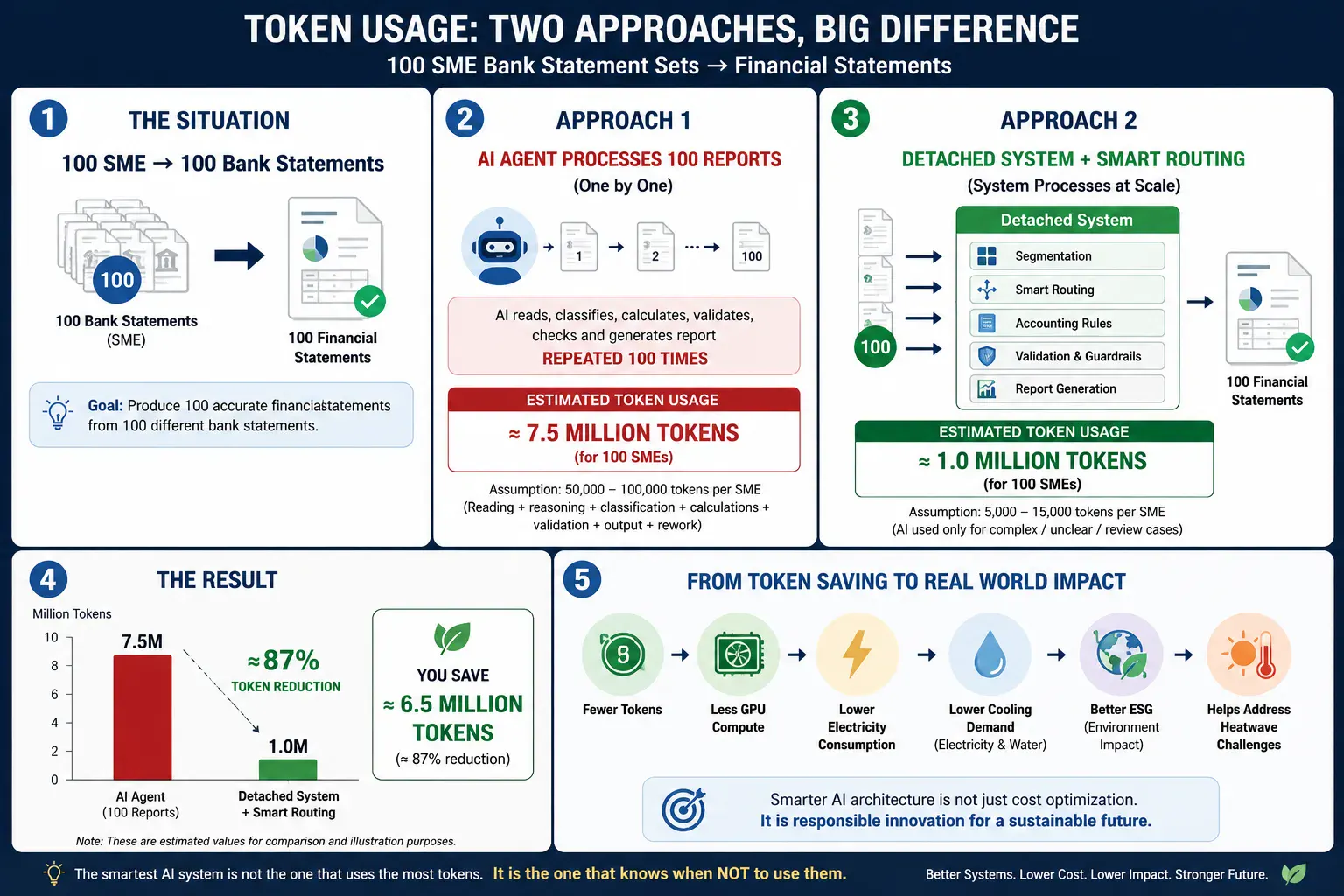
There is also a real ESG upside. 智能路由 prevents every request from defaulting to the largest, most expensive model. 确定性 processes, specialised parsers and smaller models can handle the routine work, while the heavy models are engaged only when the task genuinely requires them.
This cuts unnecessary token usage, GPU processing, electricity consumption, cooling load and infrastructure cost.
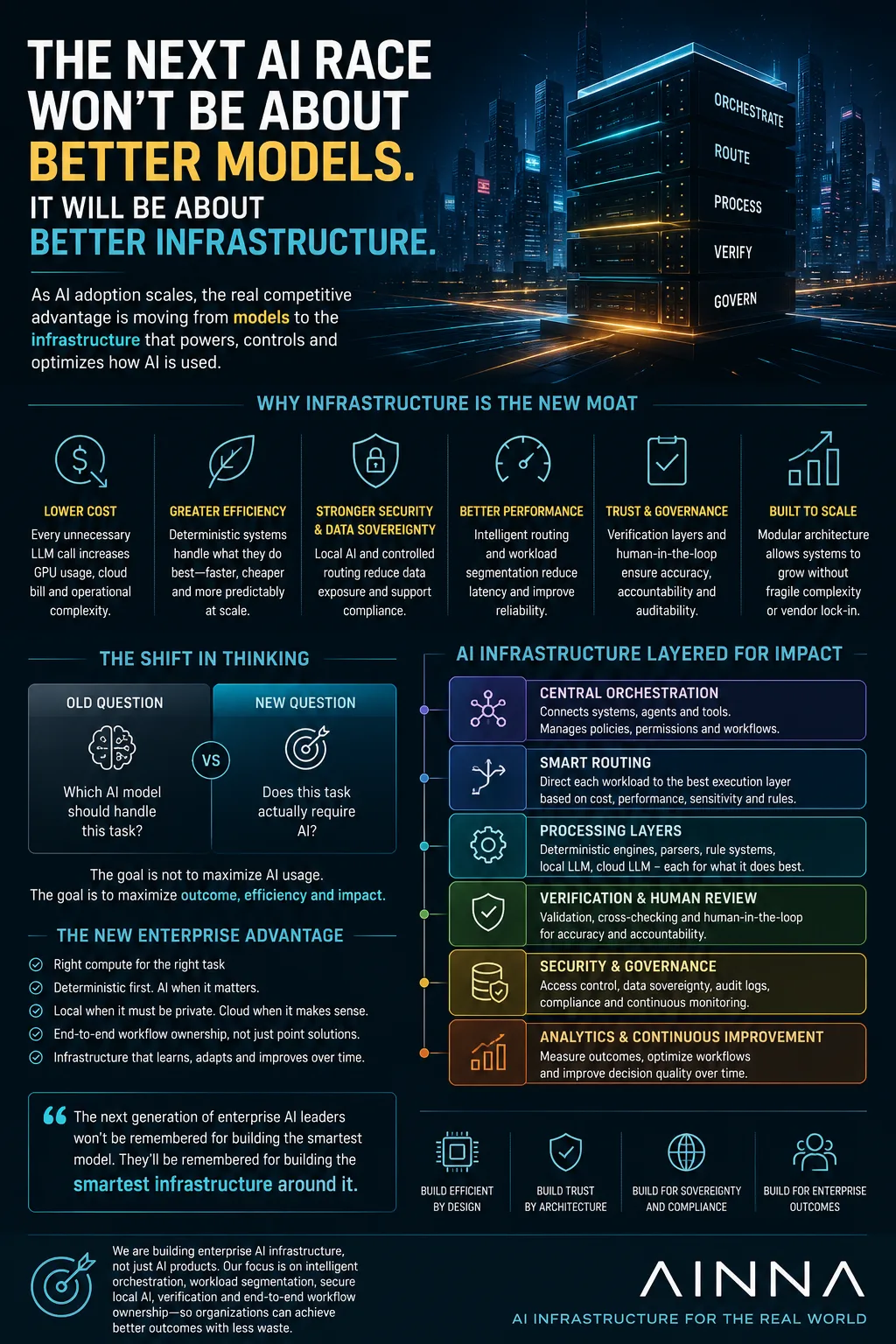
Trustworthy AI is therefore not just a matter of using a powerful model.
It requires an architecture that is measurable, independently verifiable, resource-efficient and engineered to control risk from the start.
治理 must 实时 in policy.
Prevention, verification and ESG efficiency must 实时 in the 系统.
#AI治理 #ResponsibleAI #AI基础设施 #SmartRouting #分离式系统 #AI验证 #ESG #GreenAI #马来西亚AI #DigitalTransformation
Official 跨-网络 Resource














Ruang pembaca
Apa pendapat anda?
Komen disemak sebelum diterbitkan. 电子邮件 diperlukan untuk moderasi dan tidak dipaparkan kepada pembaca.
总结部分让AI governance gets的重点更加清楚。
我喜欢文章对three architectural patterns consistently make保持务实的态度。
如果有更多reroutes or flags the transaction的数据和结果会更完整。
这篇文章把分离式系统 the AI model讲得比一般的AI介绍更具体。